





A lit antebellum-style two-story house with white columns and a wraparound porch at night, framed by live oak trees draped in Spanish moss.

Furnace Repair in Clinton, AR

Tell us about the job

Takes about a minute. No obligation.

RepairFurnace or heatingVan Buren County, AR
Step 1 of 2

What ZIP code is the job in?

Your furnace here works about seven months a year, October through April. That's a real stretch, but it's not constant strain. Overnight lows average 30°F through December, January and February, which calls for steady heat but nothing extreme. A furnace running under those conditions usually isn't fighting itself to keep up. When one in Clinton starts acting up, age or a worn part is the more likely cause, not a system that's been overworked. That's good news if yours needs attention, because it means a repair is usually the right call, not a sign the whole unit is done.

7 months
October through April, your furnace is on duty
30°F
the average winter night it heats against
4 winter storms
in ten years, the nights a failure hurts most
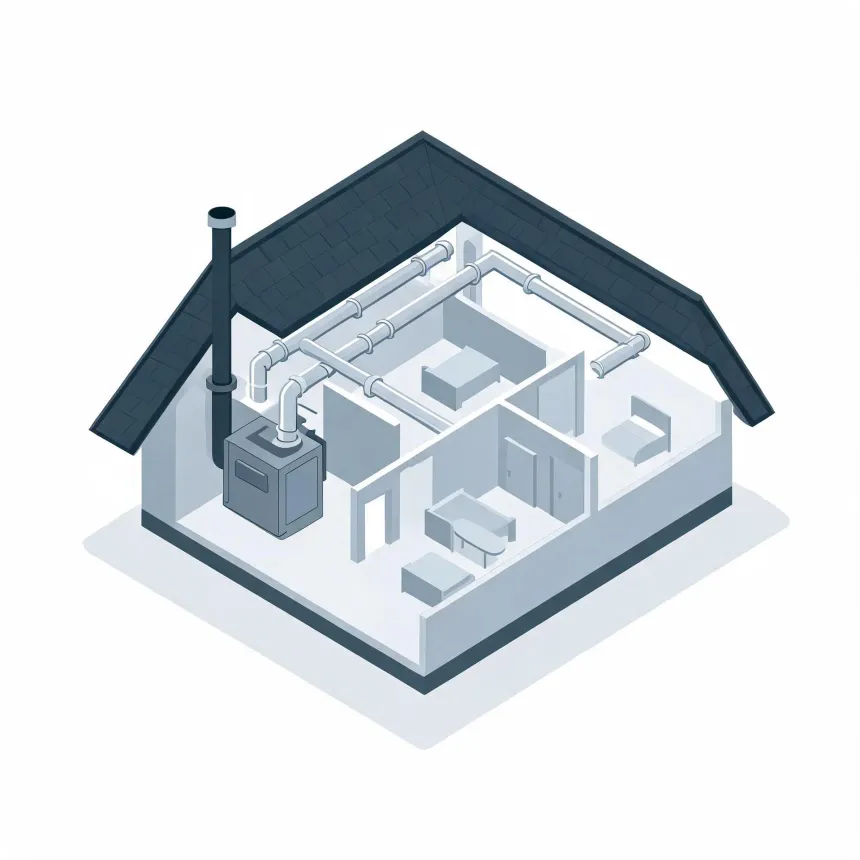
Isometric illustration of a cutaway house showing a dark furnace unit with a flue pipe and branching ductwork running through rooms with simple furniture under a dark gabled roof.
Your furnace works hardest from November through March.

NOAA nClimDiv, 1991–2020 normals

Furnaces in Clinton start working in October.

A weak part that made it through last winter is the one that quits in the first cold snap.

A Clinton winter doesn't push a furnace hard enough to explain a breakdown

Heat runs October through April
Winter nights average 30°F
Climate zone 3A
What's actually inside Van Buren County homesHalf the homes here were built in 1986 or earlier, and one in five is a mobile home.

Van Buren County gets its share of rough weather. Damaging wind, hail, even a tornado over the past decade. None of that is aimed at your furnace. Wind and hail go after the roof, the siding, the power lines. A furnace sitting in a closet or basement doesn't know the difference between a calm week and a storm outside. The one thing worth checking is the power itself. Close to a quarter of Arkansas households lost power for a full day or more last year, and a furnace that loses power mid-cycle can need a reset, or can reveal a weak part that was already close to failing. If yours quit during or right after an outage, that's worth mentioning to whoever comes out.

A repair is usually the right call

A worn part is a fair reason to call someone out. Get it found and fixed instead of guessing whether the whole furnace is done.

Find a contractor
A gray gas furnace with attached ductwork and piping installed in an unfinished concrete basement.

Some of these don't hold steady, they get worse

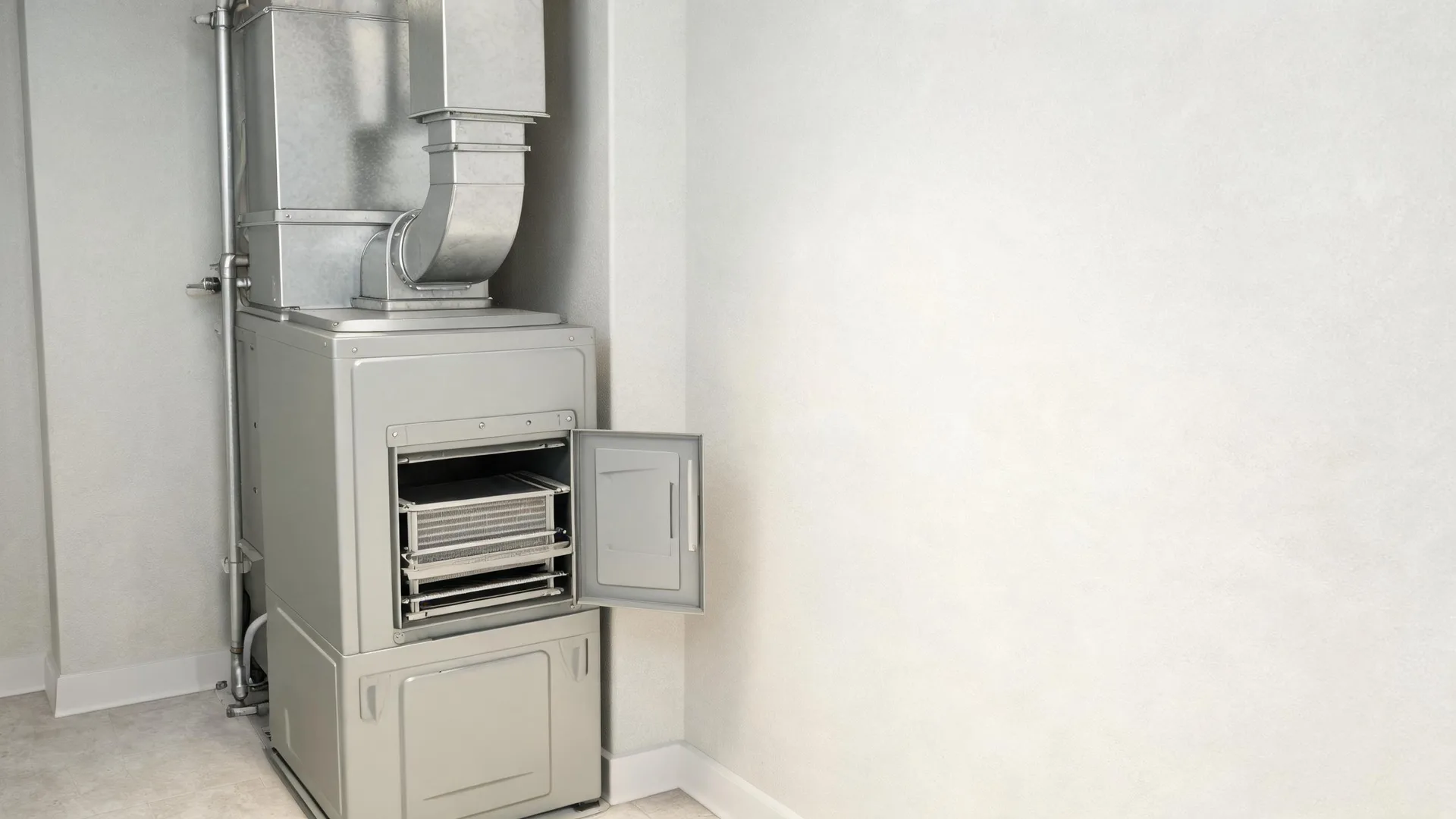
A cracked heat exchanger gets worse if the furnace keeps running, because the metal keeps flexing around that crack every time it heats and cools. A blower motor on its way out draws more current trying to spin, and that heat builds in the windings until it fails for good instead of just struggling. A failing igniter that glows weak will keep drawing on a hot surface it can't sustain, until it snaps. Even something as simple as a dirty flame sensor gets worse the longer it runs dirty, because the coating that blocks its signal keeps building up with every cycle. None of these fix themselves by waiting. They fail a little more each time the furnace fires, until the part that was limping quits outright.

What you'll actually notice first

Short cycling is one of the clearest signs, the furnace fires up, runs a few minutes, shuts off, then starts again before the house feels any warmer. Cold air out of the vents when it should be warm points to a flame that won't hold or a limit switch cutting things short. A burning smell that doesn't fade after the first run of the season, a furnace that won't fire at all, or one making a new sound like a screech or a hard bang when it starts up, all mean something inside has already failed or is about to.
Why it's worth a call now, not later

A furnace with a bad part doesn't fix itself by resting. The igniter that glows weak, the blower motor drawing too much current, the flame sensor coated in residue, all of them get worse with every cycle, not better. Waiting usually means the same repair plus a cold house when it finally gives out, often on the coldest night rather than a convenient one.

Before anyone comes out, there are a few things worth a look. Check the thermostat first. Make sure it's set to heat, not just fan, and that the temperature is actually set above room temperature. A dead thermostat battery looks exactly like a dead furnace. Next, check the air filter. A filter clogged with dust can choke the airflow enough to trip a limit switch and shut the whole thing down. Go to the furnace itself and check the switch nearby that looks like a light switch. That's the furnace's power switch, and it can get bumped off. Last, check your breaker panel for a tripped breaker. If the furnace has a standing pilot, check whether it's still lit. None of this is dangerous or technical, it just rules out the simple stuff before you pay someone to find the same thing.

A diagnostic visit starts with questions, not tools. When did it start, what does it sound like, has it happened before. That narrows things down before a panel ever comes off. The tech will pull the furnace apart enough to watch it try to run, checking the igniter's glow, the flame sensor's reading, whether the inducer motor spins freely and the blower kicks on when it should. Gas pressure gets checked at the valve. Wiring gets checked for a loose connection or a burnt spot, since heat and vibration work connections loose over the years. Most of this is watching the furnace fail in real time rather than guessing from a cold unit, because some problems only show up once things heat up and run a few minutes. A tech can usually tell you what's wrong before they tell you what it takes to fix it.