An unfinished basement featuring concrete block walls, exposed floor joists, and a metal forced-air furnace with ductwork near a central pillar.

Furnace Repair in El Dorado, AR

Tell us about the job

Takes about a minute. No obligation.

RepairFurnace or heatingUnion County, AR
Step 1 of 2

What ZIP code is the job in?

Union County sees its share of storms

113 severe weather events hit this county between 2015 and 2024, including damaging wind, hail, and tornadoes. A furnace shares the house with an outdoor unit, and that unit takes the brunt of wind and hail even when the furnace itself sits untouched in a closet or attic.

Power loss hits a furnace too

Almost a quarter of Arkansas households went at least a day without power in 2024. A gas furnace still needs electricity to run the blower and ignition, so a long outage can stop it cold the same as it would an electric system. If the power went out at your place this winter, that is worth mentioning when you call someone out.

5 months
November through March, your furnace is on duty
35°F
the average winter night it heats against
8 winter storms
in ten years, the nights a failure hurts most
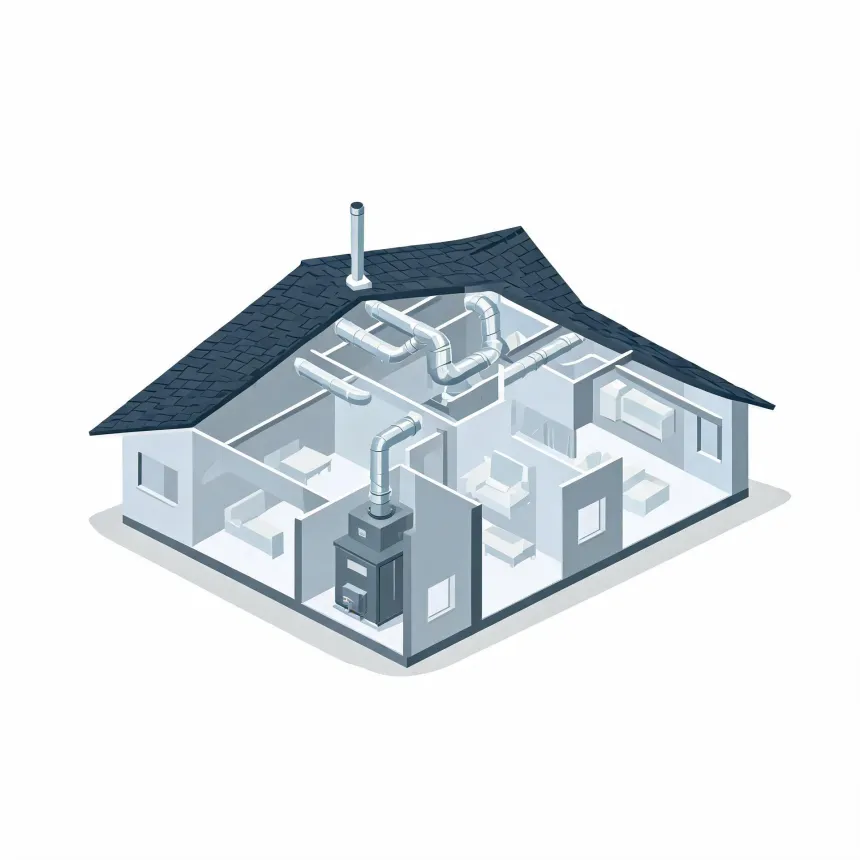
Isometric cutaway illustration of a single-story house showing interior rooms with furniture, a metal ductwork network, and a furnace unit connected to a vertical flue through the dark shingled roof.
Your furnace works hardest from November through February.

NOAA nClimDiv, 1991–2020 normals

Furnace season in El Dorado starts in November.

Get a furnace looked at in October, before the first cold snap finds the weak part.

Five months of heat a year is a light workload for a furnace

Heat runs November through March
Winter nights average 35°F
8 winter storms from 2015 to 2024

Half the homes in Union County were built in 1979 or earlier, half in 1979 or later, so a furnace here is about as likely to sit in an older closet as a newer one. That split doesn't point to any particular failure on its own. What matters more is whether yours is a mobile home, since about one in five homes in the county are. A mobile home usually runs on a different furnace setup than a house with ducts running through an attic or crawlspace, and the parts on hand for it can differ too. If that's your situation, mention it when you call someone out.

Had storm damage to your outdoor unit? Get it checked before you need the heat.

If your outdoor unit has taken hail or wind damage over the years, it's worth a look even if the furnace still fires every morning. A cracked panel or bent coil out there doesn't always show up as a problem until the system is under real load on a cold night.

Find a contractor
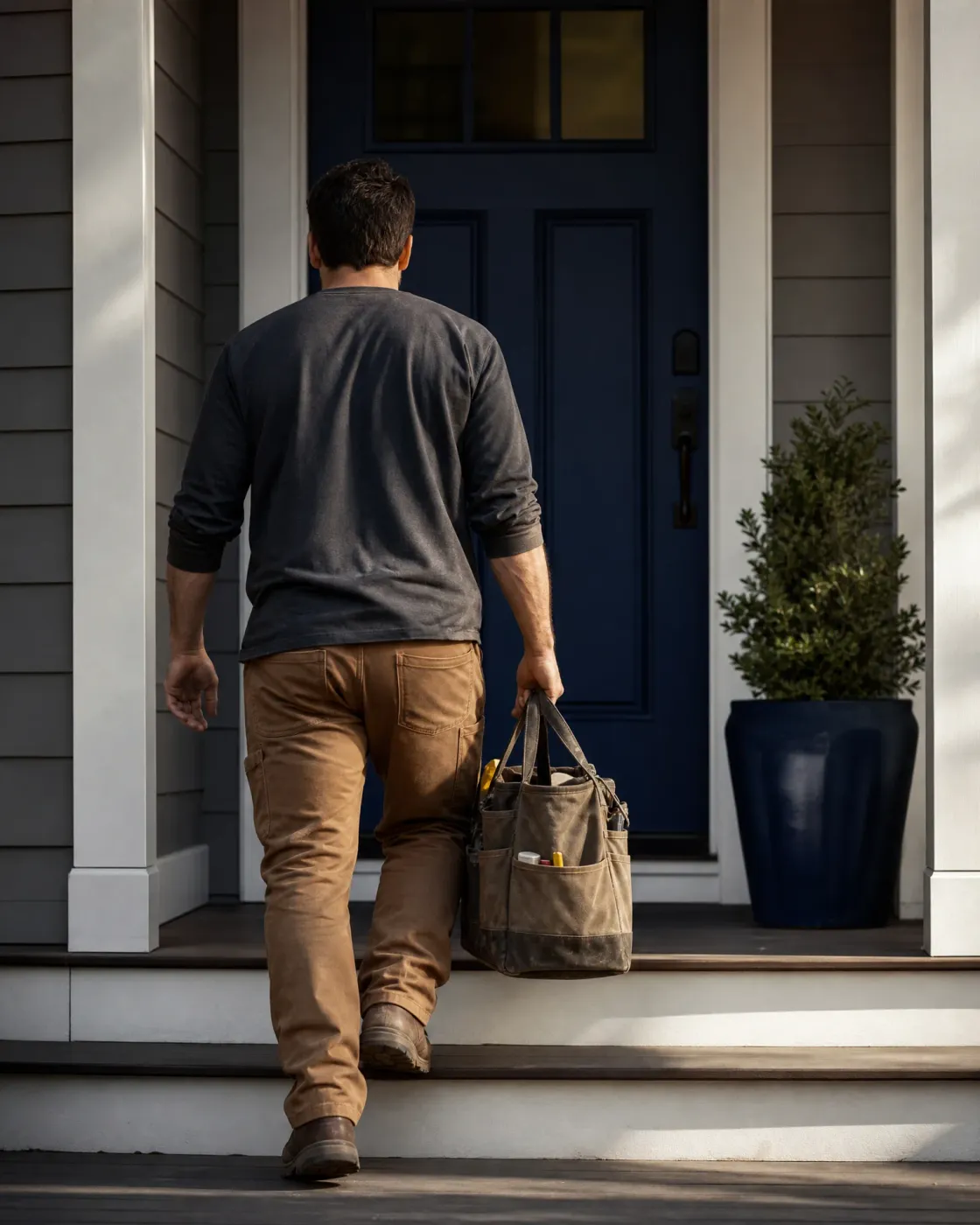
A man in a dark long-sleeve shirt and tan work pants carries a canvas tool bag up porch steps toward a navy blue front door, with a potted shrub beside the entry.
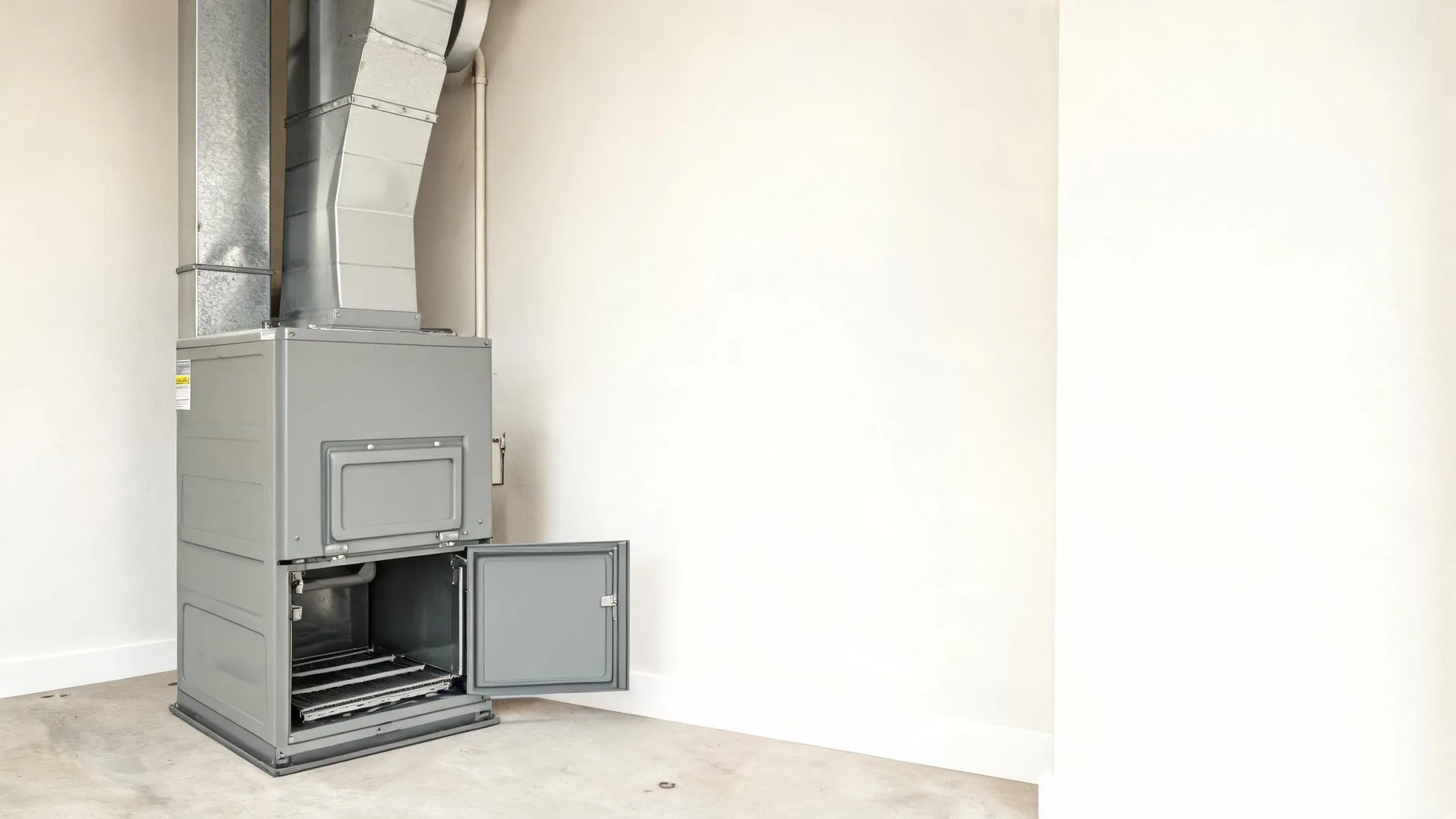
A gray gas furnace with attached ductwork and piping installed in an unfinished concrete basement.

A furnace here has time left in it

A furnace running five months a year at a 35°F average low isn't working hard. That counts for something when it starts acting up. More often than not, what's wrong is a part that wore out on its own or got skipped at a tune-up, not one that burned out from overuse. Worth getting a second opinion before anyone tells you to replace the whole unit. The storm and outage damage covered above is the exception, since that kind of failure isn't about wear at all.

Check the simple things first

Make sure the thermostat is set to heat and the setting is above room temperature. Check that the furnace switch, the one that looks like a light switch near the unit, is flipped on. Look at the breaker for the furnace in the panel. None of this takes a tool, and it rules out the easy answers before anyone comes out.

Know what to tell the tech

Check the filter and note if it's dark or clogged. Listen for what the furnace does when it fails. It might try to light and stop, run the blower with no heat, or not respond at all. If you smell gas, leave the house and call the gas company before anyone else. Don't try to check anything yourself. What you noticed helps narrow down the problem before the tech even opens the panel.

A furnace that's struggling doesn't fix itself by staying on. If the flame sensor is dirty, the furnace will keep trying to light, shut off, and try again, and each cycle puts more strain on the ignition system. A cracked heat exchanger gets worse under repeated heating and cooling, not better, and running it longer only pushes more exhaust through that crack. Even a clogged filter forces the blower motor to work harder to push air through, and a motor that runs hot wears out sooner than it should. A furnace that's limping along is telling you something. Better to shut it down and get the part looked at than let it run until something bigger gives out.

A diagnostic visit starts with the tech asking what the furnace was doing before it quit. Whatever you noticed about the sounds or the sequence gets used right away. From there they check for power at the unit and check that the thermostat is calling for heat. Then they watch the furnace try to run through its normal sequence. The igniter glows, the gas valve opens, the flame sensor confirms a flame, the blower kicks on. Wherever that sequence breaks is usually where the problem is. If it won't light at all, the igniter and the gas valve are the first things checked. If it lights and shuts off, the flame sensor is the likely culprit. If it runs but blows cold, that points to the blower or a limit switch instead. Most of this gets sorted with a multimeter and a look at the flame through the sight glass, not by replacing parts until something works.