


Single-story brick and siding houses with covered porches behind a trimmed hedge and lawn, framed by large oak branches draped with hanging moss under an overcast sky.

Furnace Repair in Harrison, AR

Tell us about the job

Takes about a minute. No obligation.

RepairFurnace or heatingBoone County, AR
Step 1 of 2

What ZIP code is the job in?

Furnaces in Harrison run from October through April, and overnight lows average 28 in the dead of winter. That's real work for a furnace, but nothing about it is unusual. Most trouble here is the same trouble a furnace has anywhere. An igniter wears out. A flame sensor gets coated with residue. A filter clogs and chokes the airflow. The job is to find which one it is and fix that, not to treat the system like it's been through something extreme. A furnace that gets the right repair handles a Boone County winter the same way it handles any other.

7 months
October through April, your furnace is on duty
28°F
the average winter night it heats against
4 winter storms
in ten years, the nights a failure hurts most
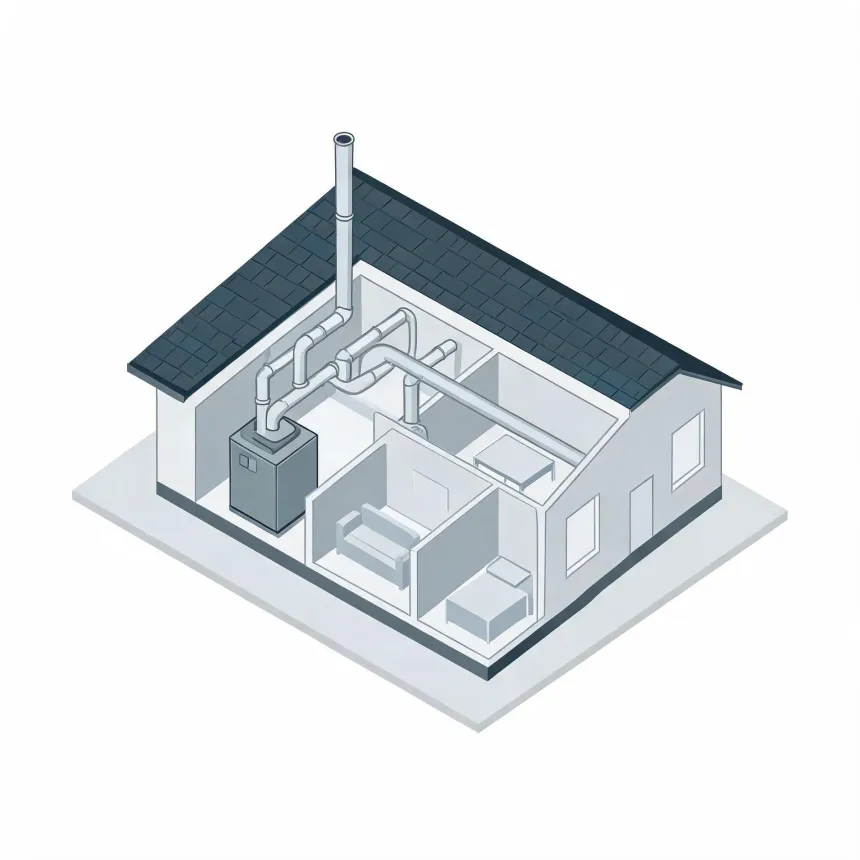
Isometric cutaway illustration of a single-story house showing a gray furnace connected to white ductwork and a flue pipe extending through the shingled roof, with simplified furniture in the interior rooms.
Your furnace works hardest from November through March.

NOAA nClimDiv, 1991–2020 normals

Furnaces in Boone County start running again in October.

September is the month to get one checked, before a weak part meets its first cold night.

Nothing unusual here, just the usual wear90 severe weather events hit Boone County between 2015 and 2024, and most furnace trouble still comes down to a worn part.

A furnace that runs all winter is using power the whole time it runs, and electricity in Arkansas ran $36.10 per million Btu last year. A furnace short cycling, or one limping along on a dirty flame sensor, burns more of that than one running the way it should. That's reason enough to get the real problem found instead of letting it ride. None of this means the furnace needs special treatment. It means a broken part costs you something every day it stays broken.

A newer furnace is usually worth fixing

Half the homes in Boone County were built in 1985 or later. If that's your house, the furnace likely isn't the original one, and a repair now is usually enough to get it through the winter. Worth having someone look at it before the cold really sets in.

Find a contractor
A man in a cap, dark shirt and tan work pants walks up stone steps toward a dark blue front door, carrying a canvas tool bag, with a potted shrub beside the entry.
A gray high-efficiency gas furnace installed in an unfinished basement, surrounded by gas lines, a condensate drain, and sheet-metal ductwork.

What a failing furnace sounds and looks like before it quits

A failing furnace usually tells you before it quits outright. It short cycles, firing up and shutting off again before the house warms up, because a flame sensor or limit switch is sensing something wrong and cutting the cycle short. Or it runs long, never quite satisfying the thermostat, because a clogged filter or a weak blower can't push enough air through the ducts. The burners show trouble too, if you look. They should burn blue and steady. A yellow, flickering flame means the gas isn't burning clean. Listen as well as look. A bang at startup usually means gas is building up before it catches instead of lighting right away. A grinding or squealing sound from the blower means a motor bearing is wearing out. Any one of these is worth having looked at before the furnace fails on the coldest night of the stretch.

A cracked heat exchanger gets worse with every cycle

Heat makes metal expand, and a hairline crack opens wider each time the furnace fires and cools back down. Left alone, a small crack becomes a gap big enough to let exhaust mix into the air the blower pushes through the house.
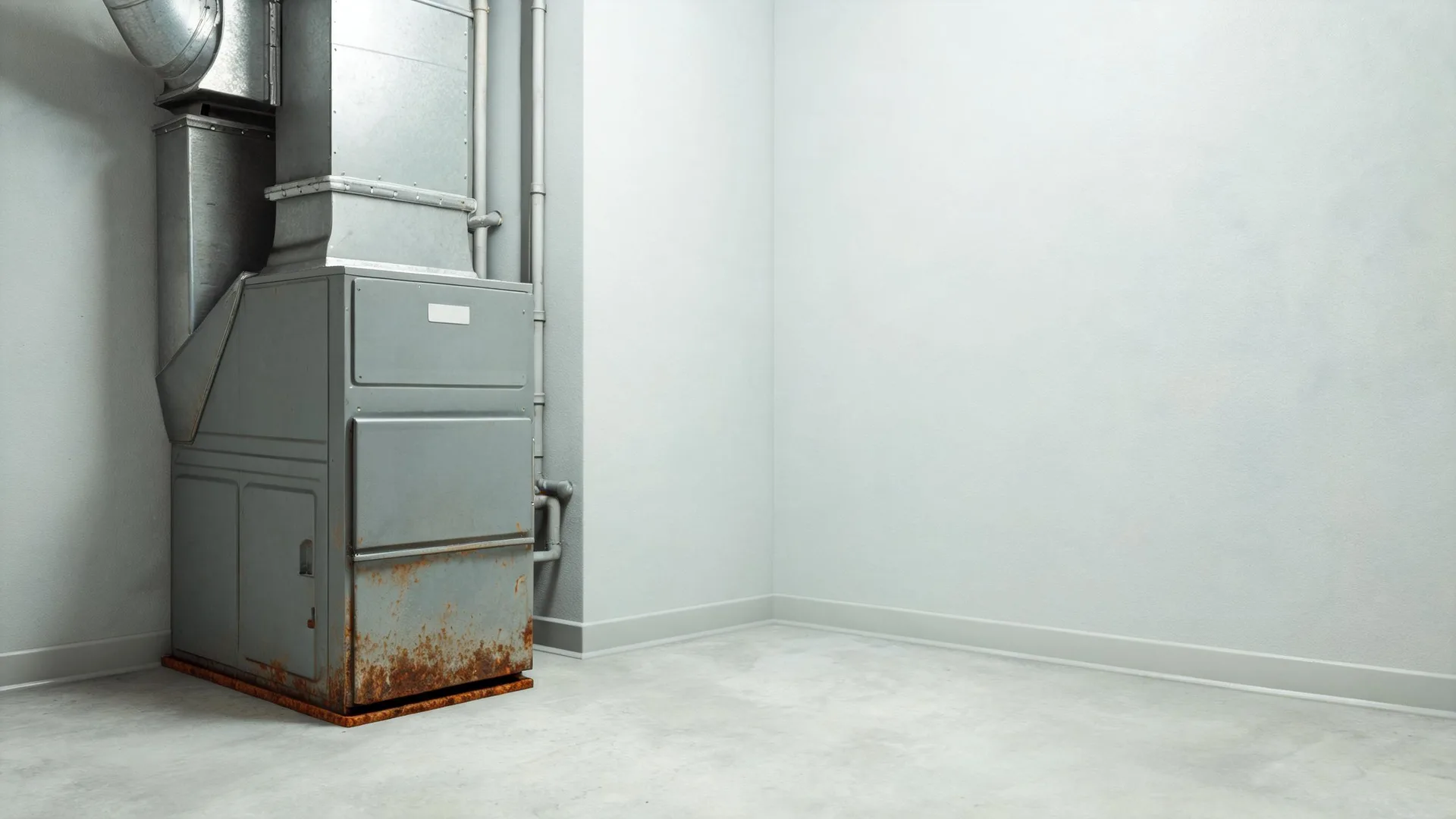
A dirty flame sensor can end in a failed ignition system

A flame sensor coated with residue tells the control board the flame isn't there, so the board shuts the gas off as a safety step. Run it like that long enough and the constant shutoffs put wear on the igniter and the board itself, turning a quick cleaning into a part replacement.

Most furnace failures trace back to a handful of parts, and they tend to fail in order. The igniter goes first, usually, since it heats up and cools down every single cycle and that wears it out faster than almost anything else in the system. The flame sensor is next, a thin rod that reads the flame and tells the control board gas is burning like it should. Residue builds on it over time until it can't sense the flame anymore, even though the flame is right there. The blower motor fails differently, through the bearings wearing down after years of spinning, which shows up as noise before it shows up as a dead motor. Capacitors weaken with age too, and a weak capacitor makes the blower struggle to start even when the motor itself is fine. None of these failures happen overnight. They build for a while first, which is exactly why catching one early is usually a quick fix instead of a dead furnace.

A diagnostic visit starts before any panel comes off. A tech asks what the furnace is doing, when it started, and whether it's one symptom or several, because a short cycle and a yellow flame point in different directions. Then the cover comes off and the burners get a look while the furnace runs, checking the flame's color and shape. The flame sensor and igniter get checked next, since those cause most no-heat calls. A meter checks the capacitor and the motor windings, because a weak capacitor can look like a dying motor from the outside. The heat exchanger gets inspected too, often with a camera, since a crack there isn't something you want to guess about. By the end, the tech should be able to point to the part causing the trouble, not just the general area.