Five months of real work
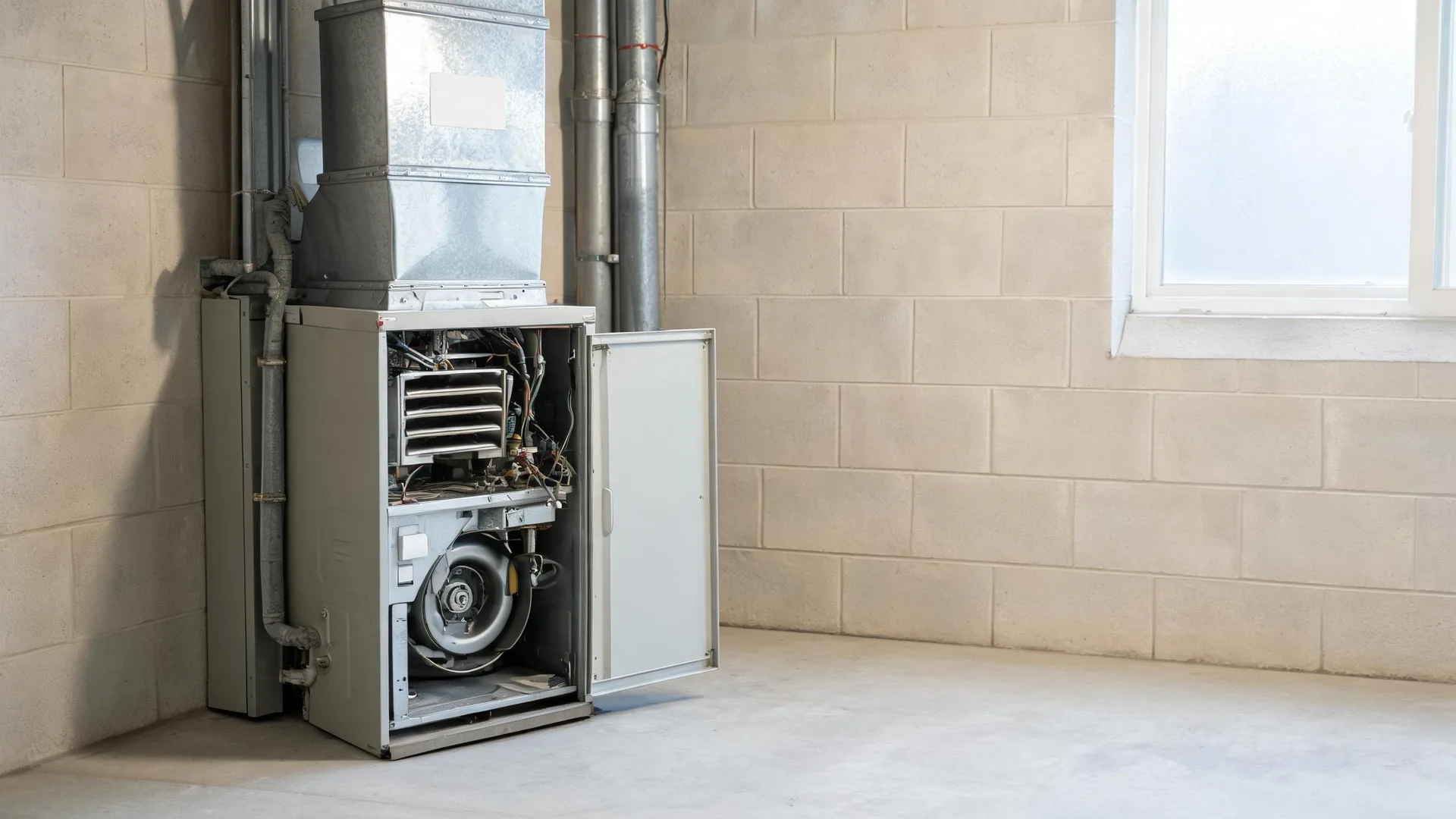
Furnaces in Magnolia run from November through March. The rest of the year the system sits idle. That's a lot less wear than a furnace running most of the year somewhere colder.
Takes about a minute. No obligation.
Furnaces in Magnolia run from November through March. The rest of the year the system sits idle. That's a lot less wear than a furnace running most of the year somewhere colder.
A furnace here isn't failing because it's been pushed hard. Winter lows average 35°F, not brutal cold, and ice storms are rare. If yours is acting up, the cause is more likely a worn part or something that's been neglected than a system that's simply used up.

NOAA nClimDiv, 1991–2020 normals
Furnaces in Magnolia start running in November.
A weak part that made it through last March often fails in the first cold snap, not months into the season.



Before calling anyone, check the thermostat first. Make sure it's set to heat, not fan, and that the target temperature is well above room temperature. Next, check the breaker box for a tripped breaker on the furnace circuit. If the furnace has a standing pilot, look to see if it's lit. If it uses an electronic igniter instead, leave that alone and let a tech handle it. Check the air filter too. A filter clogged with dust chokes off airflow, and some furnaces shut themselves down rather than run with one. Last, find the furnace switch, the one that looks like a light switch near the unit or on it, and make sure nobody bumped it off. None of this fixes a cracked heat exchanger or a failed igniter, but it rules out the simple stuff first.
A furnace with five easy months behind it is usually a furnace worth fixing. Most of what goes wrong is a single worn part, not a system worn out, and that's a repair, not a replacement.
Find a contractorA furnace that's struggling doesn't fix itself by staying on. A cracked heat exchanger gets worse every hour it runs. The metal keeps flexing with the heat and the crack keeps opening further. A failing igniter glowing weak and orange instead of bright white keeps drawing current through a part that's already breaking down, until one day it won't light at all. A dirty flame sensor works the same way. The coating that blocks it from sensing the flame keeps building up, so the furnace shuts off sooner each cycle until it won't stay lit. None of these level off on their own. Left running, a furnace with a real problem tends to take the burner compartment or the blower motor down with it.
A furnace in trouble usually tells on itself before it quits outright. Short cycling, where it fires up and shuts off again within a few minutes, points to a dirty flame sensor or airflow trouble. A burner flame that's yellow or flickering instead of steady blue means it isn't burning clean. Cold air blowing from the vents, a burning smell that doesn't fade, or a furnace that's suddenly banging or screeching on startup are all signs worth paying attention to.
A short-cycling furnace or a weak flame is a part wearing out, and a tech can usually trace it to one component and replace it. That kind of problem is worth a call soon, not an emergency visit the same hour. A burning smell that lingers, or a hissing sound near the gas line, is different. That calls for getting someone out the same day, no waiting on it.
Most furnace failures trace back to one of a handful of parts, not the whole system giving out. The igniter is a common one. It's a thin strip that glows to light the gas, and that strip gets more brittle every time it heats up and cools down, until one day it cracks. The flame sensor fails a similar way, coated over cycle after cycle until it can't tell the furnace a flame is there. Flame sensors can be cleaned, igniters usually just get replaced. Blower motors wear through their bearings over years of spinning and start making noise before they quit. Capacitors that kick the blower motor into motion just weaken with age and stop giving it the push it needs. A cracked heat exchanger is the one that matters most, since it means combustion gases could leak into the air the furnace is pushing through the house.
A furnace is really a handful of parts working in sequence, and most of the time only one of them has gone bad. That's why repair makes sense far more often than people expect. Replacing an igniter or a flame sensor brings the whole system back to normal, because the cabinet, the heat exchanger, and the ductwork around it aren't worn by a single part failing. The exception is the heat exchanger itself. Once it's cracked, there's no patching it, and a tech will tell you straight that it's a replacement, not a repair. Short of that, if a furnace has been maintained and nothing else is going wrong at the same time, fixing the one part that failed is almost always the right call.