




Night view of illuminated white Southern-style houses with wraparound porches beneath Spanish moss-draped oak trees.

Furnace Repair in Mena, AR

Tell us about the job

Takes about a minute. No obligation.

RepairFurnace or heatingPolk County, AR
Step 1 of 2

What ZIP code is the job in?

Your furnace earns its keep from October through April, about seven months of the year, and sits idle the rest of the time. Overnight lows average 31°F through December, January and February, which is cold but not extreme, so the furnace isn't fighting single-digit temperatures night after night. That's a manageable load for a furnace in good working order. It means a furnace acting up in Mena more often points to age or a part that's worn out than a system that's been run into the ground. Worth knowing if you're trying to decide whether a repair makes sense.

7 months
October through April, your furnace is on duty
31°F
the average winter night it heats against
5 winter storms
in ten years, the nights a failure hurts most
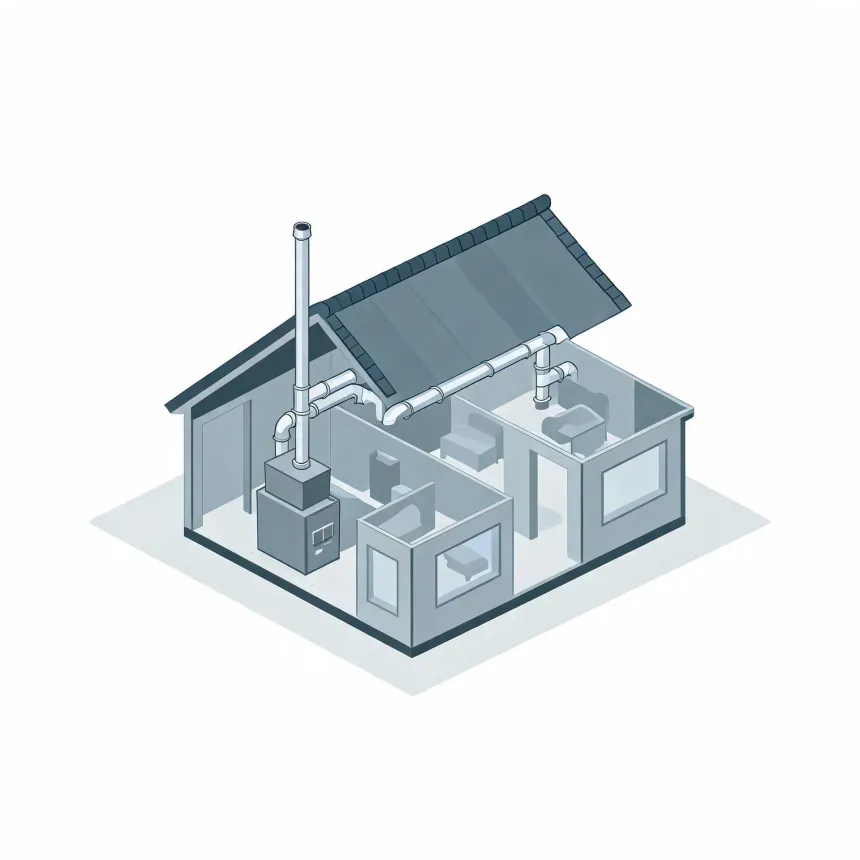
Isometric grayscale illustration of a cutaway house showing an interior furnace with a tall flue pipe and ductwork running to rooms under a partially lifted roof.
Your furnace works hardest from November through March.

NOAA nClimDiv, 1991–2020 normals

Half the homes in Polk County were built in 1986 or later.

A furnace that came with a newer house here usually has years left in it, which is worth knowing before you replace instead of repair.

Weather here is ordinary, and that works in your favor

70 severe weather events from 2015 to 2024
24% of homes statewide lost power a day or more in 2024
38 damaging wind events from 2015 to 2024

September is worth a look before the furnace runs all winter. Heat comes on in October here and stays on through April, and whatever was already weak tends to show up fast once the furnace is working every day instead of sitting idle. A cracked heat exchanger, a failing igniter, a blower motor on its way out, these don't usually announce themselves while the furnace is off. They show up in the first cold snap, once the system is finally asked to do the job it's sat around for months not doing. Having it looked at in September, before it's carrying that load, is how a weak part gets found while there's still time to deal with it.

A newer furnace is worth repairing

If your furnace came with the house, get the part fixed instead of planning a replacement. A newer system with one bad part is still a newer system.

Find a contractor
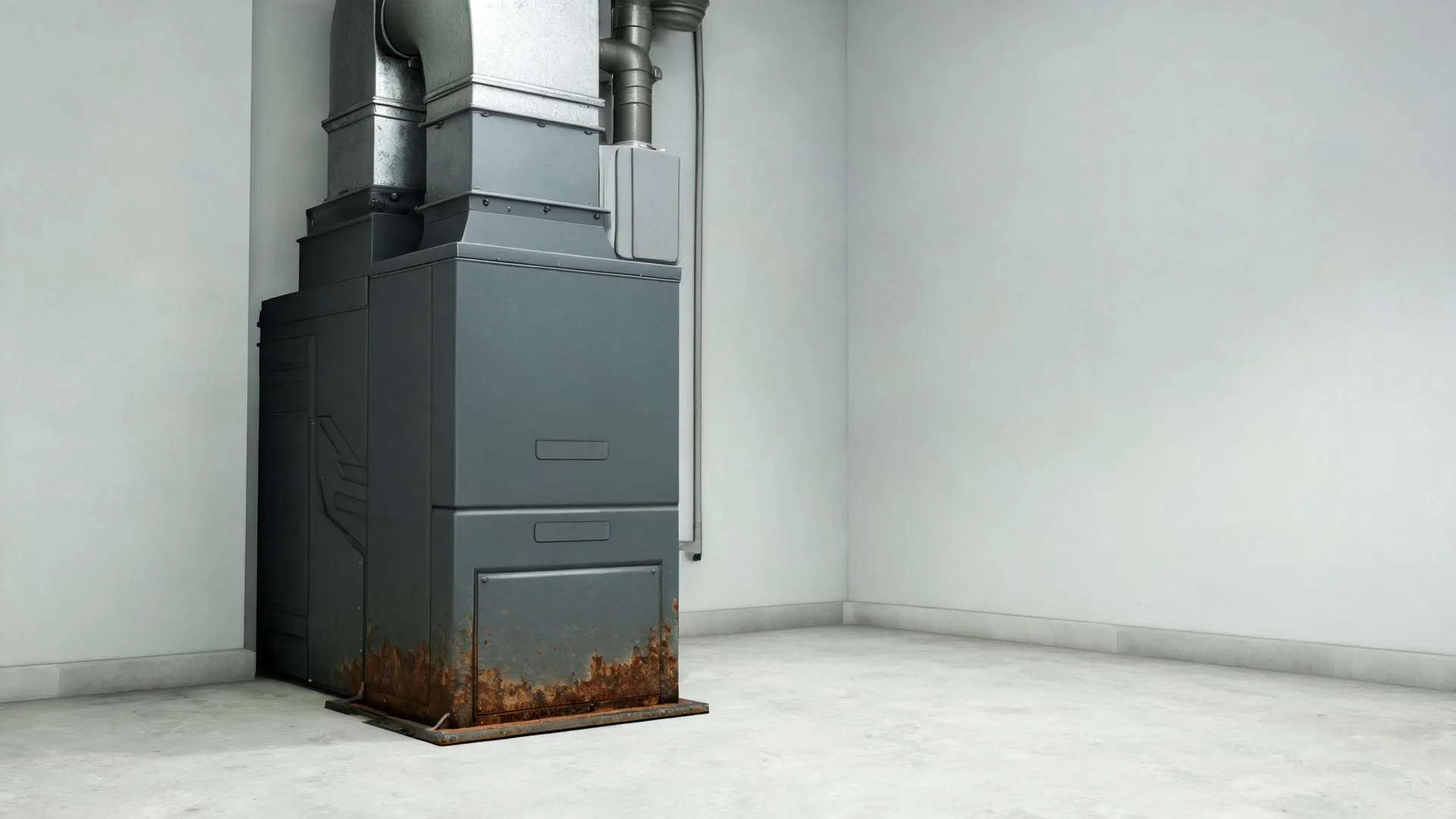
A gray residential gas furnace installed in an unfinished basement, surrounded by ductwork, a metal flue pipe, and a gas supply line.

A repair now holds up for the rest of the season

Given a decent repair history, a furnace in Mena will get through those seven months without being pushed hard. That makes the decision easier when something breaks mid-winter. A blower motor or igniter replaced now keeps doing the job through the rest of the season and into next October.

What you'll actually notice first

A furnace in trouble rarely just quits. It warns you first. Short cycling, where it kicks on and off every few minutes instead of running a full cycle. Air coming out lukewarm instead of hot. A burner flame that's yellow or flickering instead of steady blue. A clicking igniter that won't catch, or a sound like scraping or grinding from the blower compartment. Any one of these means a part is failing before it fails completely.
Why the early signs are worth acting on

A weak blower motor makes the furnace run longer to push out the same amount of heat, and that extra runtime wears on everything else in the system. A cracked heat exchanger can let exhaust mix into the air moving through the house, which is a safety issue, not just a comfort one. Getting a bad igniter or a failing blower motor looked at while it's still just a noise or a short cycle is what keeps it from becoming a full breakdown in the middle of winter.

A furnace with a failing part doesn't fail evenly across the system. A cracked heat exchanger gets worse with heat cycling, since the metal expands when it fires and contracts when it shuts off, and that flexing turns a hairline crack into a bigger one. A blower motor running on worn bearings heats up the longer it spins, so a furnace left to run through a bad motor is pushing that part closer to seizing. A clogged flue or a failing inducer motor can let exhaust linger instead of venting out, and that's not something that improves by waiting another week. The part rarely fixes itself by resting. Shutting the furnace off and having the part looked at stops a bad part from taking out whatever it's connected to.

A diagnostic call starts with the thermostat and works back from there. A tech checks that the call for heat is actually reaching the furnace before touching anything inside it. From there it moves to ignition. The igniter should glow or spark the way it's supposed to, and the flame sensor needs to read a flame once the burners light. A weak signal from either one shuts the furnace down as a safety measure, which is often what gets called in as the furnace won't stay on. The blower gets checked on its own, since a furnace can light fine and still fail to push warm air if the motor or its capacitor is going. Gas pressure, venting and the heat exchanger get looked at too, because those are the parts that make the difference between a furnace that's merely annoying and one that's not safe to run. Most of this gets sorted out by testing one part at a time, not by guessing.