Single-story houses with covered porches sit behind a mowed lawn and a long trimmed hedge, framed by oak branches draped with Spanish moss.

Furnace Repair in Morrilton, AR

Tell us about the job

Takes about a minute. No obligation.

RepairFurnace or heatingConway County, AR
Step 1 of 2

What ZIP code is the job in?

The first cold snap finds the weak part

Furnaces in Morrilton sit idle all summer, then get asked to run hard once October turns cold. A part that was already marginal, a cracked igniter or a failing flame sensor, tends to give out right then under that first real load.

September is worth a look before it starts

Homes here don't fire the furnace again until October, so September is the one month it's off and easy to check. Catching a weak part before the season starts beats finding it on the first cold morning.

7 months
October through April, your furnace is on duty
31°F
the average winter night it heats against
9 winter storms
in ten years, the nights a failure hurts most
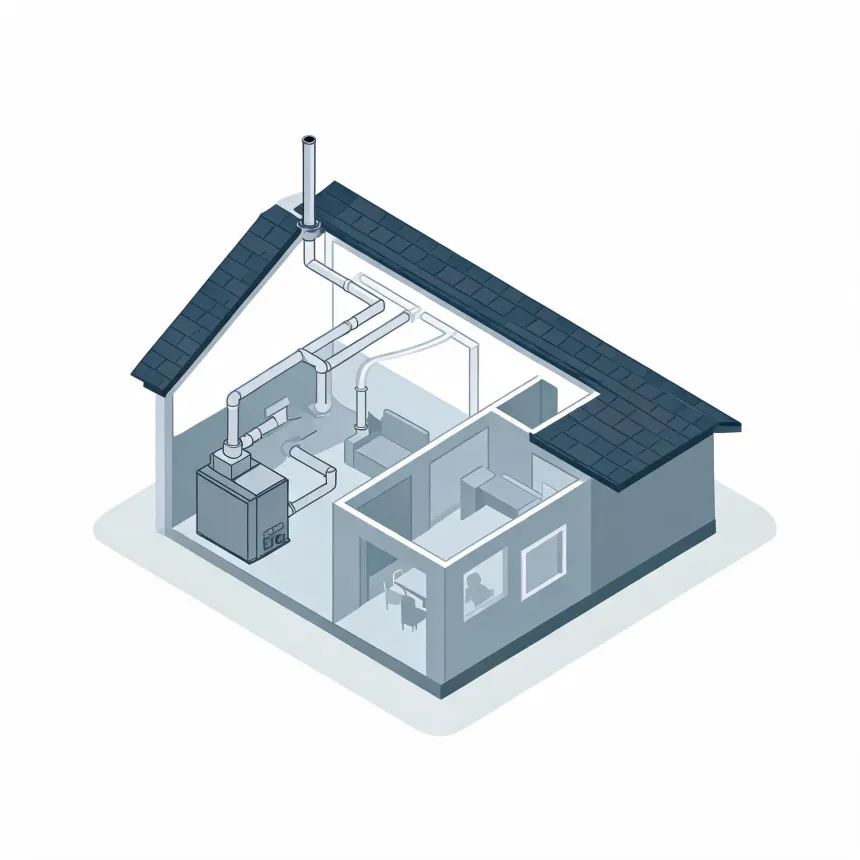
Isometric cutaway illustration of a single-story house showing interior rooms, a furnace unit with connected ductwork, and a flue pipe extending through the dark shingled roof.
Your furnace works hardest from November through March.

NOAA nClimDiv, 1991–2020 normals

A diagnostic means watching your furnace run through a full cycle, not just a quick glance inside the cabinet.

A short cycle or a loose connection that only shows up after a few minutes gets caught that way, before it leaves you stranded.

A furnace that's about half as old as the newer ones in town

Half the homes here were built by 1984
Heat runs October through April
Winter nights average 31°F

Short cycling is one of the clearest signs something's wrong. The furnace fires up, runs for a short while, then shuts off before the room ever warms, and starts the whole thing again a bit later. That's usually a flame sensor that's coated and can't confirm the flame, or a clogged filter choking the airflow until the heat exchanger overheats and trips a safety switch. A furnace blowing air that's barely warm, or air that smells scorched when it first kicks on, points the same direction. So does a burner flame that's flickering yellow instead of burning steady blue. Any of these means it's running, but not running right, and that's worth a call before it decides to stop running at all.

A furnace with this little wear is almost always worth repairing

Furnaces in Morrilton run about seven months a year, October through April, and sit idle the rest. That's less work than a lot of places put on a furnace, and it usually means trouble is one part acting up, not a system that's worn out. Winter storms still come through most years, so a furnace that quits is worth fixing fast, not replacing on a guess.

Find a contractor
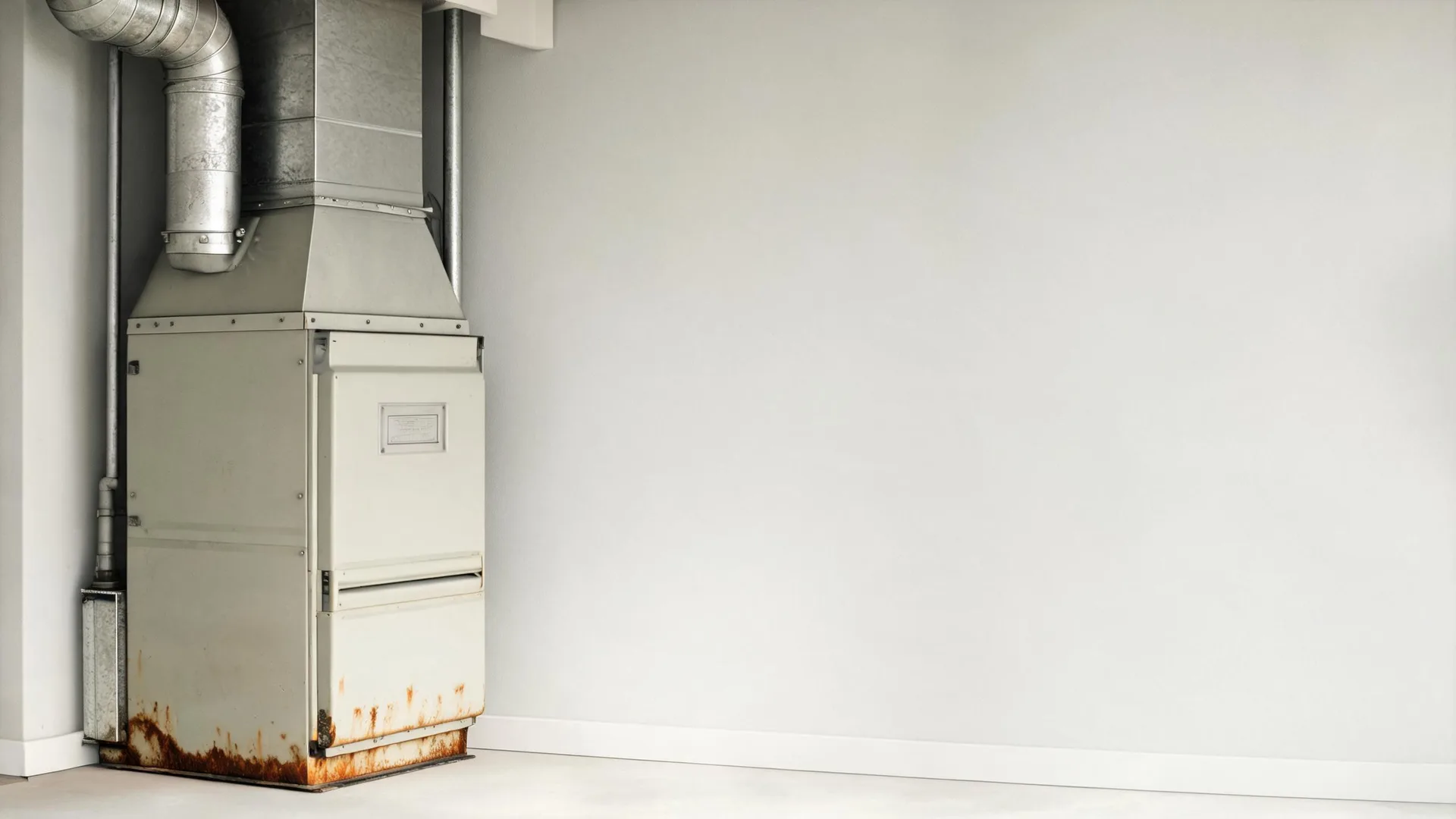
A gray high-efficiency gas furnace installed in an unfinished basement, surrounded by gas lines, a condensate drain, and sheet-metal ductwork.

The parts that give out, and why

Most furnace failures come down to a few parts, not the whole system. The igniter heats up to light the gas, and it's only built for so many cycles before it cracks or stops glowing hot enough to work. The flame sensor sits in the burner flame to prove gas is actually burning. Once it picks up a coating of residue, it can't do that job, and the control board shuts the furnace down even though the flame is fine. Motors wear too. The inducer motor pulls exhaust out before the burners light. The blower motor pushes warm air through the house. Bearings go, windings fail, and either one can leave a furnace that won't start or won't move air once it does. A cracked heat exchanger is the one that matters most. It's the chamber that keeps burning gas separate from the air going into the house, and a crack there is a safety problem, not something to wait on. None of this comes from a furnace being old on paper. It comes from cycles run, dust built up, a flame sensor that never got wiped clean. A furnace looked at before the season starts usually has these caught while they're still small.

What actually happens here

Conway County sees its share of hail, wind and the occasional winter storm, and the power goes out with it. None of that is a furnace problem. A surge from the storm, or the furnace sitting cold through a day-long outage and having to restart hard, can be what finally catches a part that was already going.

The outage is often the trigger, not the cause

A furnace that restarts after power comes back and then won't stay lit, or trips out within a few cycles, usually had a weak igniter or a dirty flame sensor before the outage ever happened. The storm just picked the moment. The fix is still the same part it would have been anyway.

Before calling anyone, check the filter. Pull it out and hold it up to a light. If you can't see light through it, air isn't getting through it either, and that alone can cause short cycling or a furnace that blows cool air. Next, look at the thermostat. Make sure it's set to heat, not just on, and that the temperature set point is actually above room temperature. Check the switch on the furnace itself, the one that looks like a light switch on the side of the cabinet, and make sure it's not been bumped off. If the furnace has a standing pilot, look for a small blue flame near the burners. If it's out, there's usually a relight instruction printed right on the panel. Last, check the breaker. A furnace that won't do anything at all, no sound, no light on the control board, is sometimes just a tripped breaker and nothing more.

Most furnace problems are one part failing, not the system giving out, and that's what makes the repair or replace call fairly simple. A furnace runs on a handful of parts working together, the igniter, the flame sensor, the blower, the heat exchanger. When one of those fails, the rest are usually fine, and swapping the bad part brings the whole thing back. Replacement starts to make sense when the failures stop being isolated, when a tech fixes one thing and keeps finding the next thing wrong right behind it. A cracked heat exchanger is the one exception. That chamber's whole job is keeping burning gas out of the air going into the house, so a crack there isn't something to patch and move on from. Short of that, a furnace that's been kept clean and serviced, with just this one part acting up, is almost always worth fixing.