





A gray forced-air furnace with sheet-metal ductwork stands in an unfinished basement with exposed wooden joists, concrete walls, and a hanging incandescent bulb.

Furnace Repair in Pine Bluff, AR

Tell us about the job

Takes about a minute. No obligation.

RepairFurnace or heatingJefferson County, AR
Step 1 of 2

What ZIP code is the job in?

October is worth a look before you need the heat at all. Furnaces here start up in November and run through March, and the first cold snap is when a weak part finally gets tested. An igniter or a flame sensor that was already failing last season usually waits until that first real call for heat to quit. Getting a furnace checked in October means it gets fixed on your schedule, not during the first cold night. If it's already acting up and heat hasn't even started yet, that's worth paying attention to, not waiting out.

5 months
November through March, your furnace is on duty
35°F
the average winter night it heats against
12 winter storms
in ten years, the nights a failure hurts most
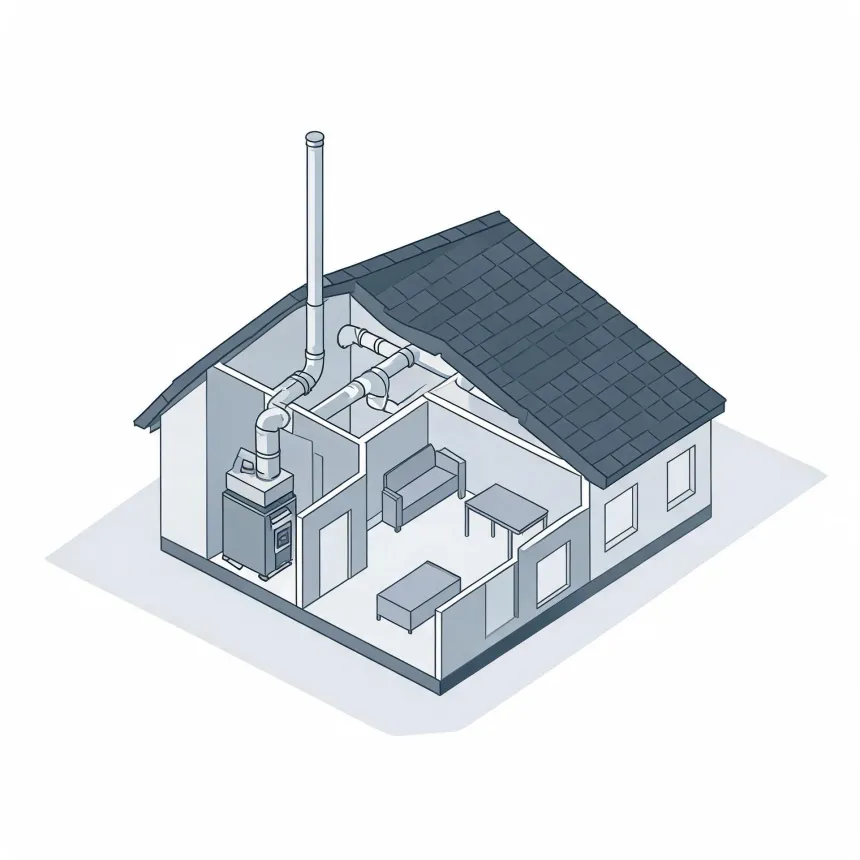
Isometric line illustration of a cutaway single-story house with a shingled roof, showing an interior furnace connected to ductwork and a tall vertical flue pipe, plus simple furniture in the adjacent room.
Your furnace works hardest from November through March.

NOAA nClimDiv, 1991–2020 normals

Furnaces in Jefferson County only run about five months a year.

A furnace that's only worked five months out of twelve is usually still in decent shape underneath, which is why most repairs here are worth making.

The weather here is nothing special. Your furnace's age is the bigger factor

98 severe weather events from 2015 to 2024
24% of homes statewide lost power a day or more in 2024
45 damaging wind events from 2015 to 2024

Get it looked at early

Problems tend to show up in the first weeks of the season, when the load hits a part that was already weak.

Find a contractor
A man in a cap, dark jacket and tan work pants carries a canvas tool bag up white porch steps toward a dark blue paneled front door, with a potted shrub beside the entry.
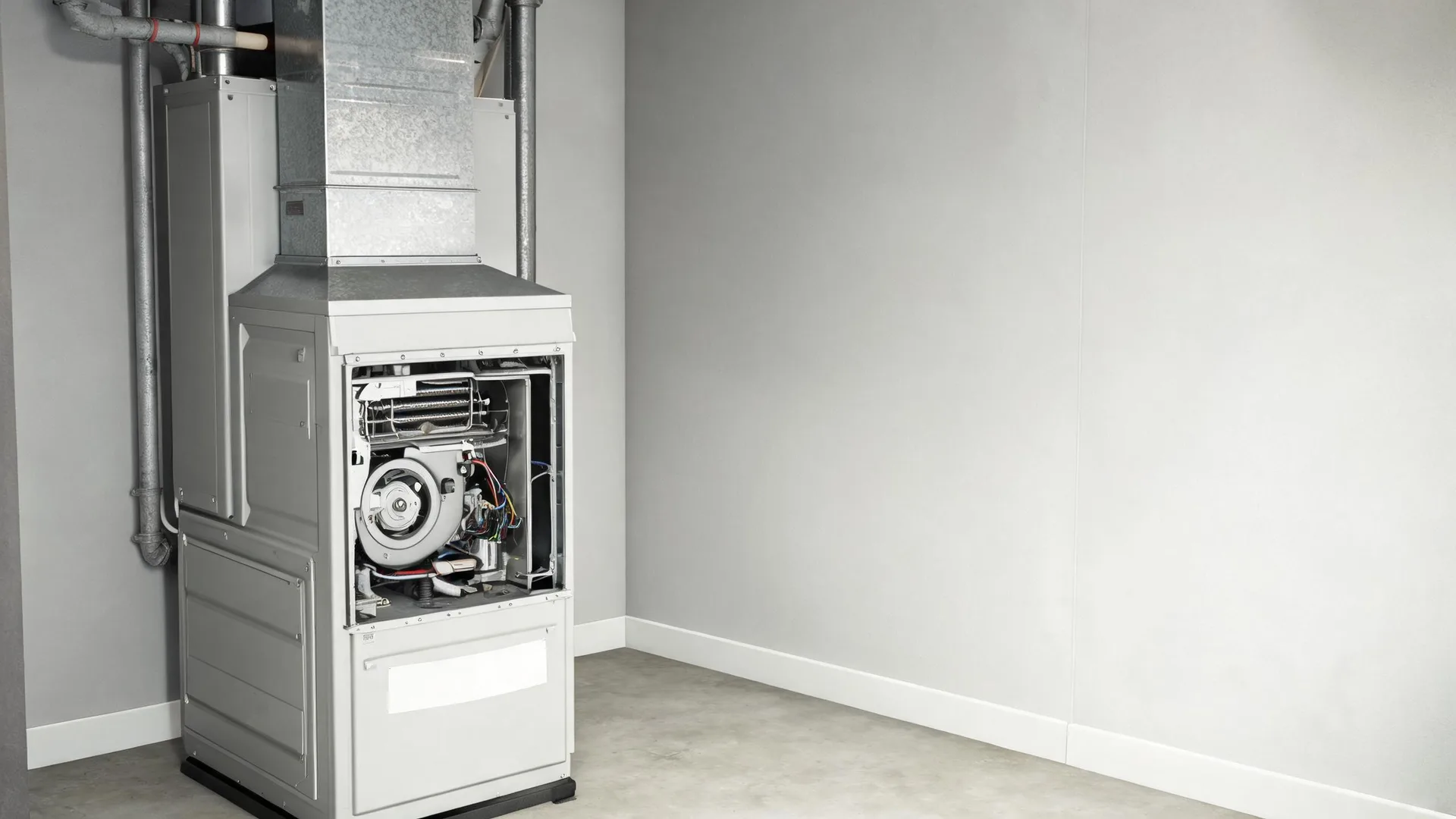
A gray residential gas furnace installed in an unfinished basement, surrounded by ductwork, a metal flue pipe, and a gas supply line.

What to check before you call

Before you pick up the phone, go stand by a vent and see if air is coming out at all. No air usually means the blower motor or a bad switch, not the burners. If air is moving but it's not warm, check the thermostat is actually set to heat and not just fan. Look at the air filter next. A filter packed with dust chokes the airflow, and some furnaces will shut themselves down rather than run with a blocked filter. Check the breaker and any switch that looks like a light switch near the unit, they get bumped or flipped more often than people think. If you smell gas, that's the one thing to stop on and get a contractor out for, not something to keep checking yourself.

Most failures start with the igniter or flame sensor

A hot surface igniter wears out from being heated and cooled over and over, and eventually it just won't glow hot enough to light the gas. A flame sensor gets a layer of residue on it over time and starts telling the control board no flame is there even when one is lit. Both are small parts, both fail from normal use, and both will stop a furnace cold.
That points to how a repair goes

When the problem is a worn igniter or a dirty sensor, a tech is swapping or cleaning one part, not tearing into the furnace. The harder repairs come from the blower motor seizing up or a cracked heat exchanger, and those get found during a proper inspection, not guessed at over the phone. Knowing which kind of problem you have is most of the job before anyone touches a wrench.

Short cycling is one of the clearest signs something's wrong. The furnace fires, runs for a couple minutes, shuts off, then starts again a little later, and it never gets a full stretch of run time in. That's usually a flame sensor losing its signal or a furnace overheating because airflow is restricted somewhere. A burning smell the first time you run the heat for the season is normal, dust burning off the heat exchanger, and it should clear in a few minutes. A burning smell that lingers or comes back every cycle is not normal. Rattling, banging or a screech on startup means a part has worked loose or a motor bearing is going. None of these fix themselves, and most get worse the longer the furnace keeps running that way.

A diagnostic visit starts before any panel comes off. A tech asks what you've noticed, when it happens, whether it's every cycle or just sometimes, because that narrows things down fast. Then it's a look at the whole system running through a full cycle, not just a glance. Pulling the igniter or flame sensor to check it by eye, testing for the actual voltage and amperage a part is getting instead of guessing from how it looks, checking that the flame burns steady and the right color. Airflow gets checked too, since a lot of furnace problems start with air that isn't moving the way it should. The point of the visit is to find the one thing actually causing the problem, not to replace parts until something works.