A white Southern-style house with a wraparound porch photographed at night, surrounded by Spanish moss-draped oak trees lit by landscape lights.

Furnace Repair in Russellville, AR

Tell us about the job

Takes about a minute. No obligation.

RepairFurnace or heatingPope County, AR
Step 1 of 2

What ZIP code is the job in?

Half these homes were built in 1988 or later

Pope County splits down the middle, half the homes built in 1988 or earlier, half in 1988 or later. A furnace that came with one of the newer ones hasn't logged as many years of runtime as one in an older house.

That changes the repair math

A furnace with plenty of years left on it is usually worth fixing when something goes wrong. The newer the house, the better the odds that's the furnace you have.

7 months
October through April, your furnace is on duty
30°F
the average winter night it heats against
3 winter storms
in ten years, the nights a failure hurts most
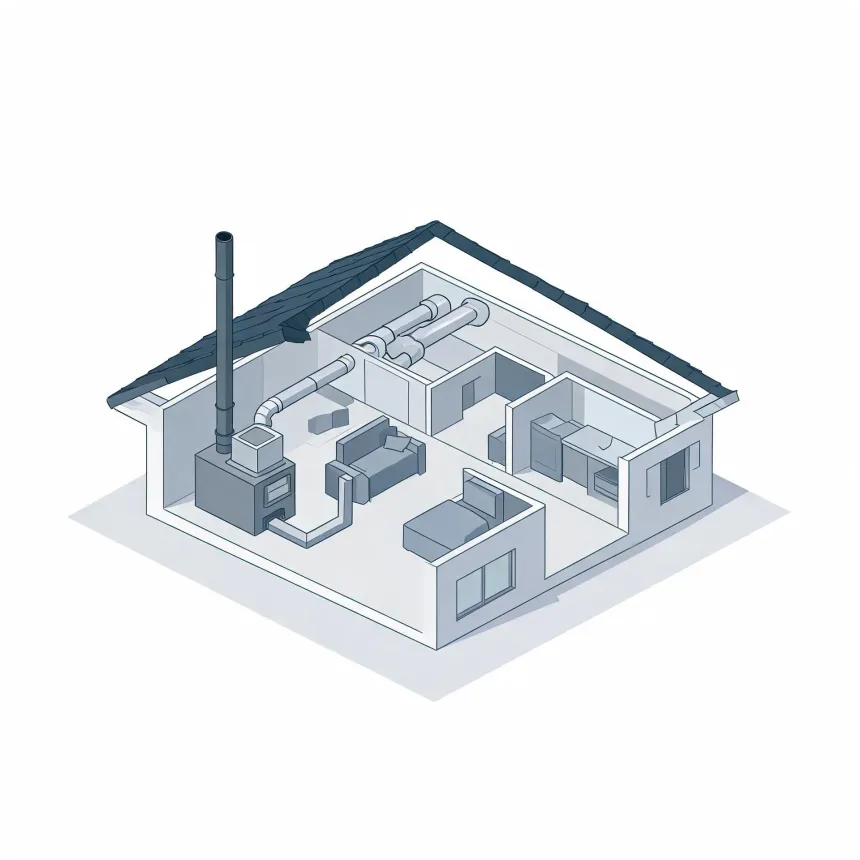
Isometric line illustration of a cutaway single-story house showing interior rooms with furniture, a furnace unit with a tall flue pipe, and connected ductwork running under the pitched roof.
Your furnace works hardest from November through March.

NOAA nClimDiv, 1991–2020 normals

Your furnace only runs about seven months a year here, October through April.

The rest of the year it sits idle, so a furnace that's been looked after usually still has the years left to make a repair worth it.

October is when a weak furnace gets found out

Heat runs October through April
Winter nights average 30°F
Climate zone 3A
Pope County storms don't ask your furnace's permission80 damaging wind events and 35 hail events hit this county in the last ten years

Most furnace problems in Russellville trace back to something ordinary. A dirty flame sensor, a failed igniter, a thermostat that's lost its wiring connection. None of that has anything to do with the climate here. Electricity in Arkansas runs $36.10 per million Btu, and the furnace you have isn't working against anything unusual to heat your house. If a tech tells you a part failed, it failed because parts fail over time, not because Pope County was hard on it. That's usually good news. The fix is the same ordinary fix it would be anywhere, and nothing about this place makes the repair harder or the furnace less worth keeping.

Get a newer furnace looked at, not replaced

If your furnace came with a house built more recently, it hasn't had the years to wear out on its own. A tech can tell you what failed and fix that part. There's no reason to jump to replacing it first.

Find a contractor
A man in a cap, dark shirt and tan work pants walks up porch steps toward a navy blue front door, carrying a canvas tool bag beside a potted shrub.
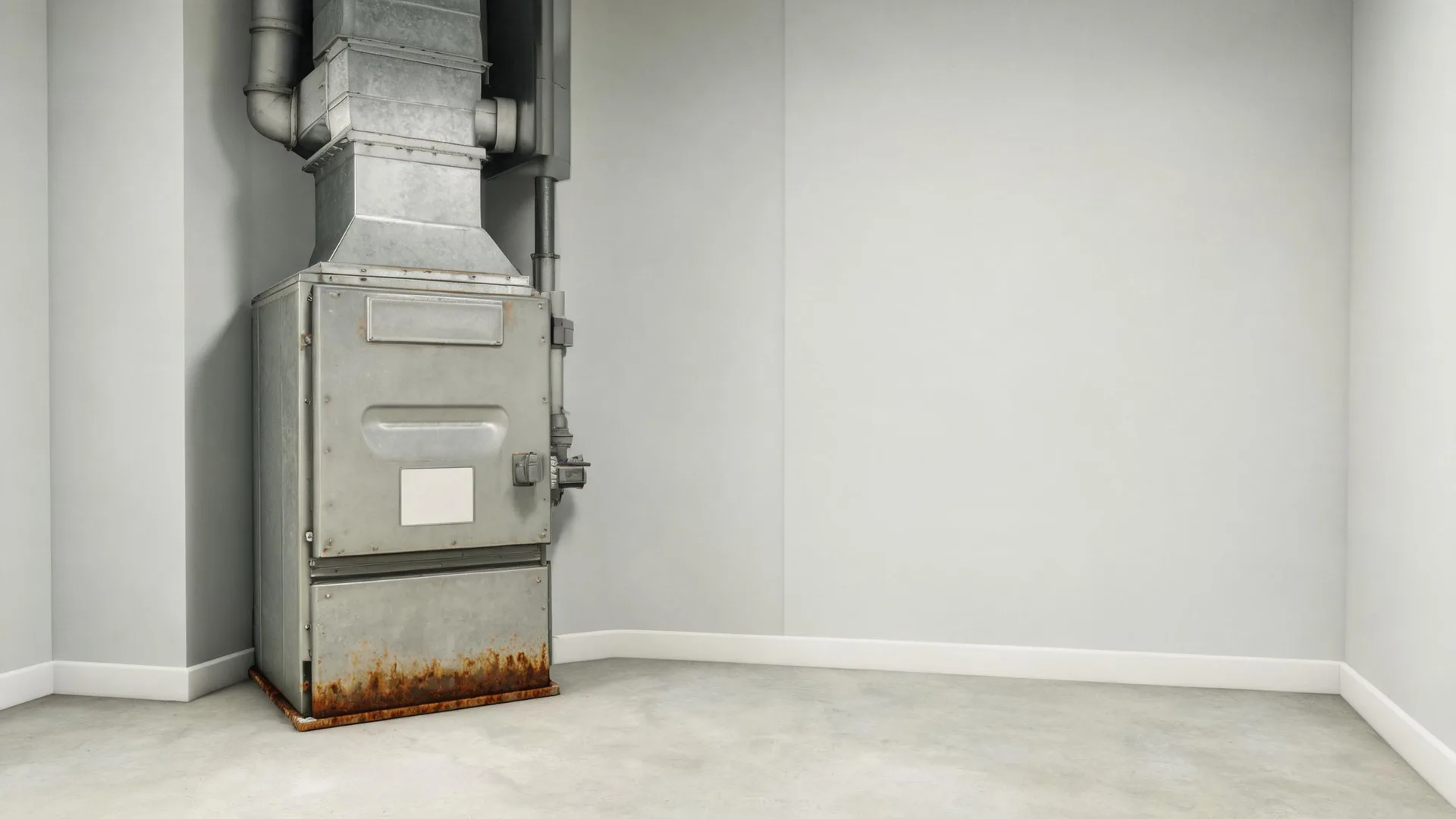
A gray gas furnace with attached ductwork and piping installed in an unfinished concrete basement.

Part of the year, it's not even running

Call it seven months on, the rest off. Each winter adds some hours, but a furnace that gets that kind of break every year isn't logging the hours a furnace up north racks up. When a tech opens yours up after a breakdown, they're usually looking at wear that matches its age, not wear from overwork. That's the case for fixing what failed instead of replacing the unit.

The igniter wears out on a schedule

A hot surface igniter does the same job over and over, heating up every cycle the furnace calls for heat. That wears it down a little each time until it cracks or stops glowing hot enough to light the burners. It's a wear part, not a sign anything else is wrong.

A dirty flame sensor reads as a bigger problem than it is

The flame sensor checks that the burners actually lit, and a thin layer of residue on it can make the furnace think there's no flame when there is. It shuts the gas off to be safe. The furnace runs for a few seconds, cuts out, and tries again, which looks alarming but is usually just a sensor that needs cleaning.

Before you call anyone, check the simple things. Make sure the thermostat is set to heat and the setting is above room temperature, not just on. Check the furnace switch, the one that looks like a light switch near the unit, and make sure it hasn't been bumped off. Look at the air filter. A filter so clogged that air can't pass through it will make a furnace shut down on its own, and that's something you can see just by pulling it out and holding it up to a light. If the furnace has a standing pilot, check whether it's lit. If you've got a code blinking on the control board, write down the pattern, slow flashes and fast flashes both mean something, and a tech will want to know it before they even walk in. None of this fixes an igniter or a cracked heat exchanger, but it rules out the things that aren't actually broken.

A diagnostic call starts with the same questions every time. When did it stop working, and what did it do right before. A tech will run the furnace through a cycle and watch it instead of just reading a manual. A furnace usually tells you what's wrong if you watch the whole sequence. Does it try to ignite. Does it light and then cut out. Does the blower even come on. They'll pull the cover and check the flame sensor and igniter first since those fail the most, then look for a code on the control board if the furnace has one. If the simple parts check out fine, the pressure switch and inducer motor get tested next. A gas furnace also gets checked for a clean burn and proper venting, which is a safety check as much as a repair one. By the time a tech tells you what's wrong, they've usually watched it fail firsthand instead of guessing from what you described on the phone.