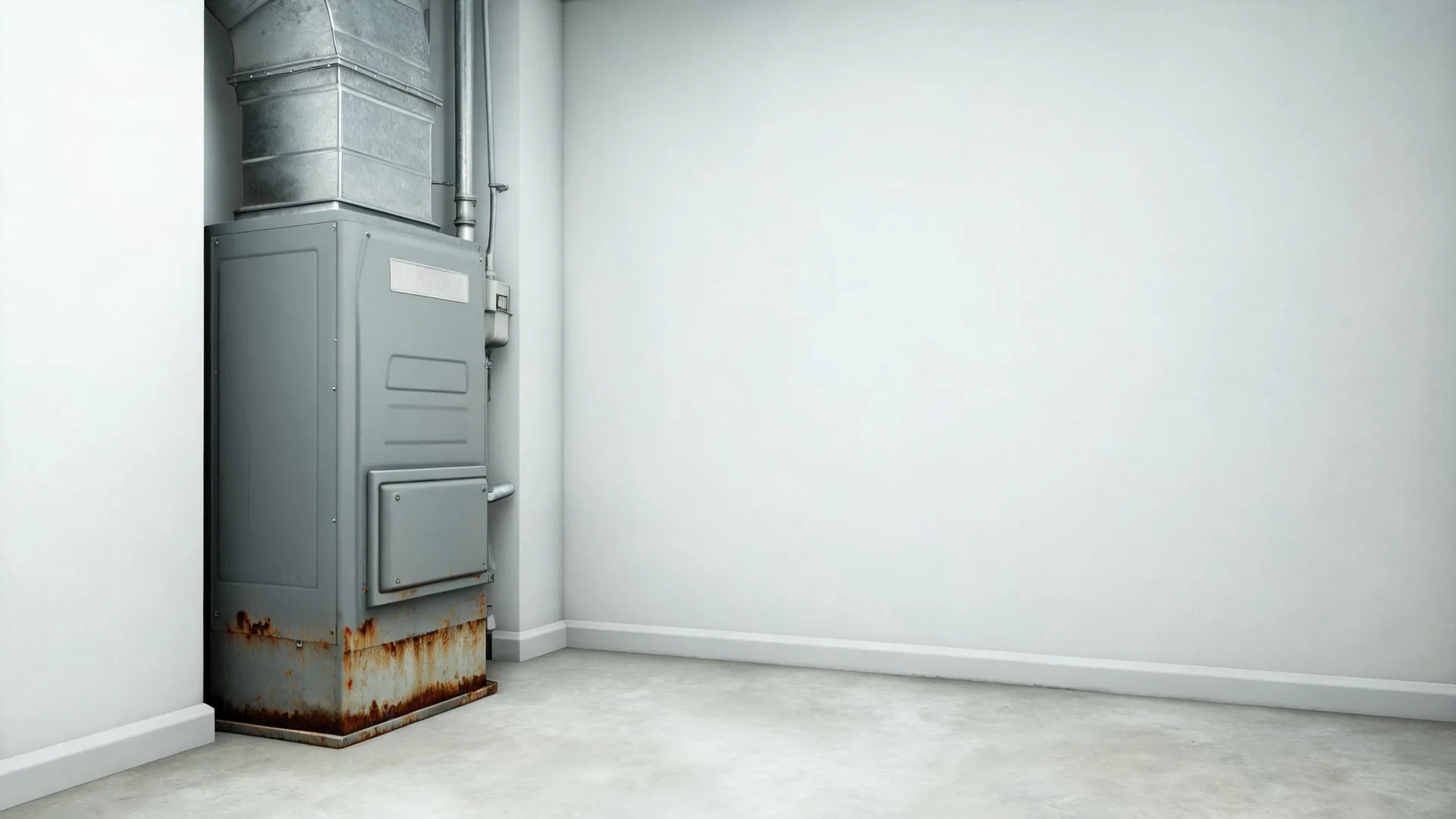
An unfinished basement featuring a forced-air furnace, exposed wooden ceiling joists, bare concrete walls, and miscellaneous items including cardboard boxes and coiled cables on the floor.

Furnace Repair in Texarkana, AR

Tell us about the job

Takes about a minute. No obligation.

RepairFurnace or heatingMiller County, AR
Step 1 of 2

What ZIP code is the job in?

Half these homes were built in 1983 or later

Miller County splits down the middle. Half the homes were built in 1983 or earlier, half in 1983 or later. A house on the newer side of that line was framed and ducted to a different standard than one built decades before it.

That changes the math on a repair

If your furnace came with a newer house, there's a good chance it still has plenty of working life left in it. Fixing what's wrong now is usually the call that makes sense.

5 months
November through March, your furnace is on duty
36°F
the average winter night it heats against
6 winter storms
in ten years, the nights a failure hurts most
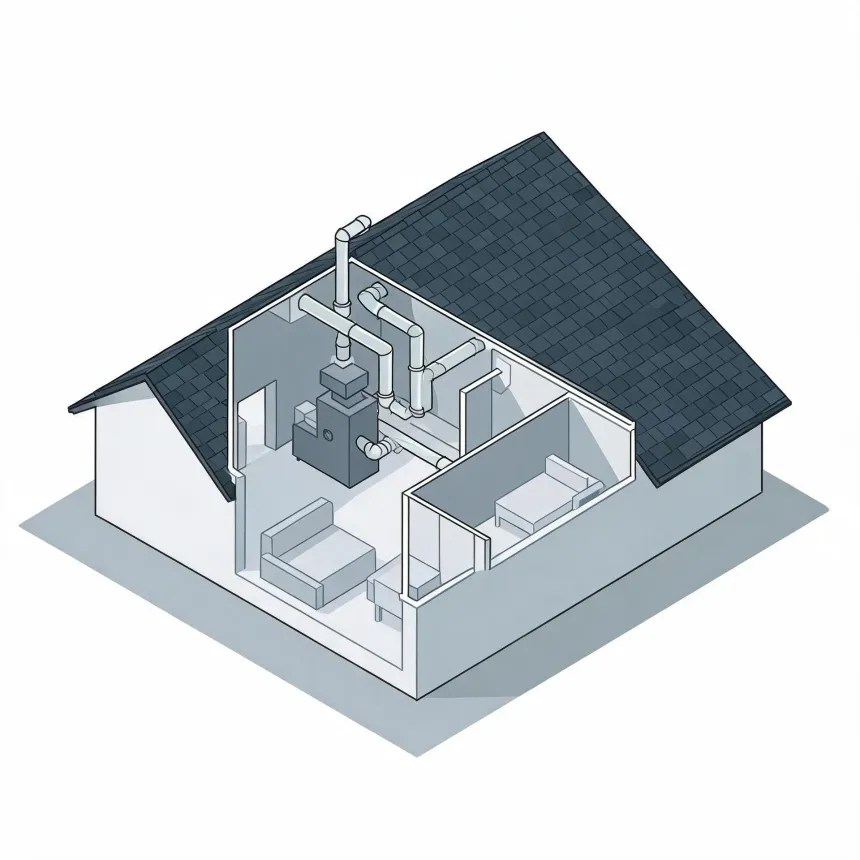
Isometric cutaway illustration of a single-story house with a dark shingled roof, showing interior rooms with furniture and a furnace connected to ductwork.
Your furnace works hardest from November through February.

NOAA nClimDiv, 1991–2020 normals

Furnaces in Miller County only run about five months a year, November through March.

A short work season like that means a furnace acting up now is more likely worn by age than worked to death.

Weather here isn't what wears out a furnace

91 severe weather events from 2015 to 2024
24% of homes statewide lost power a day or more in 2024
57 damaging wind events from 2015 to 2024
Furnace problems show up fastHeat goes on in November. October is the month to get a weak furnace looked at.

Most furnace failures start small and get ignored until the system quits outright. The igniter is usually first. It glows to light the gas and it's built to wear out eventually, so a furnace that won't fire at all often just needs that one part replaced. A cracked heat exchanger is the one that matters most, since it lets exhaust mix into the air the blower pushes through the house, and it means the unit gets replaced, not patched. Flame sensors coat over with a film that builds up with normal use, and once that happens the furnace shuts itself off a few seconds after lighting as a safety check. A clogged filter is the quiet one. It starves the system of airflow, makes it run hotter and longer than it should, and ages every part downstream faster than it would otherwise. Catching that early is the cheapest fix there is.

A five-month season means a furnace that's worn, not worked to death

Get a furnace acting up looked at before you decide it's done. With this short a season behind it, most problems trace back to one part, and most of those are worth fixing.

Find a contractor
A gas furnace with attached ductwork, gas piping, and condensate lines installed in a concrete-block basement.

What to check before you call anyone

Start at the thermostat. Make sure it's set to heat, not just fan, and that the temperature you want is actually above room temperature. Dead batteries in a thermostat can mimic a dead furnace. Check the breaker and the switch near the furnace that looks like a light switch. It gets bumped or shut off more often than people expect. Pull the filter and hold it up to the light. If you can't see through it, that alone can make a furnace shut itself down as a safety measure, and a clean filter slid back in sometimes solves the whole problem. If your furnace runs on a standing pilot, check whether that pilot is lit. Most units have a relight procedure printed right on the panel. Listen to what the furnace does when it tries to start. A unit that hums but never catches is telling you something different than one that stays silent, and that's worth mentioning to whoever comes out.

A furnace that short cycles stresses a blower motor built for fewer starts

When a flame sensor coats over, the furnace fires, shuts off a few seconds later, and tries again. Motors wear on the number of starts, not the hours they run, so a furnace stuck in that loop puts more starts on the blower motor in a day than normal heating calls would all season. Left alone, a problem that started at the flame sensor can end at the blower.

A furnace that won't catch is asking the igniter to work harder each time

A furnace that hums or clicks without lighting is usually calling for another attempt a few minutes later. Each attempt heats the igniter up and lets it cool down again, and that cycle is what shortens its life, not the number of months it sees use. Getting a hard starting furnace looked at sooner spares the igniter a repeat of the same stress.

Pay attention to what the furnace sounds and smells like when it runs. A burning dust smell on the first few starts of the season is normal and clears fast. A smell that lingers, or anything sharp like formaldehyde, is not. Banging or popping from the ductwork usually just means the metal is expanding as it heats, but a sound that's new or getting louder is worth mentioning to a tech. Same with a burner flame. It should be steady and mostly blue. A flame that flickers yellow or orange, or that looks like it's lifting off the burner, means something's off with the mix of air and gas and shouldn't wait. None of these need you to open the cabinet or guess at a diagnosis. You just need to notice when something's different from how it usually runs, and say so when someone comes to look at it.

Age is the thing to weigh against the repair bill, not how bad the current problem feels. A furnace that's given you one failure in its life is a good candidate for a fix, almost regardless of what broke. A furnace that's into its second or third repair in as many years is telling you something different, even if this particular part is cheap. It's not that the next part is guaranteed to fail too. It's that a unit old enough to need this many separate repairs is old enough that the next failure, whatever it is, is coming. A cracked heat exchanger ends the conversation either way, since that's a safety issue and not a wear issue, and no amount of remaining life elsewhere in the unit changes that. Short of that, the honest question is whether you're fixing a furnace or slowly rebuilding one, one part at a time.