Poinsett County sees its share of storms
103 severe weather events hit this county between 2015 and 2024, including damaging wind and hail. Hail dents coils and bends fins on the unit outside, and wind throws branches and debris into it.
Takes about a minute. No obligation.
103 severe weather events hit this county between 2015 and 2024, including damaging wind and hail. Hail dents coils and bends fins on the unit outside, and wind throws branches and debris into it.
A furnace system can still fire up and heat the house after an outdoor unit takes a hit. Bent fins and a dented cabinet strain it in ways you won't notice until it quits on the coldest night.
NOAA nClimDiv, 1991–2020 normals
Furnaces here start working in October, before heat even kicks on in November.
A furnace that sat quiet since April needs a look before the cold hits, not after it quits.



Half the homes in Poinsett County were built in 1978 or earlier, half in 1978 or later. Either way, a furnace repair here is usually the kind every furnace needs eventually. An igniter wears out. A flame sensor gets coated and stops reading the flame. A blower motor loses its bearings. None of that depends on when the house was built. If your furnace came with the house, it's worth knowing roughly how old it is, since parts fail more as a unit ages. But most calls in this county turn out to be the same handful of common repairs, not something tied to the place itself.
If hail or wind has come through since the furnace last ran, a look at the outdoor unit is worth it before the cold sets in. Dents and bent fins don't always show up as a problem right away. They show up later, as strain on a system you're counting on.
Find a contractor
A furnace that gets six months of light work and comes back on at 33 degrees instead of zero has an easier time of it than most. That's a point in favor of fixing what's wrong rather than replacing the whole unit. A worn igniter or a dead flame sensor on a furnace with a light workload behind it is usually a straightforward repair, not a sign the thing is done for.
If the furnace fires up, runs a few minutes, then shuts off before the house warms, something is cutting it short. A cracked heat exchanger, a dirty flame sensor, or a clogged filter restricting airflow can all cause this. It's not something to wait out, since the cause is usually one part failing, not the whole unit.
A bang at startup usually means gas is building up before it lights, then igniting all at once. A screech points to a blower motor losing its bearings. A furnace that's run the same way for years and suddenly sounds different is telling you a specific part is wearing out, not that it's time to replace the system.
A cracked heat exchanger is the clearest case. Keep running a furnace with a crack in it and the metal flexes more with every heat cycle, and the crack grows. A dirty flame sensor works the same way in a smaller sense. It lets the furnace shut off and relight over and over, and each cycle puts more wear on the igniter and the blower. A blower motor running on worn bearings will keep running right up until it seizes, and when it seizes it can take the motor with it instead of just the bearings. The pattern is the same each time. A problem that starts small turns into a part that has to be replaced outright, just because the furnace kept working instead of getting shut off and looked at.
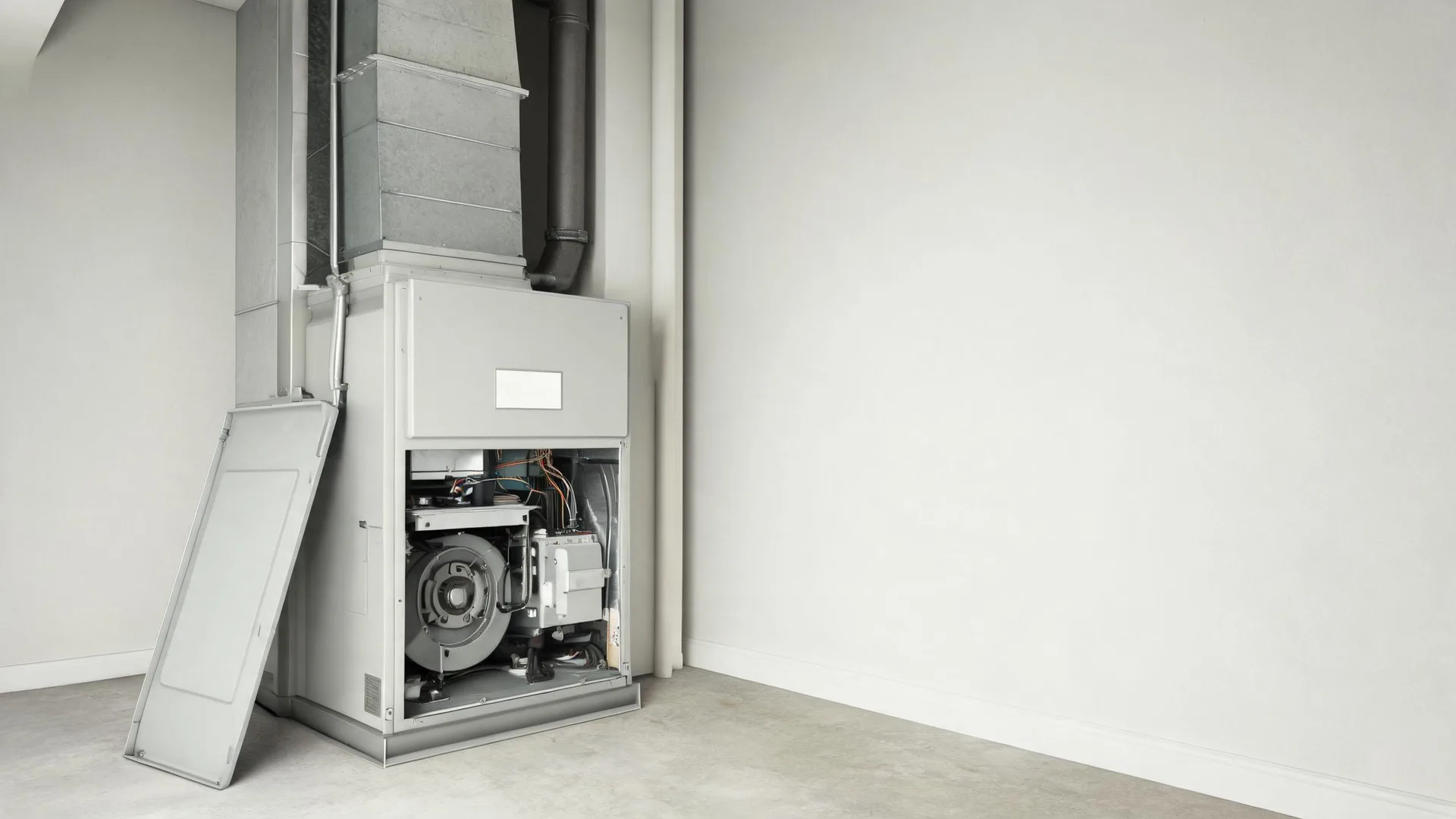
A diagnostic visit starts before any panel comes off. A tech asks what the furnace is doing, when it started, and whether it's constant or only sometimes. Then the cover comes off and the burners get a look while the furnace is running, since the flame tells you things on its own. A steady blue flame means it's burning clean. Yellow or flickering points to a different problem than a bad igniter does. From there it's a process of checking the parts that commonly fail first, the flame sensor, the igniter, the pressure switch, before taking anything apart. Most of what's wrong with a furnace shows up in that first stretch, before a single part gets replaced.