An unfinished basement interior featuring a large metal furnace unit, exposed ceiling joists, concrete walls, and scattered boxes and cables on the floor.

Furnace Repair in Van Buren, AR

Tell us about the job

Takes about a minute. No obligation.

RepairFurnace or heatingCrawford County, AR
Step 1 of 2

What ZIP code is the job in?

Short cycling wears parts out fast

A furnace that fires up, runs a few minutes, then shuts off and starts again is working harder than it should. A cracked heat exchanger, a dirty flame sensor, or a clogged filter can all cause this. Left alone, the extra starts and stops put strain on the igniter and the blower motor until one of them fails outright.

Smell and sound tell you what to check first

A burning dust smell when the furnace first kicks on for the day is normal and clears fast. A smell that lingers, or one that's sharp like metal or gas, is not. Banging or popping from the ducts usually means dirty burners or a airflow problem. Either one is worth a call before the furnace stops running altogether.

7 months
October through April, your furnace is on duty
30°F
the average winter night it heats against
9 winter storms
in ten years, the nights a failure hurts most
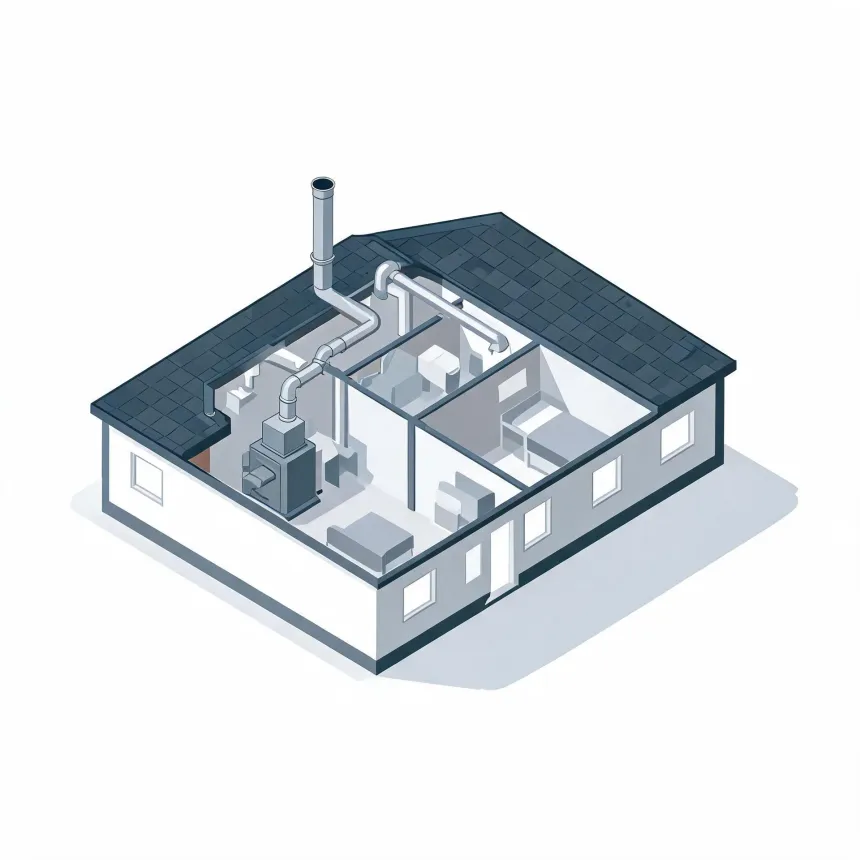
Isometric cutaway illustration of a single-story house with a dark shingled roof, showing interior rooms with furniture and a furnace connected to ductwork and a flue pipe extending above the roof.
Your furnace works hardest from November through March.

NOAA nClimDiv, 1991–2020 normals

Most furnace problems in Van Buren are the same ones a furnace gets anywhere else.

When the power comes back on after an outage, the furnace should start on its own and run like it did before.

October is when a weak furnace shows itself

Heat runs October through April
Winter nights average 30°F
Climate zone 3A
Seven months of work a yearFurnace here runs October through April, with winter lows averaging around 30°F.

Half the homes in Crawford County were built in 1991 or later. If yours is one of them, the furnace probably isn't the original. Furnaces this age are usually worth repairing rather than replacing, since the parts that fail, an igniter, a flame sensor, a control board, are the kind a contractor fixes in one visit. That math changes once a system gets old enough that parts are hard to find, but a newer house usually isn't there yet.

Get the usual fix

Nothing about this area is especially hard on it. It's most likely the usual problem with the usual fix.

Find a contractor
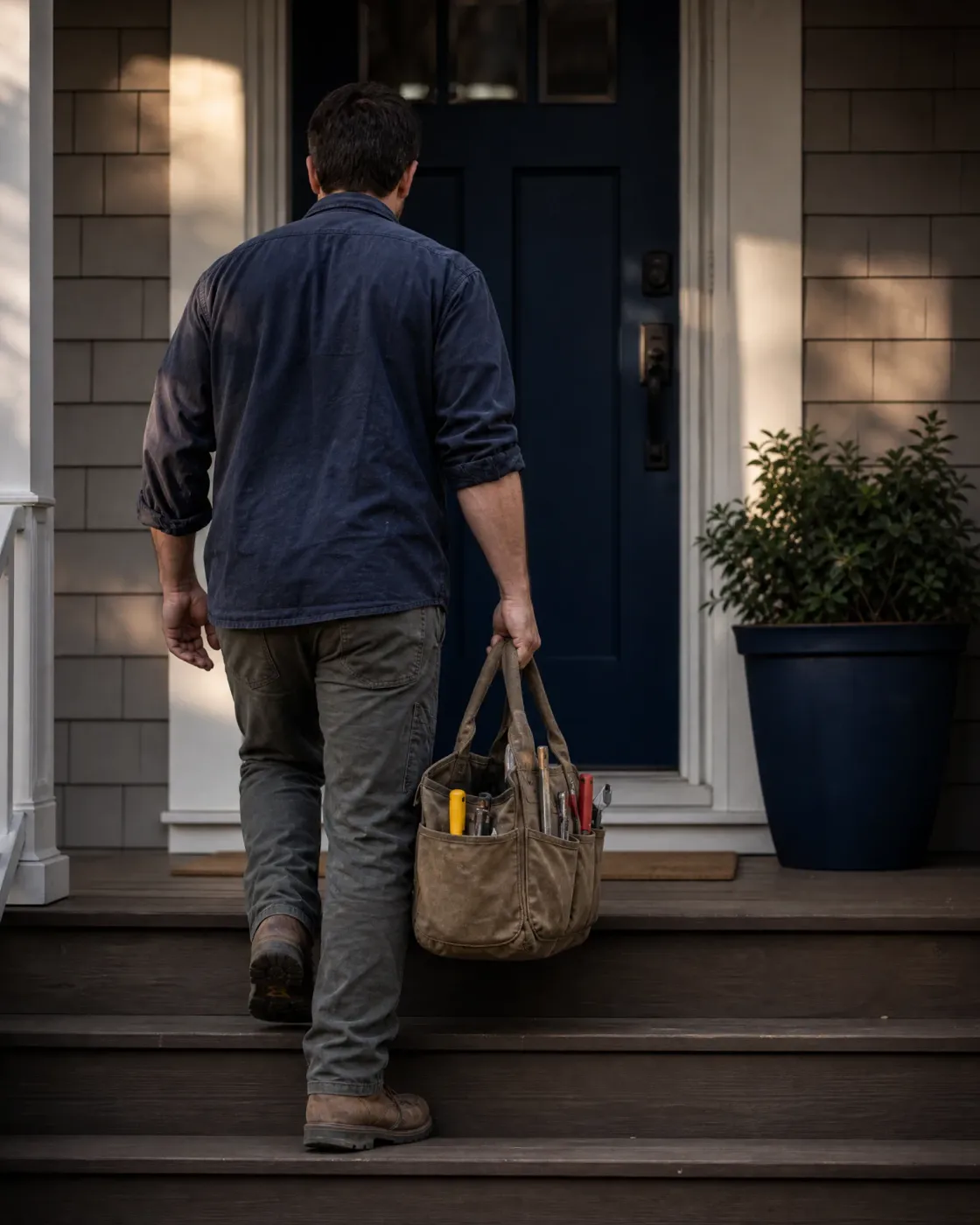
A man in a dark shirt and work boots carries a canvas tool bag filled with tools up wooden porch steps toward a navy blue front door of a shingled house, with a potted shrub to the right.
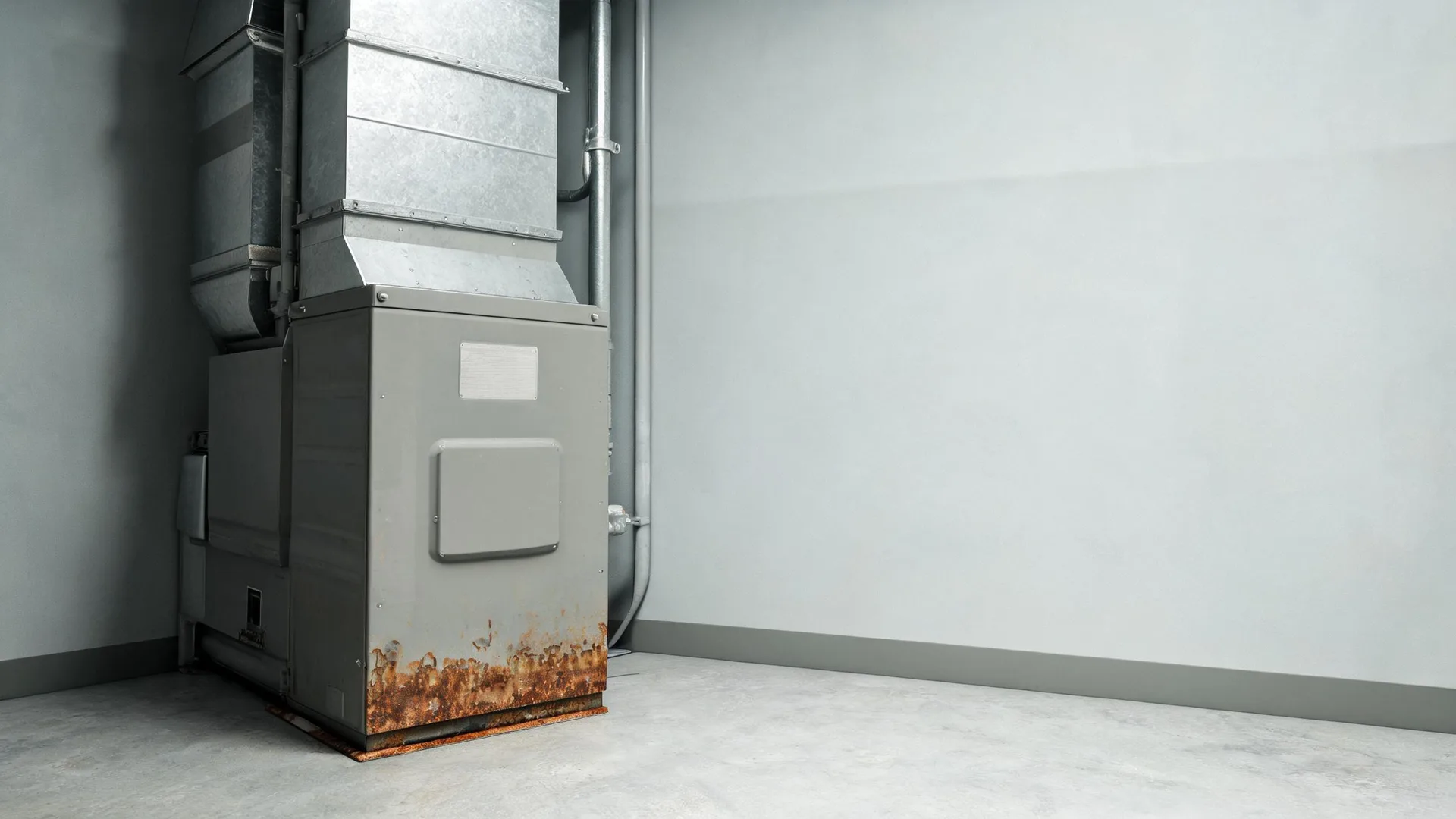
A gray high-efficiency gas furnace installed in an unfinished basement, surrounded by gas lines, a condensate drain, and sheet-metal ductwork.

Get it looked at, not replaced

Get a contractor out to diagnose it before deciding anything bigger. If the house is newer, the furnace has had less time to put hours on its parts, and a repair call is likely to find something straightforward rather than a system on its last leg.

A cracked heat exchanger gets worse with every cycle

Metal expands when it heats and contracts when it cools. A crack that starts small flexes a little wider each time the furnace fires, until it's large enough to let exhaust mix into the air the blower pushes through the house. Shutting it down when the smell or the shutoffs start keeps a repair a repair.

A dirty flame sensor can end in a failed igniter

A flame sensor coated in residue can't tell the control board the burners are lit, so the board shuts the gas off as a safety measure. Each time this happens the igniter cycles through another hot start. Igniters are only built for so many of those before they crack and stop glowing at all.

Before calling anyone, check the thermostat first. Make sure it's set to heat and the set temperature is actually above room temperature, and swap the batteries if it uses them. Next, look at the filter. Hold it up to a light, and if you can't see light through it, replace it. A clogged filter starves the furnace of airflow and can trip a safety switch that shuts the whole thing down. Check that the furnace switch, the one that looks like a light switch near the unit, is flipped on, and that the breaker for it hasn't tripped. If it's gas, make sure the gas valve is open and other gas appliances in the house are working. None of this involves opening the furnace itself. That part is for a contractor.

Most of the time a furnace problem is one part, not the whole system, and replacing one part keeps a repair cheap compared to a new unit. The exceptions are worth knowing. A heat exchanger that's cracked all the way through isn't something a contractor patches, since it's the barrier between the flame and the air moving through your house. A cabinet that's rusted through at the bottom, or a blower wheel caked so heavy it's thrown out of balance, point the same way. Age by itself doesn't decide this. A furnace that's been serviced regularly and gets a single part failure is a different situation than one that's been ignored and is now failing in more than one place at once. If a contractor is naming more than one thing wrong with it in the same visit, that's the conversation worth having.