





Two single-story houses, one brick and one with light siding, both with covered front porches, set behind a mowed lawn and a tall green hedge under large moss-draped oak trees.

Furnace Installation in Benton, AR

Tell us about the job

Takes about a minute. No obligation.

New system or replacementFurnace or heatingSaline County, AR
Step 1 of 2

What ZIP code is the job in?

The furnace itself is only part of the bill. What usually moves the price is the ductwork it has to connect to. If the existing ducts are the right size and in good shape, a new furnace ties into them with no trouble. If they're undersized, leaky, or laid out wrong for the unit going in, that work has to happen first or the new furnace won't heat evenly no matter how good it is. Venting matters too. A high-efficiency furnace vents differently than an older standing-pilot unit, and if the venting has to be run new or rerouted, that's real labor. The size of the furnace matters as well. Bigger isn't better here, the unit has to match the space it's heating, and getting that wrong either wastes money upfront or leaves the furnace short-cycling for years.

5 months
November through March, your furnace is on duty
33°F
the average winter night it heats against
80% AFUE
the federal minimum any new unit must meet
Isometric cutaway illustration of a single-story house showing interior rooms with furniture, a furnace unit with connected ductwork and a tall vertical flue pipe extending above the dark shingled roof.
Your furnace works hardest from November through March.

NOAA nClimDiv, 1991–2020 normals

Electricity in Arkansas ran $36.10 per million Btu in 2024, cheaper than most of the country.

A high-efficiency furnace costs more to install and takes longer to earn that back here, so pick yours for how it holds up through a Benton winter, not for the fuel it saves.

Most of Benton heats with electricity, which is why a straight swap is usually the easiest path

56.6% of homes heat with electricity
Heat runs November through March
Winter nights average 33°F
Get it done before NovemberHomes in Benton run heat November through March. October is the month to have it in.

Five months of heat a year is a light load. Benton furnaces cycle on through nights that average 33°F, then sit idle come spring. That's a different kind of wear than you'd see somewhere colder, where a furnace runs harder for longer and parts age faster. Here, a well-built furnace can go a long time on nothing more than normal upkeep. The bigger risk isn't the day-to-day load, it's what happens when a winter storm knocks the power out, something Saline County has seen more than once in the past decade. A furnace that fits the house and gets serviced on schedule is worth fixing when something goes wrong. You don't need to pay for the highest efficiency tier to get a furnace that holds up here.

Reliability first

Power is cheaper here, so the most efficient model takes longer to pay off. Reliability and fit matter more.

Find a contractor
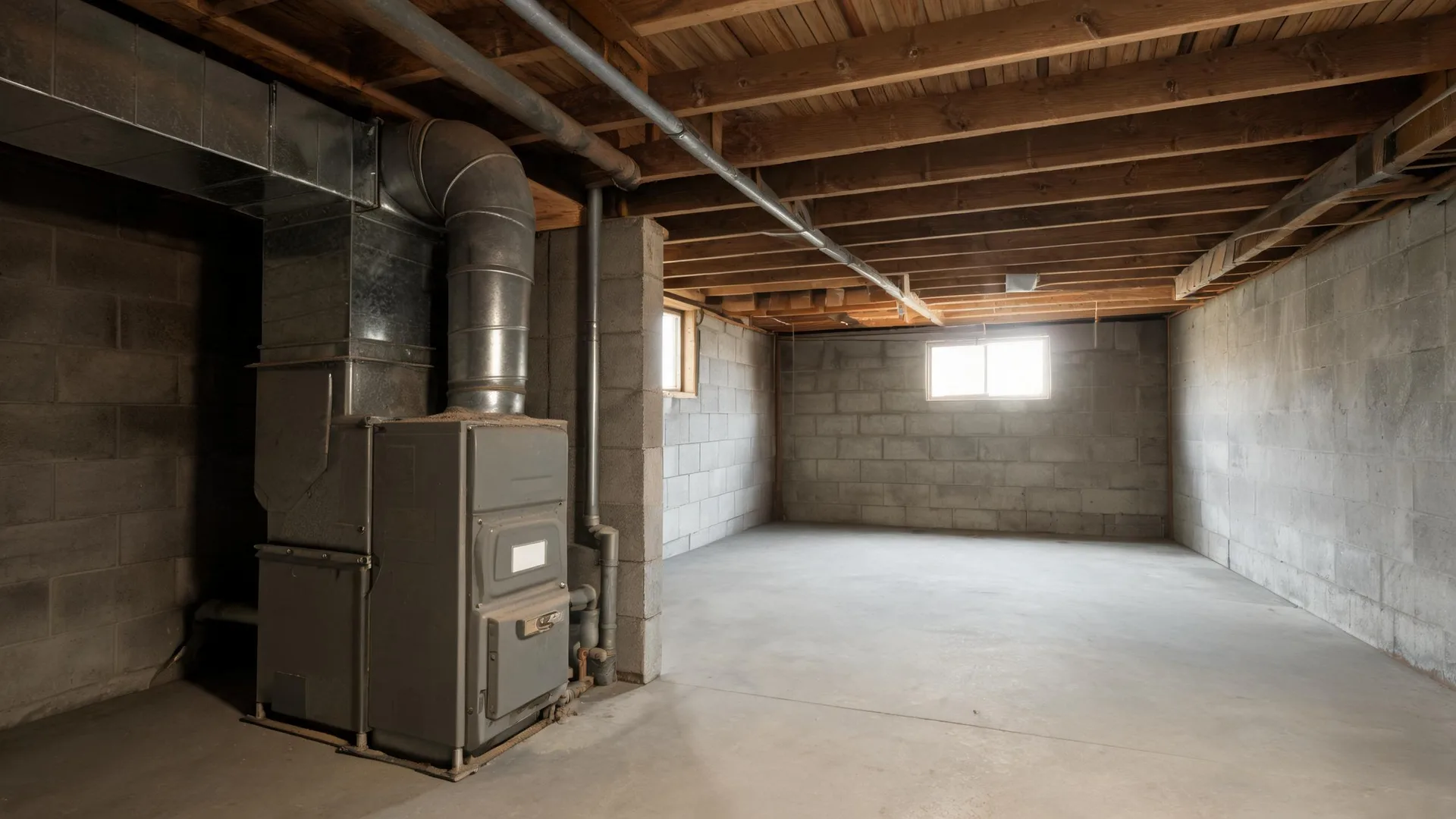
A gray high-efficiency gas furnace installed in an unfinished basement, surrounded by gas lines, a condensate drain, and sheet-metal ductwork.

The rating tells you the fuel bill, not the furnace's future

The rating on the label tells you what share of the fuel burned turns into heat in the house instead of going out the flue. It says nothing about how long the furnace lasts or how well it holds up to a hard winter. A higher rated furnace does the same job with a smaller gas bill, but it gets there with a more complex heat exchanger and a second drain for condensation, more parts that can fail, not fewer. A lower rated furnace is simpler, and simple holds up. Neither number tells you if the furnace was sized right for the house or installed with the ducts sealed and the gas joints checked. That work matters more to how long it lasts than the rating stamped on the side.

Ask what size they're putting in, and why

Any installer bidding the job should walk through a load calculation, room by room, before naming a size. If a quote names a furnace size without having measured the house, that's a guess, not a fit. The right size depends on the home's layout and insulation, not on matching the old unit.
Ask what happens to your ductwork

A new furnace moves a different amount of air than the one it replaces, and the ducts have to be able to handle it. Ask whether the installer checked duct size and condition, or just measured for the furnace itself. Skipping that step is how you end up with rooms that never heat right.

A furnace that's too big for the house heats the room fast, then shuts off before it ever moves the warm air into the rest of the duct run. You get hot and cold spots and a furnace that's cycling on and off all day, which wears the heat exchanger harder than a long, steady run would. Too small, and it never gets ahead of the heat loss on a cold night, so it runs constantly and still leaves the house a few degrees short. The right size comes from a load calculation, a room by room look at square footage, insulation, window area and how much outside wall each room has. There's no shortcut that works as well as actually measuring the house. Matching the new furnace to the old one's size skips that step and just repeats whatever mistake was built in the first time.

Install day starts with the old furnace coming out, and that's when an installer finds anything that didn't show up in the estimate, a cracked plenum, flex duct that was never sealed right, a gas line that needs a new shutoff. The new unit gets set, connected to the ductwork, vented, wired, and the gas line hooked up and pressure tested before anything runs. Once it's in, a good installer fires it up and checks the temperature rise across the heat exchanger, confirms the blower is moving the right amount of air, and checks for gas leaks at every joint they touched. That last check matters more than almost anything else that happens that day. The furnace shouldn't be left running until all of that's been verified, not just switched on and left.