





White two-story houses with wraparound porches and Spanish moss-draped oak trees photographed along a residential street at night.

Furnace Repair in Batesville, AR

Tell us about the job

Takes about a minute. No obligation.

RepairFurnace or heatingIndependence County, AR
Step 1 of 2

What ZIP code is the job in?

Your furnace runs about seven months out of the year here, October through April. Overnight lows average 31 degrees across December, January and February, cold enough to keep a furnace working most nights, but not the kind of deep cold that keeps a system running nonstop for months straight. That lighter schedule means less wear on the parts that tend to fail first, the igniter, the blower motor, the heat exchanger. A furnace that's been kept up usually has some life left in it, which makes a repair worth it more often than not. Age and upkeep matter more here than how hard the system's been pushed.

7 months
October through April, your furnace is on duty
31°F
the average winter night it heats against
11 winter storms
in ten years, the nights a failure hurts most
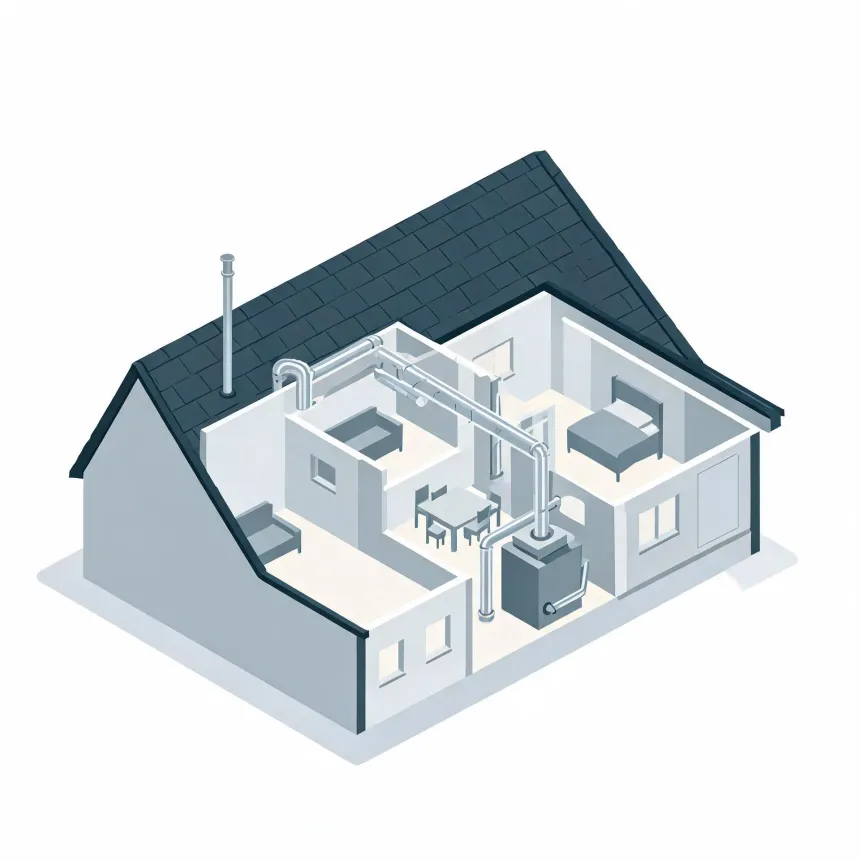
Isometric cutaway illustration of a single-story house with a dark shingled roof, showing interior rooms with furniture and a ducted furnace unit connected to metal ductwork and a roof flue.
Your furnace works hardest from November through March.

NOAA nClimDiv, 1991–2020 normals

Half the homes in Independence County were built in 1988 or later.

A furnace that came with a newer house still has years in it, and that's usually a repair, not a replacement.

October is when a weak part gets found out

Heat runs October through April
Climate zone 3A
Winter nights average 31°F
Nothing unusual here, just a furnace to fixElectricity here runs $36.10 per million Btu, about what most places pay

A tech starts by asking what the furnace is doing, or not doing, before touching anything. Whether it fires and quits, runs but blows cold, or won't start at all points to different parts. That first answer matters. From there it's a sequence of checks. Power to the board, the flame sensor, the igniter, gas pressure, airflow across the heat exchanger. Each test rules something out until one thing is left. Most calls end with a part that's worn or dirty, not a system that's failing. A flame sensor coated in residue can shut a furnace down just as fast as a cracked heat exchanger. The only way to tell them apart is to look.

A newer furnace is worth repairing

If your furnace came with the house, get the actual part fixed rather than planning around a replacement. Get a repair quote first.

Find a contractor
A gray high-efficiency gas furnace installed in an unfinished basement, surrounded by gas lines, a condensate drain, and sheet-metal ductwork.

The same broken part means something different as a furnace ages

Every part in a furnace wears down on its own schedule, and age changes what a breakdown tells you. In a younger furnace, a failed igniter or a loose wire is just that part giving out early. It gets replaced and the furnace goes back to work. In an older furnace, the part that just failed often has other worn parts behind it, close to the same point in their life. A tech checks the part in front of them either way, but how the furnace has run over the years, and what else has needed attention, shapes whether a repair is the end of the problem or just the first part of it to show up.

Most failures are one part, not the system

An igniter wears out and stops glowing hot enough to light the gas. A flame sensor collects a film that keeps it from sensing the flame, so the furnace shuts itself off as a safety measure. A capacitor weakens and the blower motor struggles to start. Each of these is a single part doing its job poorly, and each one is a repair, not a reason to replace the furnace.
The heat exchanger is the one to take seriously

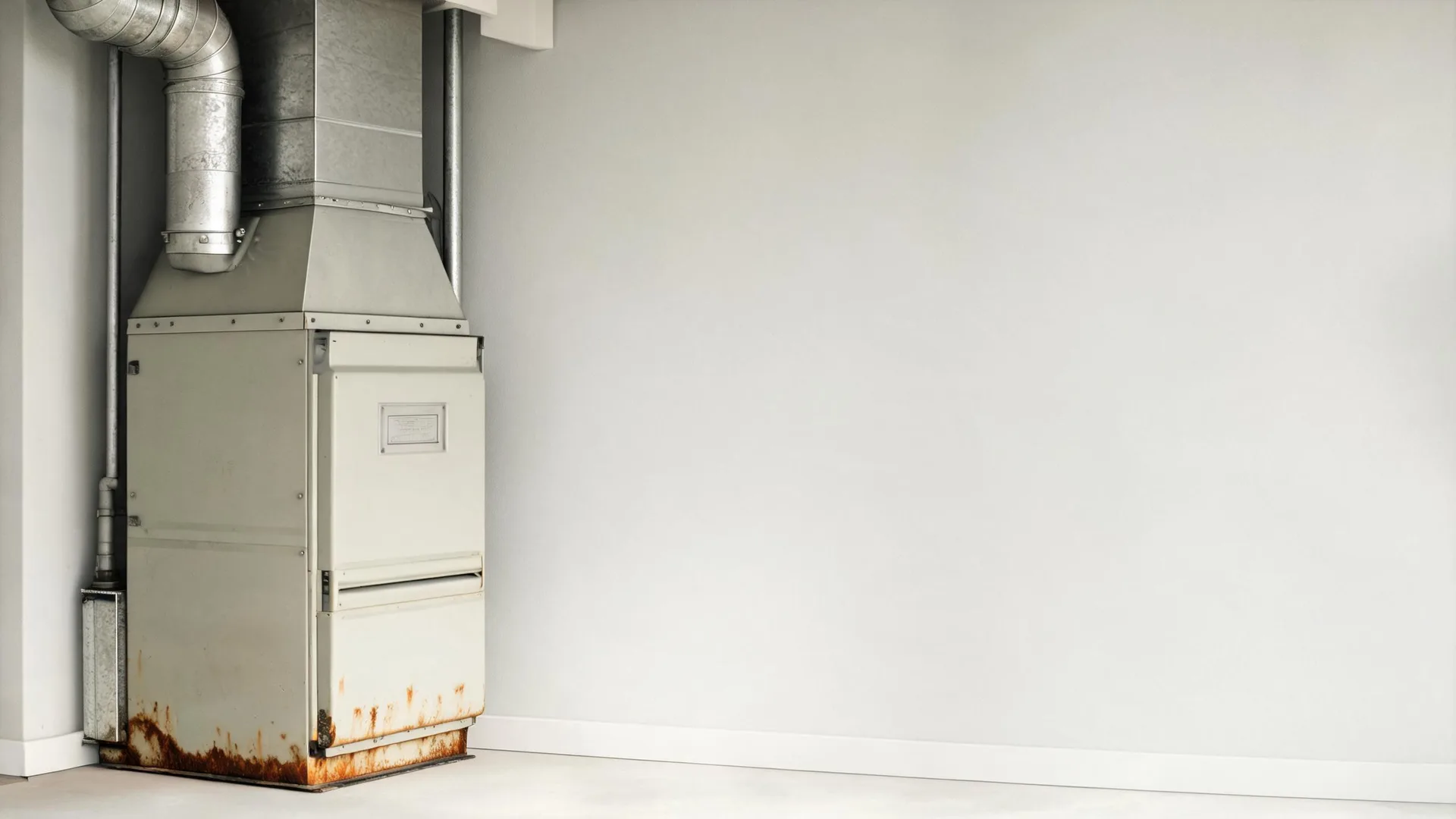
A cracked heat exchanger is the failure that matters most, because it can let combustion gas mix with the air moving through the house. It doesn't happen on its own. It usually follows years of heating and cooling cycles, or a furnace that's been run with poor airflow from a dirty filter or blocked vent. A tech checks for this before ruling anything else out.

A furnace usually tells you something is wrong before it quits for good. It might take a few tries to light, or light and then shut off a minute later. The flame might look yellow or flickering instead of steady blue. You might notice short cycling, where it kicks on, runs a few minutes, and stops, over and over, never quite heating the house. A burning or metallic smell in the first minutes of a cycle is worth paying attention to, especially if it doesn't fade. So is a knocking or screeching sound from the cabinet, which usually points to the blower motor or its bearings. Rooms that used to heat evenly but now run cold in one corner can mean weak airflow or a duct issue rather than the furnace itself. None of these mean the furnace is done. They mean something specific inside it needs attention, and most of them get worse the longer they're ignored.

There are a few things worth checking before you pick up the phone. Start with the thermostat. Make sure it's set to heat, not fan, and that the temperature you want is actually above room temperature. Next, check the filter. A filter clogged with dust chokes off airflow and can cause the furnace to shut down on its own as a safety measure, and swapping it takes a minute. Look at the breaker box too. A furnace that won't start at all sometimes just needs a tripped breaker reset. If you have a standing pilot, check whether it's lit, and if it keeps going out, that's worth telling the tech rather than relighting it over and over. Beyond that, leave it alone. Gas pressure, the heat exchanger and anything inside the cabinet are not places to go poking around.