



A row of single-story houses with porches, one brick and others with pale siding, behind a trimmed hedge and lawn, under oak branches draped with Spanish moss.

Furnace Repair in Camden, AR

Tell us about the job

Takes about a minute. No obligation.

RepairFurnace or heatingOuachita County, AR
Step 1 of 2

What ZIP code is the job in?

Furnaces in Camden work about five months a year, November through March. That's a shorter stretch than a lot of the country asks of them. Overnight lows average 34°F through December, January and February, cold enough to run the system steadily but not the kind of deep cold that pushes a furnace to its limit night after night. A furnace with that kind of workload usually has some life left in it even when something goes wrong. If yours is acting up, the cause is more likely a worn part or a few years of skipped maintenance than a machine that's been run into the ground.

5 months
November through March, your furnace is on duty
34°F
the average winter night it heats against
8 winter storms
in ten years, the nights a failure hurts most
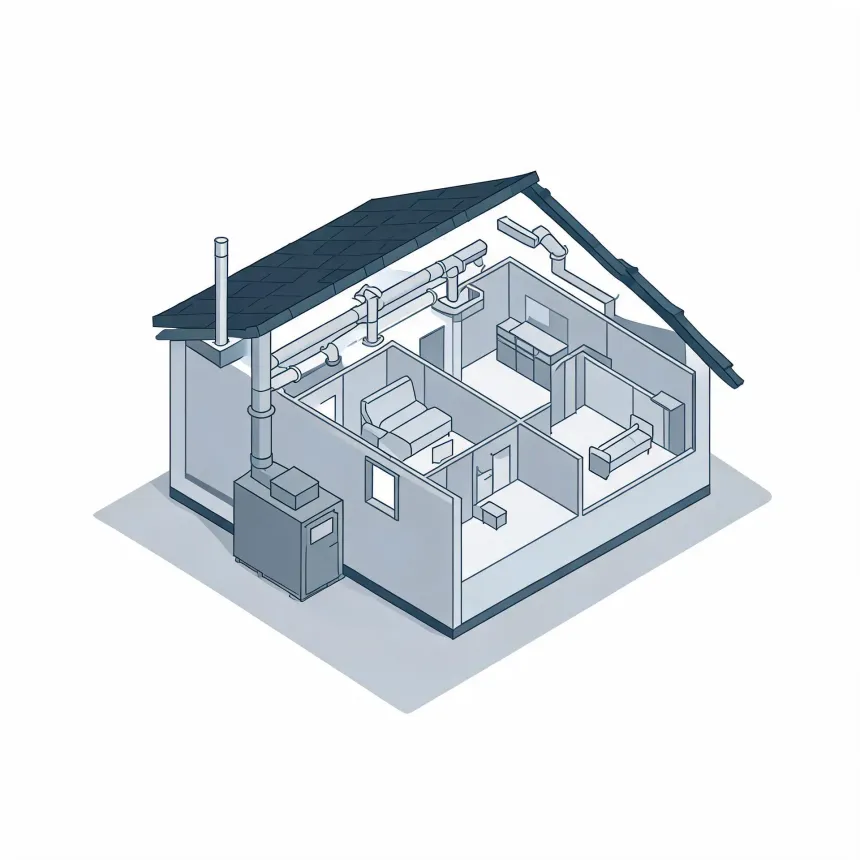
Isometric line illustration of a cutaway single-story house showing interior rooms with furniture, ceiling ductwork, a chimney flue, and a furnace unit outside the exterior wall.
Your furnace works hardest from November through March.

NOAA nClimDiv, 1991–2020 normals

Furnaces in Camden start their first real run in November.

Whatever's wrong with yours now was likely already wearing thin last season, so get it looked at before that first cold week in November finds it.

Camden sees its share of rough weather, but none of it targets your furnace

62 severe weather events from 2015 to 2024
24% of homes statewide lost power a day or more in 2024
30 damaging wind events from 2015 to 2024

Camden is an even split, half the homes built in 1974 or earlier and half in 1974 or later. That split doesn't point to one kind of furnace problem over another. A house from the older half might still have its original system, or it might have been swapped out since. A house from the newer half isn't proof of a newer furnace either. What's behind the closet door matters more than the year the house went up, and that's something only a look at your actual unit will tell you. If your furnace is acting up, the age of the house isn't the lead to follow.

If your furnace is acting up, repair is the first thing worth trying

A furnace that only runs five months a year, through lows in the mid-30s, isn't working under much strain. When one acts up, the fix is usually a worn part or overdue maintenance, not a system past saving. Worth getting a repair quote before you write it off.

Find a contractor
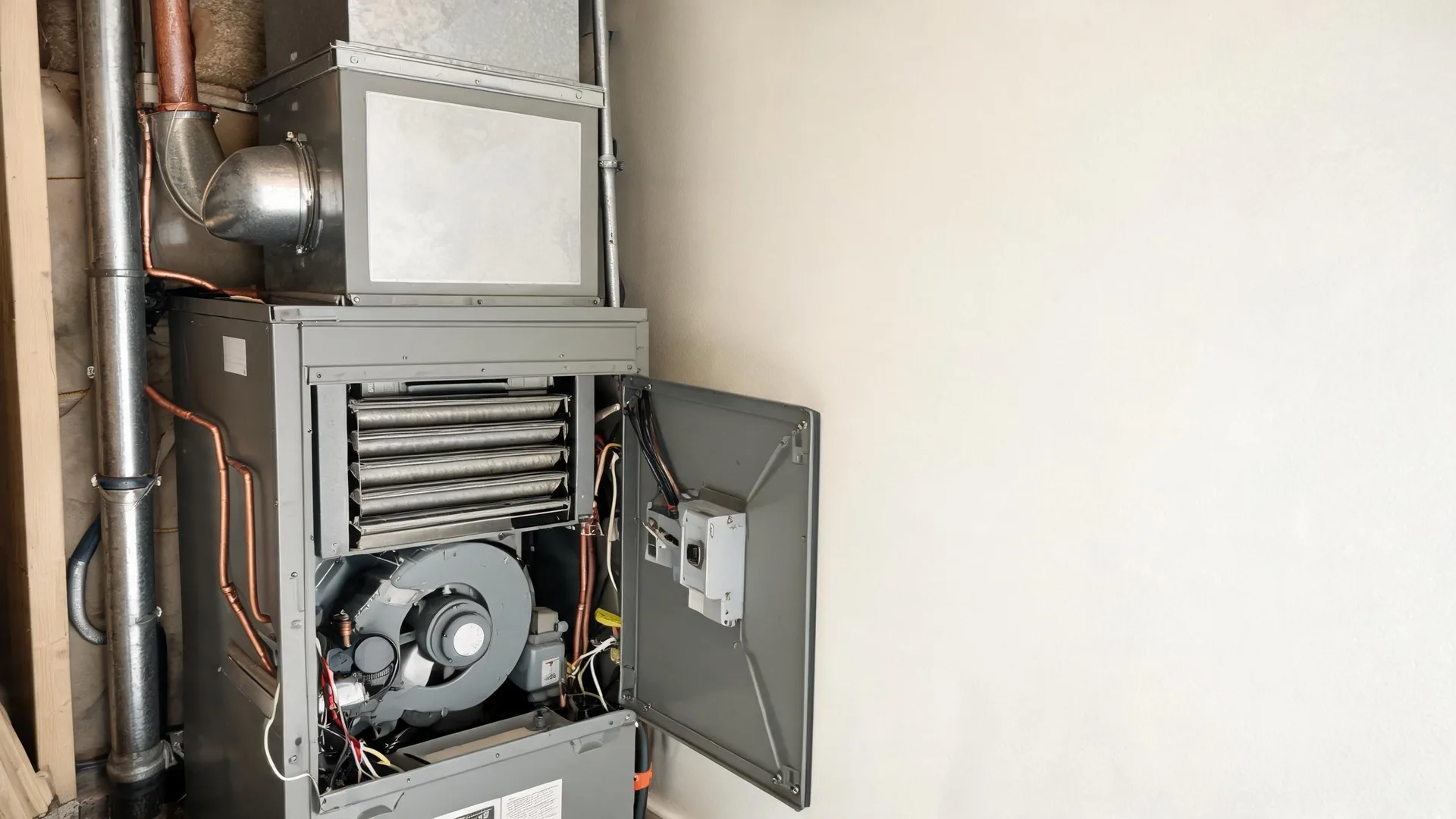
A gray gas furnace with attached ductwork and piping installed in an unfinished concrete basement.

What to check before you call

Before anyone comes out, there are a few things worth checking. Start at the thermostat. Make sure it's set to heat and the set point is above room temperature, and if it runs on batteries, swap them. Next, find the switch near the furnace that looks like a light switch, that's the power cutoff and it's easy to bump without noticing. Check the breaker panel too. Then pull the filter and hold it up to a light. If you can't see light through it, that's enough to choke the system down or trip a safety switch, and swapping it is something you can do yourself. Last, look at the furnace door for a blinking light. A lot of furnaces have one that flashes a code when something's wrong. You don't need to know what the code means, but writing it down and passing it along helps whoever comes out.

A furnace that won't stay lit is telling you something specific

Short cycling, where the burner fires and then shuts off almost right away, usually means a flame sensor coated in residue or a cracked heat exchanger tripping a safety switch. Both are the furnace stopping itself before it can do damage. Neither fixes itself, and letting it keep happening wears down the igniter too.

Noise is the furnace asking for a specific fix, not a general one

A bang at startup usually means gas is building up before it catches, often from a dirty burner. A grinding or squealing points to the blower motor bearings. A rattle that comes and goes could just be a loose panel. Each sound points a technician toward a different part before the cabinet even comes off, which is why describing what you heard helps more than saying something sounds off.

An unfinished basement featuring exposed ceiling joists, a metal HVAC unit with round ductwork, a hanging light bulb, and scattered boxes and debris along the left wall.

A new furnace would cut about $100 a year off heating for a typical Ouachita County home.

  • A new high-efficiency furnace$470 a year
  • An older furnace$570 a year

Estimates for a typical Ouachita County home, compared with an older unit built to the previous federal minimum, from EIA household energy data, Arkansas fuel prices and NOAA climate normals. Your home will differ.

Repair makes sense when one part has failed and the heat exchanger is sound.

Replacement makes sense when the heat exchanger is cracked or the furnace keeps needing parts.

When a furnace breaks down, the question is whether the broken part is isolated or whether it's a sign the whole system is wearing out together. A failed igniter or a bad flame sensor is usually just that part giving out. It gets replaced, the furnace runs fine again, and nothing about the rest of the system changes. A cracked heat exchanger is a different kind of problem, because that's the part that shouldn't fail, and when it does, it's often a sign the furnace has been working hard for a long time. The other thing worth asking is how often this furnace has needed a repair call. One breakdown doesn't mean much on its own. A furnace that's had several different parts fail over a couple of years is usually telling you the whole unit is aging out, even if each individual fix was small and cheap. Repair makes sense when the rest of the system around the broken part is still sound. Replacement starts to make more sense when you're paying to fix one thing only to have another give out a season later.