






An unfinished basement featuring a grey forced-air furnace with metal ductwork, concrete block walls, exposed wooden joists, and a single hanging bare bulb.

Furnace Repair in Cherokee Village, AR

Tell us about the job

Takes about a minute. No obligation.

RepairFurnace or heatingSharp County, AR
Step 1 of 2

What ZIP code is the job in?

September is worth a look before heat season starts here. Furnaces in Sharp County run from October through April, about seven months straight once they get going. A furnace that sat idle since spring often has a weak igniter, a dirty flame sensor, or a clogged filter that nobody noticed, and the first cold snap in October is what finds it. Catching that in September means a technician can fix it on their schedule instead of yours, before you actually need the heat.

7 months
October through April, your furnace is on duty
29°F
the average winter night it heats against
8 winter storms
in ten years, the nights a failure hurts most
Isometric line illustration of a cutaway building interior showing a furnace unit with a flue pipe and ductwork running along the ceiling, plus adjacent rooms with simplified furniture.
Your furnace works hardest from November through March.

NOAA nClimDiv, 1991–2020 normals

Winter nights in Sharp County average 29 degrees.

A furnace that struggles on a cold night needs a technician who can find the real cause, not just a quick fix.

A furnace that runs October through April gets the usual problems, not unusual ones

Heat runs October through April
Winter nights average 29°F
Climate zone 3A

Half the homes in Sharp County were built in 1978 or earlier, half in 1978 or later. A furnace doesn't know or care which side of that line yours falls on. The usual causes still apply whether the house is old or new. A cracked heat exchanger shows up more in an older unit that has run a lot of winters. A bad flame sensor or igniter shows up in newer units too. Mobile homes make up a share of the housing here, and a furnace in a mobile home often sits in a different setup than one in a house with a basement or crawl space. If yours is in a mobile home, mention that upfront. It tells the technician what kind of unit and parts to expect before they start.

Your furnace likely has a normal problem with a normal fix

Sharp County gets storms, wind, the odd ice event. None of that wears out a furnace any faster than normal. When one acts up, it's almost always the same handful of parts. The igniter, the flame sensor, the filter. Getting a technician to find which one it is means heat back on sooner.

Find a contractor
A man in a dark cap, navy T-shirt and tan work pants, seen from behind, carries a canvas tool bag up porch steps toward a dark blue front door, with a potted shrub in a blue planter to the right.
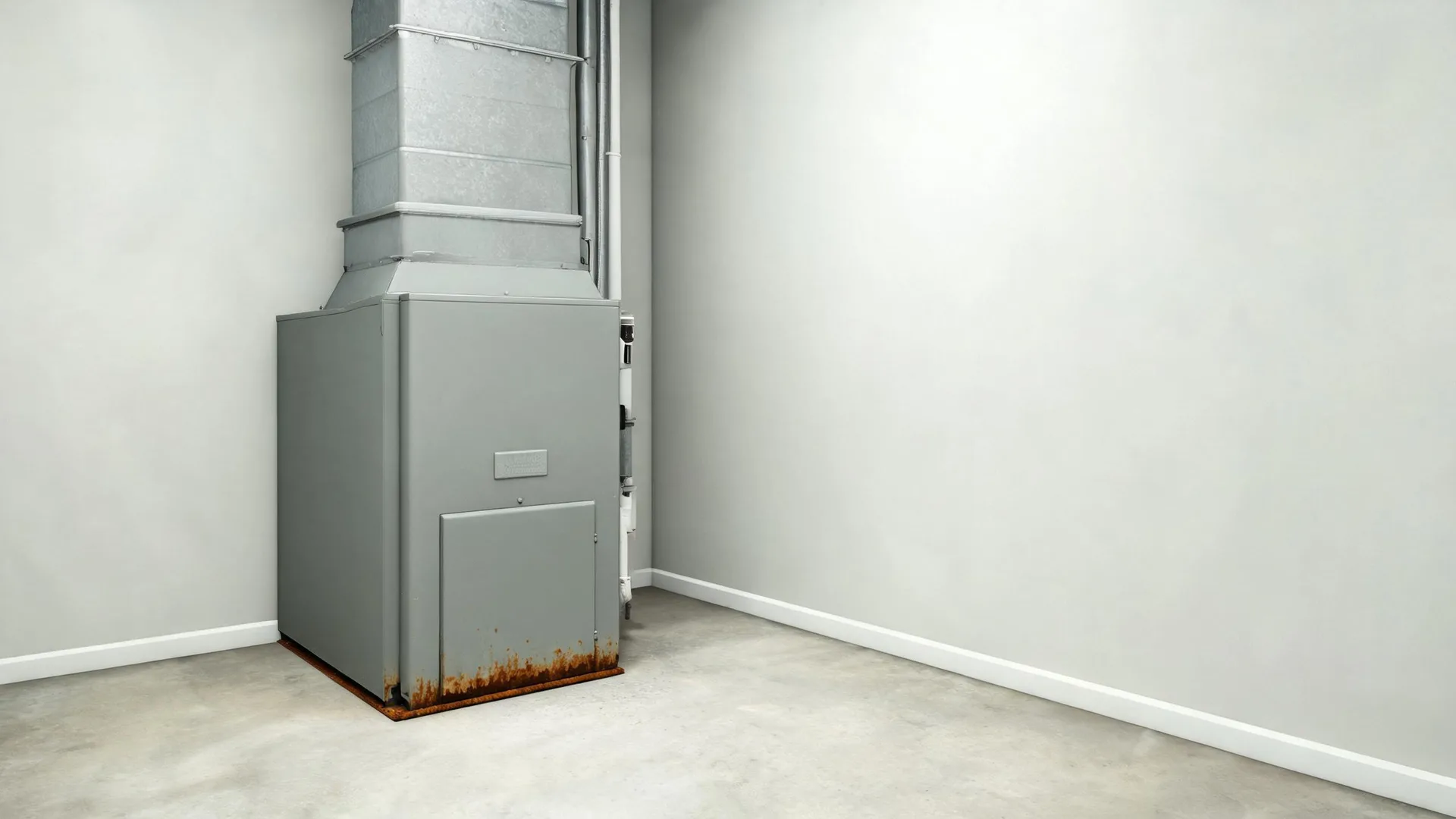
A gray gas furnace with attached ductwork and piping installed in an unfinished concrete basement.

Your furnace tells you before it quits

A furnace that runs every winter night for months doesn't fail out of nowhere. It gives notice first. It might take a few tries to light before it catches. The blower might run longer than it used to before warm air shows up. There might be a clicking at the start of a cycle that didn't used to be there, the igniter trying and failing to catch the gas. Short cycling, where it fires up and shuts off again before the room ever warms, is another one. None of these mean the furnace is done. They mean a part is wearing out while the rest of the system still runs fine around it. The longer it runs that way, the more it leans on the parts picking up the slack, the blower motor especially. Catching the sign early usually means swapping one part. Waiting usually means more than one.

A cracked heat exchanger gets worse with every cycle

Heat makes metal expand, and cooling makes it contract back. A hairline crack in the heat exchanger opens a little more each time the furnace fires and shuts off. Left alone, it goes from a small crack to a gap big enough to push exhaust into the air moving through the house.
A clogged filter overworks the blower motor

A dirty filter makes the blower pull harder to move the same amount of air. That motor isn't built to strain against resistance all winter. Keep running it that way and the motor bearings wear faster, and a filter swap turns into a blower motor replacement.

Most furnace failures trace back to a short list of parts, and it's rarely the furnace itself giving out. The igniter is the most common. It's a small component that heats up to light the gas, and it weakens with every cycle until it stops catching reliably. The flame sensor is close behind. It tells the control board a flame is actually burning, and once it's coated with a thin film, it reads no flame even when there is one, so the system shuts itself down as a safety measure. Inducer motors and blower motors fail too, usually from age or from straining against a dirty filter for too long. A cracked heat exchanger is the one that matters most, since it's a safety issue and not just a comfort one. None of these are tied to how a house is built or how old it is. They're the same handful of parts wearing out the way they always do.

A diagnostic visit starts with the complaint, not the furnace. A technician wants to know what it's doing, or not doing, before touching anything, because a clicking sound and a short cycle point in different directions. From there it's a check of the easy things first. The filter, the thermostat settings, the power switch. Then the technician pulls the panel and watches a cycle happen, since an igniter that's failing often shows it right there, glowing weak or taking an extra try to catch. A flame sensor gets tested or just cleaned and tried again, since that's a quick way to rule it out. Pressure switches, the inducer motor, the wiring at the control board, all get checked in turn until something explains the symptom. The goal is to find the one part actually causing the problem, not to replace things until it happens to work.