




White plantation-style houses with wraparound porches lit at night, surrounded by Spanish moss-draped live oak trees.

Furnace Repair in Conway, AR

Tell us about the job

Takes about a minute. No obligation.

RepairFurnace or heatingFaulkner County, AR
Step 1 of 2

What ZIP code is the job in?

Check the thermostat first. Make sure it's set to heat, not just on, and that the temperature is set above room temperature. If it runs on batteries, swap them before you assume the furnace itself is the problem. Next, go to the breaker box and look for a tripped switch. Then check the air filter. A filter clogged with dust can choke off airflow and cause the furnace to shut down on its own as a safety measure. If your furnace has a standing pilot light, see if it's lit, and follow the relight instructions printed near the gas valve if it's gone out. If none of that explains what's happening, the problem is likely inside the unit, and that's when it's time to get a technician out to look at it.

6 months
November through April, your furnace is on duty
32°F
the average winter night it heats against
13 winter storms
in ten years, the nights a failure hurts most
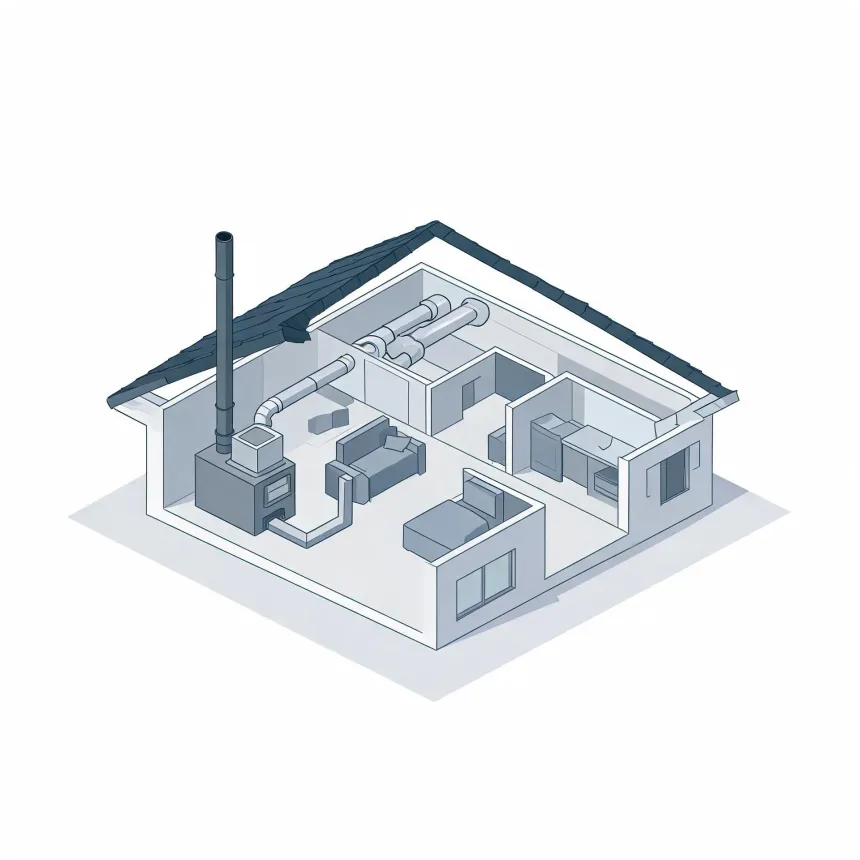
Isometric line illustration of a cutaway single-story house showing interior rooms with furniture, a furnace unit with a tall flue pipe, and connected ductwork running under the pitched roof.
Your furnace works hardest from November through March.

NOAA nClimDiv, 1991–2020 normals

Furnaces in Conway sit idle from April to October, then start up again in November.

The first cold weeks of November put weight on parts that have been off for six months.

Half the furnaces here are younger than that, and repair makes sense for most of them

Half the homes here were built by 1998
Heat runs November through April
Winter nights average 32°F

Your furnace only has to work about six months a year here, November through April. The rest of the time it sits. Overnight lows average 32°F through December, January and February, which is cold enough to run a furnace hard but not the kind of deep, sustained cold that wears one out fast. That's a lighter load than a lot of the country puts on a furnace. Less strain over the years means a repair is more often the right call than a replacement, especially if the problem turns out to be one part rather than a system that's been run into the ground.

Get it looked at early

Problems tend to show up in the first weeks of the season, when the load hits a part that was already weak.

Find a contractor
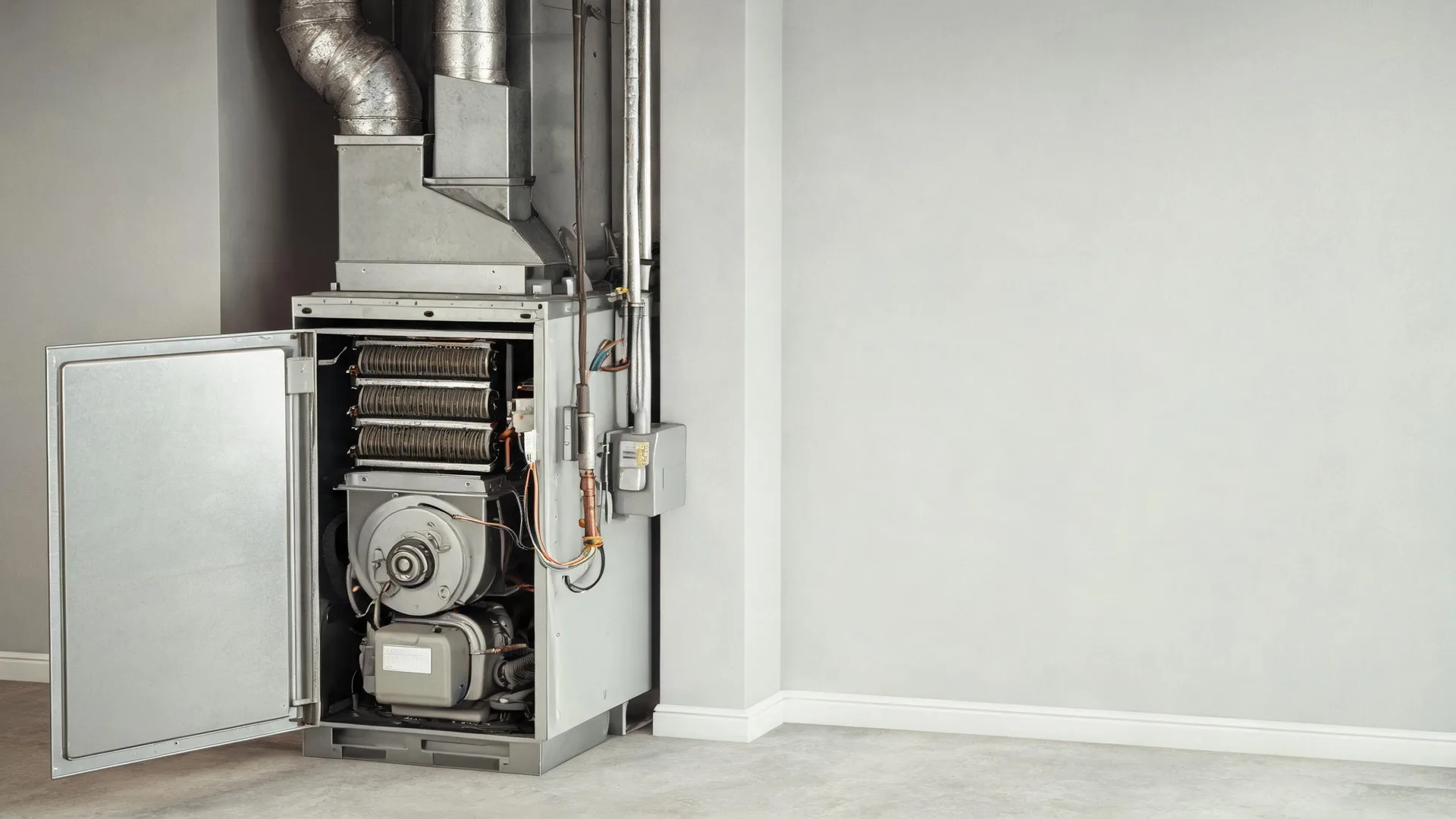
A gray high-efficiency gas furnace installed in an unfinished basement, surrounded by gas lines, a condensate drain, and sheet-metal ductwork.

Light use like this is a reason to repair, not replace

A furnace that only runs six months a year and never faces deep cold has fewer reasons to fail outright. When one acts up, the cause is usually a single worn part, not a system worn down all over. That's worth knowing before anyone talks replacement.

A small problem can turn into a shutdown

A furnace that's short-cycling or struggling to light isn't resting between attempts, it's stressing the same parts over and over. A cracked heat exchanger gets worse under heat and flexing. A failing igniter weakens with every attempted light-off until it stops working at all. What starts as an intermittent issue often ends as a total no-heat call, just on a longer timeline.
Running it while it's failing can spread the damage

A dirty flame sensor makes the burners shut off early, and a furnace that keeps relighting against that fault puts extra wear on the ignition system with every cycle. A blower motor straining under a clogged filter can overheat and fail completely, instead of just running weak. The part that's actually broken is rarely the only one that pays for it if the furnace keeps being asked to run.

Most furnace problems announce themselves before the furnace quits outright. Short cycling is one of the clearest. It fires up, runs for a short stretch, then shuts off before the house warms, and it keeps doing that over and over. Weak heat is another sign, air coming out of the vents that never feels as hot as it used to. Listen for sounds that weren't there before too. A bang at startup usually means gas is building up before it lights instead of catching right away. A screech or grinding points to the blower motor or its bearings. A burning smell the first time it runs after sitting all summer is normal and should clear up fast. If it lingers or comes back, that's a different problem. Watch the flame itself if you can see it. It should burn steady and blue. Yellow or flickering means it's not burning clean.

A diagnostic visit starts before any panel comes off. A tech will ask when the trouble started and what it looked like. Short cycling, weak heat and a dead blower all point in different directions. Then comes a visual check inside the cabinet, looking over the wiring, the burners, the heat exchanger, any sign of soot or corrosion. Next is usually a look at the ignition sequence from a safe distance, watching how the igniter glows or the pilot catches, and whether the flame holds steady or drops out. A multimeter comes out to test parts that can't be judged by eye, like a flame sensor or a limit switch. Those either read within range or they don't. Airflow gets checked too, because a furnace can test fine on ignition and still shut itself down if the filter or ductwork is choking it. By the end, the goal is one clear answer, which part failed and why.