





A illuminated white antebellum-style house with a wraparound porch, white columns, and Spanish-moss-draped oak trees, photographed at dusk.

Furnace Repair in Dardanelle, AR

Tell us about the job

Takes about a minute. No obligation.

RepairFurnace or heatingYell County, AR
Step 1 of 2

What ZIP code is the job in?

Half the homes in Yell County were built in 1984 or later. If yours is one of them, your furnace is likely newer too, and a repair call makes sense before you think about replacing anything. Furnaces built in the last few decades are built to last two decades or more with the right care. A cracked heat exchanger or a worn-out blower motor is rare on a unit that age. Most of what goes wrong is smaller, like an igniter, a flame sensor or a pressure switch. Worth fixing, not worth replacing over.

6 months
November through April, your furnace is on duty
32°F
the average winter night it heats against
3 winter storms
in ten years, the nights a failure hurts most
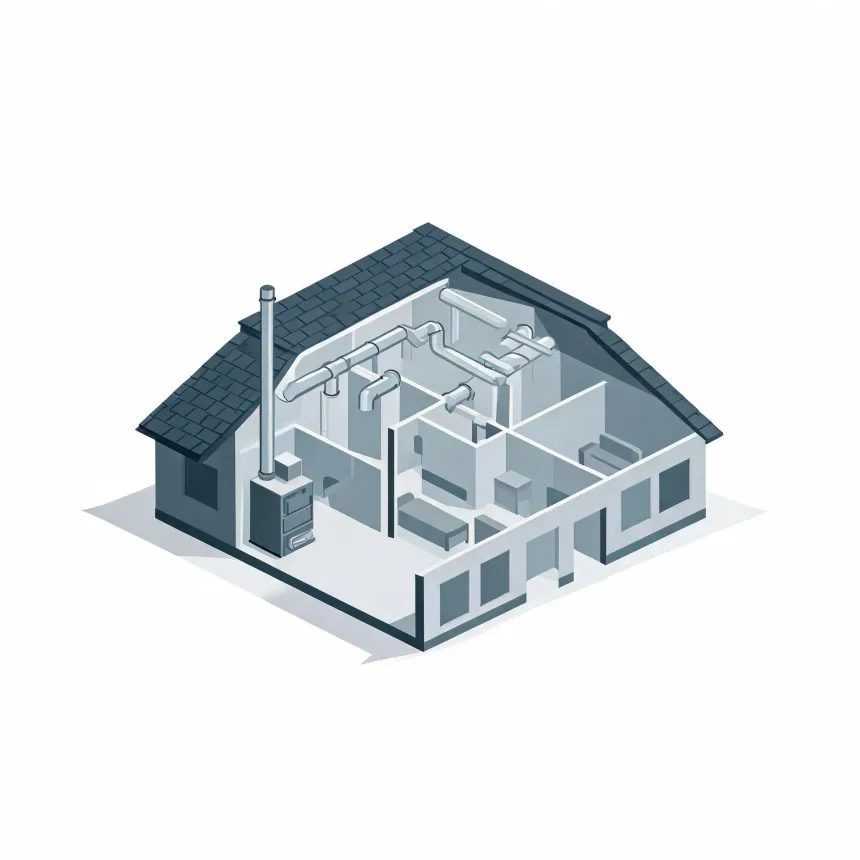
Isometric grayscale illustration of a cutaway house showing interior rooms, ceiling ductwork, a flue pipe, and a furnace unit on the left side.
Your furnace works hardest from November through March.

NOAA nClimDiv, 1991–2020 normals

Winters in Yell County only ask a furnace to run about six months, November through April.

A furnace with a light workload like that usually still has life in it, worth fixing instead of replacing.

Yell County doesn't put a furnace through anything out of the ordinary

66 severe weather events from 2015 to 2024
24% of homes statewide lost power a day or more in 2024
43 damaging wind events from 2015 to 2024

Furnaces sit idle all summer, and November is when they get asked to work again. That first cold snap is when a weak igniter or a dirty flame sensor finally gives out, because the part was already failing and the extra demand just found it. If your furnace is acting up in the first few weeks of running, that is not a coincidence. Getting it looked at in October, before you need the heat, means catching the weak part on your schedule instead of on the coldest night in November.

A light workload is a good reason to fix it

Your furnace only works November through April here. That is a light enough load that a repair is usually the right call, not a replacement. Get the failing part fixed and it should keep going.

Find a contractor
A man in a dark T-shirt, brown work pants, boots and a cap, seen from behind, climbs concrete steps toward a dark blue front door while carrying a worn canvas tool bag, with a potted shrub beside the entry.
A gas furnace with attached ductwork, gas piping, and condensate lines installed in a concrete-block basement.

A newer furnace is worth the repair call

Call a contractor out for the repair and ask what year the furnace was made. If it's a newer unit, there's no reason to let someone talk you into replacing it over one failed part. Get the igniter or pressure switch fixed and keep running it.

Check the thermostat first

Make sure it's set to heat, not cool, and that the set temperature is above room temperature. Swap the batteries if it uses them. A thermostat that lost its schedule or its power is a common reason a furnace seems dead when nothing is actually wrong with it.
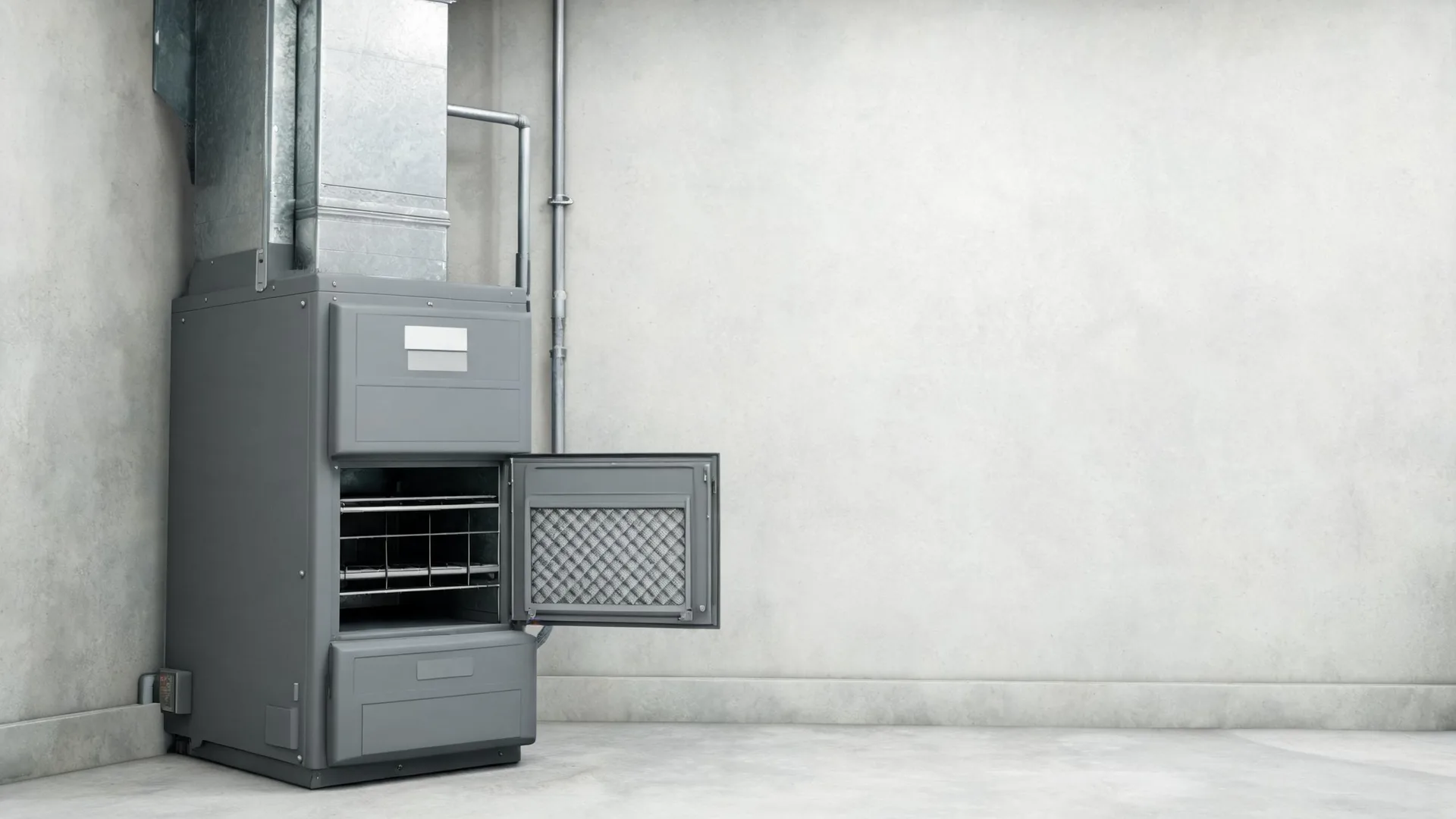
Look at the filter and the switch on the door

A filter clogged with dust chokes off airflow and can shut the furnace down as a safety measure. Pull it out and hold it up to a light. Also check that the panel covering the blower is seated and latched, since most furnaces have a switch there that won't let the unit run with the panel off.

Past the igniter and flame sensor, a few other parts tend to wear out over time. The pressure switch checks that the inducer motor is pulling exhaust properly before the burners light, and if the switch sticks or the hose to it cracks, the furnace will refuse to start at all. The inducer motor itself can wear out after years of running every heating cycle. Blower motor bearings go the same way, and you'll usually hear it before it fails, a grinding or squealing when the blower kicks on. Gas valves last a long time but can stop opening fully. None of these are related to the age of the ductwork or the house around it. They fail because they're mechanical parts that cycle on and off thousands of times a season, and eventually one of them sticks.

A good rule of thumb is to ask whether the part failing is small and simple, or whether it's the furnace itself. An igniter, a flame sensor, a capacitor. These are small parts that each do one job, and swapping one out doesn't put the rest of the system at risk. The heat exchanger is different. It's the part that actually gets hot every cycle, year after year, and metal that heats and cools that long can crack. A cracked heat exchanger usually ends the conversation about repair, because then it's the furnace failing, not just a part bolted onto it. Everything else, ask what broke before you decide it's not worth fixing.