Two single-story houses, one of red brick with a white-columned porch and one with pale siding, sit behind a mown lawn and a trimmed hedge, beneath large moss-draped oak trees.

Furnace Repair in Fort Smith, AR

Tell us about the job

Takes about a minute. No obligation.

RepairFurnace or heatingSebastian County, AR
Step 1 of 2

What ZIP code is the job in?

The tech checks before touching anything

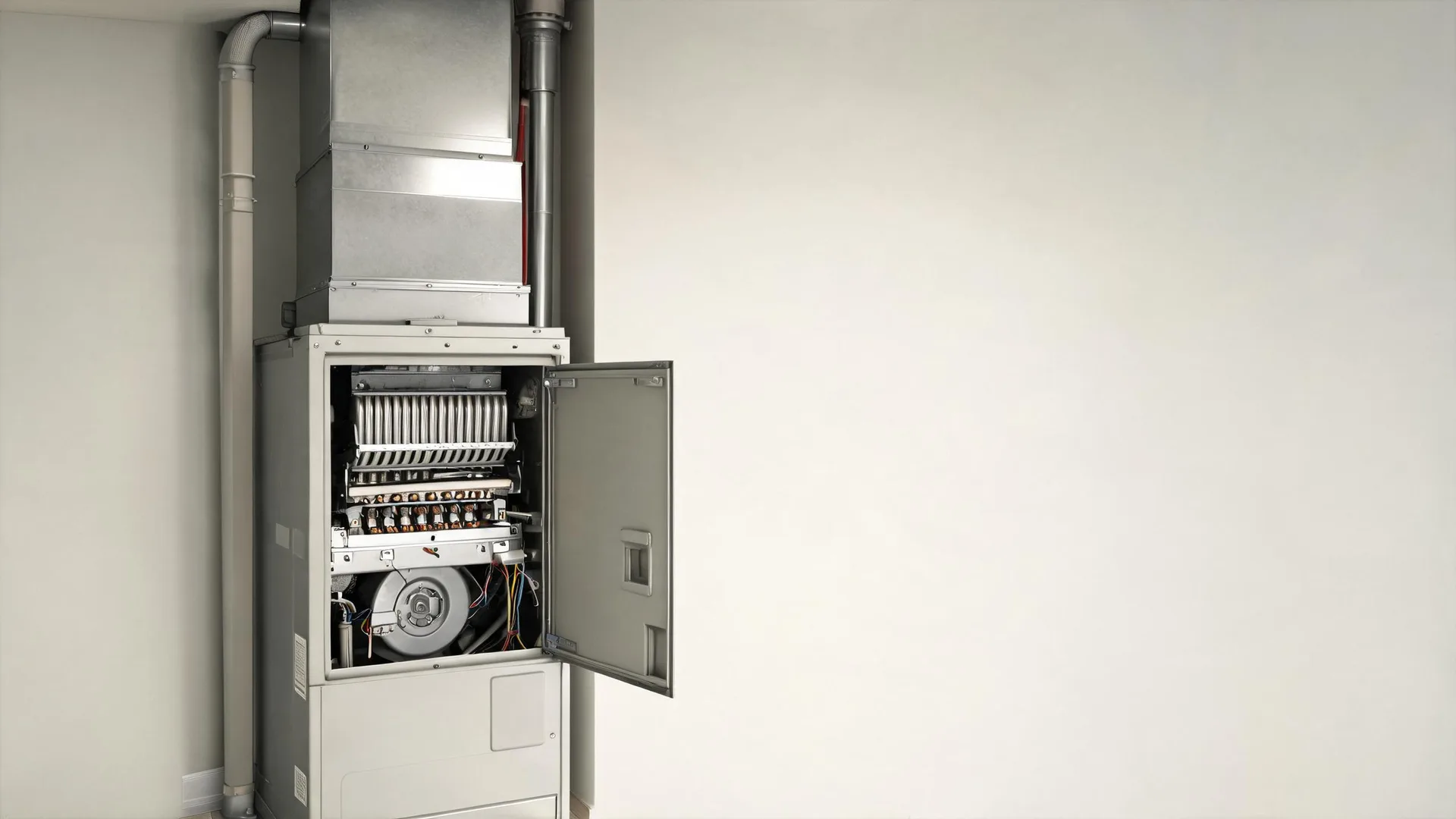
A diagnostic starts with questions. When did the furnace stop working right, what does it do when it fails, has anyone smelled gas or heard banging. Then the tech watches it run through a full cycle, checking the igniter glows or sparks, the gas valve opens, the flame sets up right, and the blower kicks on when it should. Most furnace problems show themselves somewhere in that sequence.

The fix depends on where it stops

A furnace that won't light points at the igniter, the flame sensor, or the gas valve. A furnace that lights then shuts off points at a dirty flame sensor or a cracked heat exchanger tripping a safety switch. A furnace that never starts at all points at the thermostat, the control board, or a blown fuse. The tech narrows it down by watching where the cycle actually breaks, not by guessing.

6 months
November through April, your furnace is on duty
31°F
the average winter night it heats against
10 winter storms
in ten years, the nights a failure hurts most
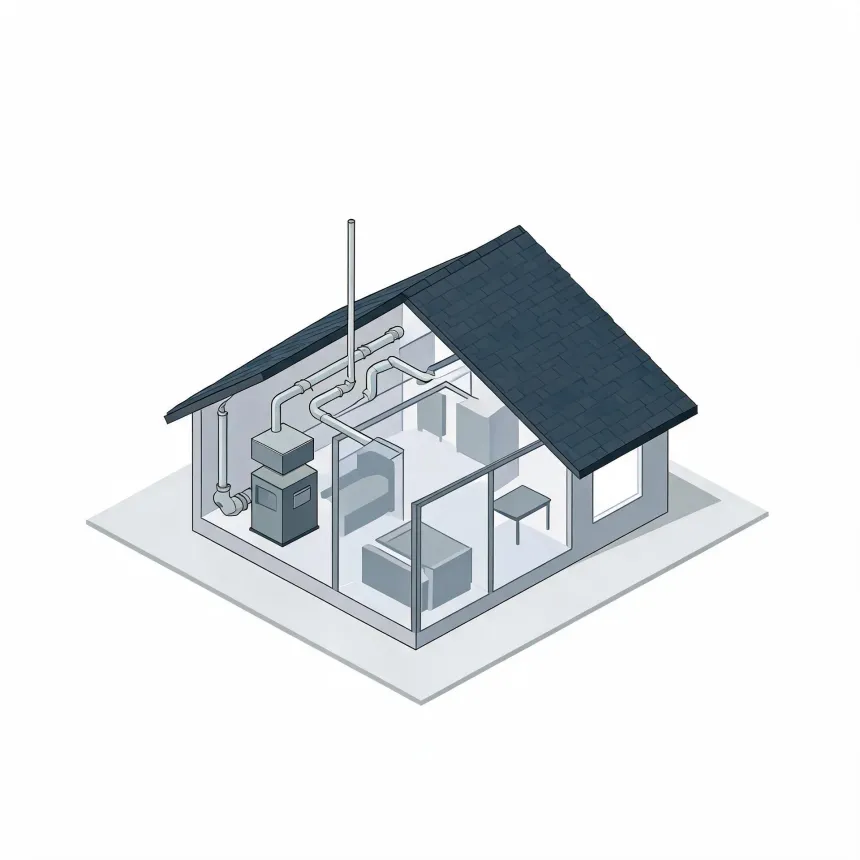
Isometric cutaway illustration of a small house with a dark shingled roof, showing an interior furnace unit, ductwork, and a flue pipe extending through the roof.
Your furnace works hardest from November through March.

NOAA nClimDiv, 1991–2020 normals

A flame sensor coated with a film of carbon stops reading the flame, even though the flame is burning fine.

The furnace shuts off a few seconds after ignition, over and over, until that sensor gets cleaned or replaced.

Half the homes in Sebastian County were built in 1981 or later, and a newer furnace is usually worth fixing

Half the homes here were built by 1981
Heat runs November through April
Winter nights average 31°F

Furnaces here sit unused from April through October, then get asked to run hard starting in November. A weak igniter or a failing flame sensor can sit that whole stretch without anyone noticing, since nothing calls on it. The first cold night is what finds it. That's why October, right before the season starts, is a good time to get a furnace that struggled last winter looked at, instead of waiting for it to quit on the first night it's actually needed.

Repair it

If your system came with a newer house, it likely has plenty of life left. Repair is usually the right call.

Find a contractor
A gas furnace with attached ductwork, gas piping, and condensate lines installed in a concrete-block basement.

Built recently, still worth fixing

If your furnace came with the house and the house is newer, say so when you book the call. Half the homes in Sebastian County were built in 1981 or later, which puts a lot of furnaces well inside their working life. Age alone does not spare a furnace here. It still shuts down every spring and gets asked to run hard every winter, and a weak igniter or flame sensor can fail on either kind of furnace. But a newer unit with a part gone bad is a repair, not a reason to replace it. Tell the tech when the house was built if you know it.

A cracked heat exchanger spreads carbon monoxide into the air it heats

Once that crack is there, every cycle pushes exhaust into the air the blower sends through the house. The safety switch that shuts the furnace down on shutdown is doing its job. Running it anyway, or bypassing that switch, turns a repair into a hazard.

A clogged flue or blocked intake backs exhaust up into the cabinet

The furnace keeps trying to run its cycle the same way it always has, but the gas has nowhere clean to go. Heat and soot build up in places built to stay cool, and that stress can crack the exchanger or warp the burner assembly that was fine the day before.

Before anyone comes out, there's a short list worth checking. Look at the thermostat first. Make sure it's set to heat and the set point is actually above room temperature, and swap the batteries if it takes them. Next, check the furnace switch, the one that looks like a light switch near the unit or at the top of the basement stairs, and make sure it hasn't been bumped off. Look at the breaker too. A tripped breaker will stop the whole thing cold. If the furnace has a visible flame or pilot light, check whether it's lit. Last, find the air filter and hold it up to a light. If you can't see light through it, it's choking off airflow and starving the system, and swapping it might be all the furnace needed. None of this involves opening the cabinet or touching gas lines or wiring. If the furnace still won't run after these, the problem is inside the unit, and that's a job for a tech, not a homeowner with a screwdriver.

A furnace is a collection of parts that wear at different rates, and most of them can be swapped out on their own. An igniter, a flame sensor, a blower motor, a control board, these all get replaced without touching the rest of the system. What changes the math is the heat exchanger. That part isn't meant to be opened up or swapped out in the field, and a crack in it means the whole unit is done. So the real question a tech is answering isn't just what broke, it's whether what broke is a part or the exchanger itself. A furnace that's given years of steady use without major trouble is a reasonable one to keep repairing as smaller things fail. One that's already had the heat exchanger crack, or is showing rust and wear across several parts at once, is telling you the cabinet itself is wearing out, not just whatever failed this time.