Two single-story houses, one with red brick and one with light siding, behind a trimmed hedge and lawn under large oak trees draped with Spanish moss.

Furnace Repair in Heber Springs, AR

Tell us about the job

Takes about a minute. No obligation.

RepairFurnace or heatingCleburne County, AR
Step 1 of 2

What ZIP code is the job in?

Seven months of work

Furnaces in Cleburne County run October through April, with overnight lows averaging 31°F in December, January and February. That is real cold, but it is a season. The rest of the year the furnace sits idle, and that time off adds up over its life.

So a repair is usually the right call

A furnace that only runs part of the year carries less wear on the parts that fail from overuse. If yours is acting up, age or a worn part is the more likely cause, not a system run into the ground. That makes most repairs worth doing.

7 months
October through April, your furnace is on duty
31°F
the average winter night it heats against
10 winter storms
in ten years, the nights a failure hurts most
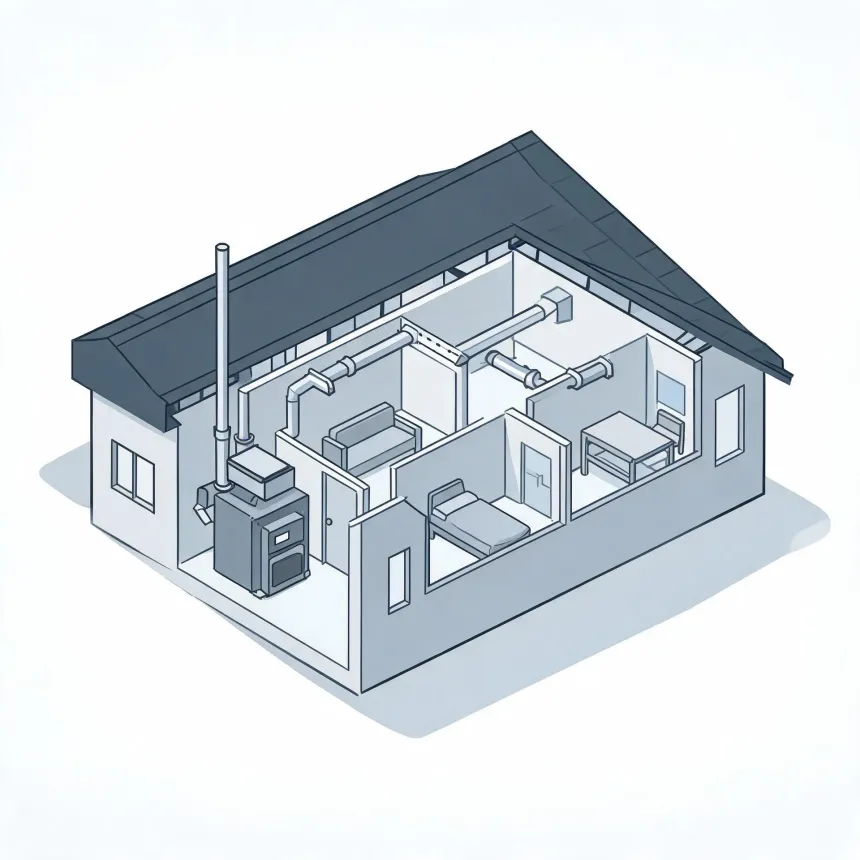
Isometric cutaway illustration of a single-story house showing interior rooms with furniture, overhead ducting, a flue pipe, and a furnace unit against an interior wall.
Your furnace works hardest from November through March.

NOAA nClimDiv, 1991–2020 normals

Half the homes in Cleburne County were built in 1989 or later.

A furnace that came with a newer house still has years in it, which is reason enough to fix what's wrong with it.

October is when a weak furnace gets found out

Heat runs October through April
Winter nights average 31°F
10 winter storms from 2015 to 2024
Nothing about Heber Springs winters wears out a furnace earlyArkansas homes paid $36.10 per million Btu in 2024, and a furnace built for this cold runs as expected.

A furnace that came with a newer house is worth having looked at before it's written off. The failure is usually one part, an igniter, a flame sensor, a pressure switch, and a tech can name which one it is. If the house is newer, odds are the furnace is too, and a single worn part doesn't mean the whole unit is done. Get the actual problem diagnosed before deciding it's bigger than it is.

Worth fixing, not replacing

A furnace with a light workload and a house that isn't old is usually a furnace worth fixing. Get the part that's failing named, and go from there.

Find a contractor
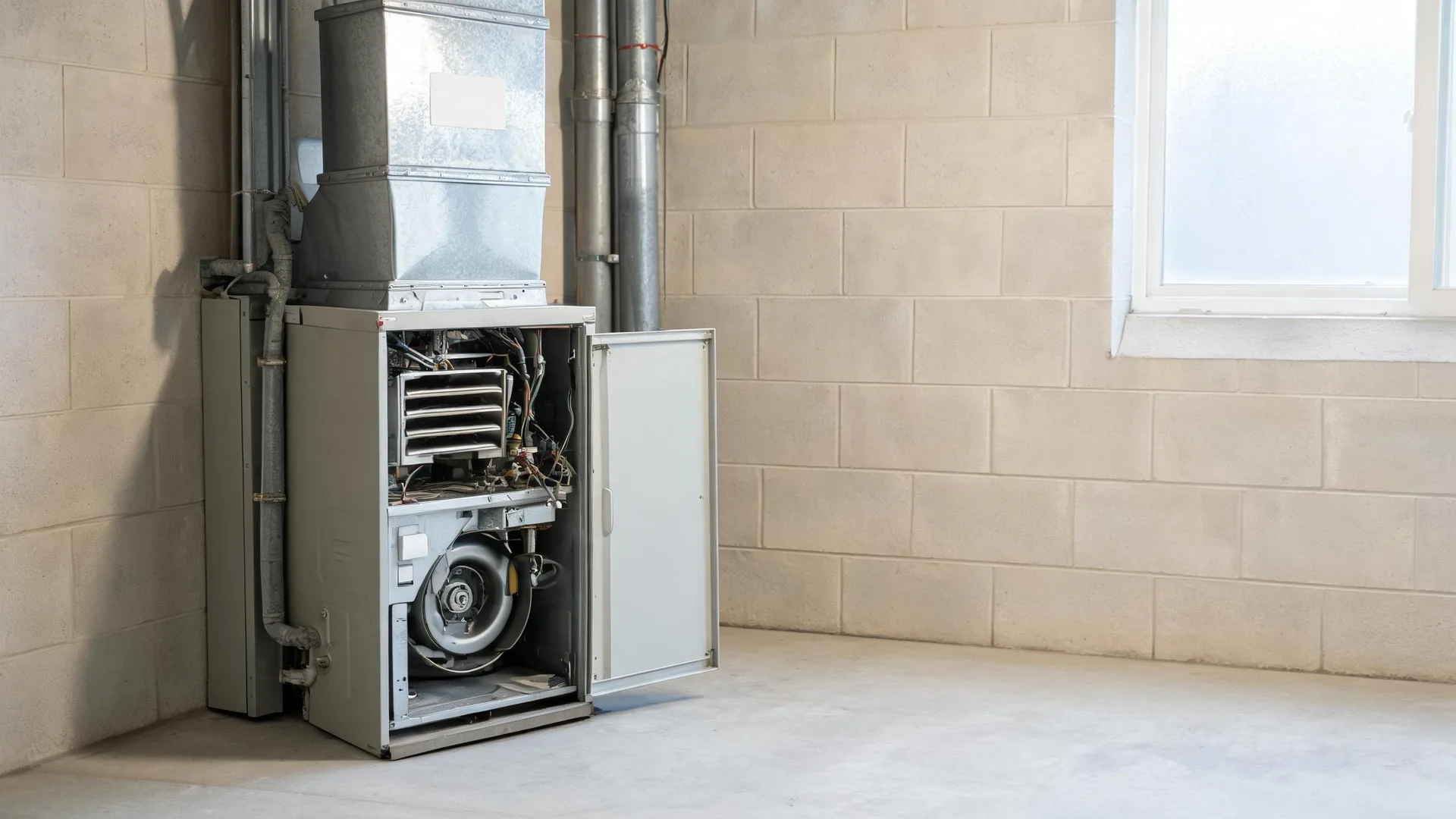
A gray residential gas furnace installed in an unfinished basement, connected to sheet-metal ductwork and PVC pipes.

What a furnace tells you before it quits

A furnace that's starting to fail usually gives warning before it quits for good. Short cycling is one of the first signs. It fires up, runs a few minutes, and shuts off before the house warms. The blower running with no heat coming out points to the igniter or the gas valve, not the fan. A burner flame that flickers yellow instead of burning steady blue is worth a call on its own. That's a combustion problem, not ordinary wear. Some signs you hear before you see them. A rattle at startup, a boom when the burners light, a clicking that repeats without the furnace catching. Any gas smell means shutting the furnace down and getting it checked before touching anything else. Rooms that stay cold even with the thermostat turned up mean the furnace is losing ground, not that it needs to work harder.

What you can look at yourself

Check that the thermostat is set to heat and the temperature is actually above room temperature. Check the furnace switch, the one that looks like a light switch near the unit, hasn't been bumped off. Check the breaker in the panel hasn't tripped. Check the air filter. A filter clogged with dust chokes airflow and can cause the furnace to shut itself off partway through a cycle.

What to leave alone

Don't open the burner compartment or touch the gas valve. Don't reset a pressure switch or flame sensor by hand even if you know where they are. These parts are set up to shut the furnace down when something's wrong, and getting them running again without fixing the cause just hides the problem until it fails worse.

A tech will ask what the furnace was doing right before it quit. Short cycling, no heat with the blower running, and a burner that won't stay lit point to different parts, so that answer narrows things before any panel comes off. After that, the sequence gets checked the way the furnace itself checks it. Does the inducer motor start. Does the igniter glow or spark. Does the gas valve open. Does the flame sensor see what it needs to see. A pressure switch gets tested under actual airflow, not just looked at. If the control board has a code stored, that points to a part before anything gets pulled. The goal is finding which step in that sequence breaks down, not swapping parts to see what helps.

A furnace doesn't fail all at once, usually one system in it does. The gas valve, the ignition, the blower, the venting all work together, but they fail separately, which is why a repair can fully solve the problem instead of just slowing it down. Age matters less than which part is going and what it would take to fix it. A failed control board on an old furnace is a different decision than a cracked heat exchanger on one that's barely been used. Ask what's actually wrong before asking what it's worth. The part names the decision better than the furnace's age does.