






A bare concrete basement containing a gray gas furnace with metal ductwork and a vertical flue pipe, lit by a single hanging bulb.

Furnace Repair in Malvern, AR

Tell us about the job

Takes about a minute. No obligation.

RepairFurnace or heatingHot Spring County, AR
Step 1 of 2

What ZIP code is the job in?

October is worth a check before the weather turns. Furnaces around Malvern sit unused since March, and whatever was already borderline, a weak igniter, a cracked flame sensor, a failing capacitor, tends to give out once the system starts working again in November. That first real cold snap puts load on parts that have been idle for months. If your furnace struggled last March, going out, short cycling, blowing cool air, it will likely do the same thing again unless whatever caused it gets fixed. Catching it before November means you are not without heat on the night you need it most.

5 months
November through March, your furnace is on duty
33°F
the average winter night it heats against
9 winter storms
in ten years, the nights a failure hurts most
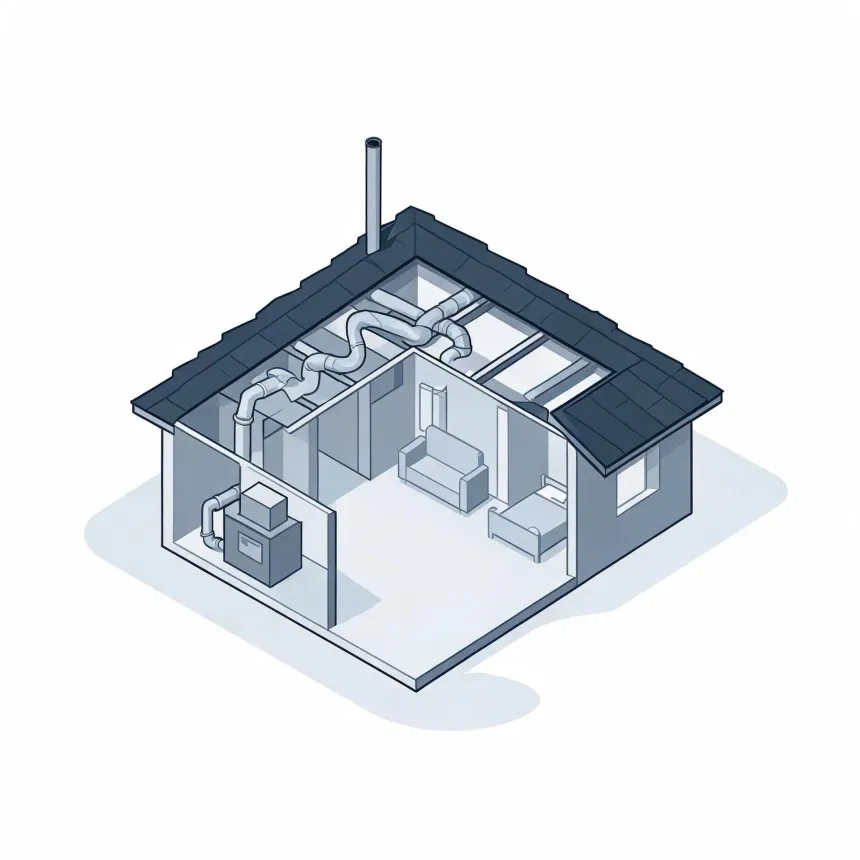
Isometric cutaway illustration of a small house showing a furnace unit connected to ductwork running through the interior and attic, with a chimney on the shingled roof and simple furniture in the rooms.
Your furnace works hardest from November through March.

NOAA nClimDiv, 1991–2020 normals

A cracked heat exchanger gets worse every hour the furnace keeps firing.

Keep running it and carbon monoxide can reach the house instead of going up the flue.

Half the homes here are older, but the furnace problem is still the ordinary one

Half the homes here were built by 1979
Climate zone 3A
Heat runs November through March
Furnace calls in Hot Spring County look like furnace calls anywhere elseWinter storms have hit the county 9 times between 2015 and 2024, not enough to explain a furnace acting up

Your furnace only has to run five months a year here, November through March. That's a short season compared to colder states, and it means less wear on the parts that usually fail first, the igniter, the heat exchanger, the blower motor. Overnight lows average 33°F through the coldest stretch of winter, which isn't an extreme ask for a furnace in decent shape. A system that's only moderately used and starts acting up is usually dealing with one worn part, not a unit breaking down from years of strain. Ice and winter storms do roll through the county from time to time, so when one hits, you want the repair already done right, not holding on until the next cold snap finds it again.

Get it looked at early

Problems tend to show up in the first weeks of the season, when the load hits a part that was already weak.

Find a contractor
A man in a cap, dark shirt and tan work pants walks up porch steps toward a navy blue front door, carrying a canvas tool bag beside a potted shrub.
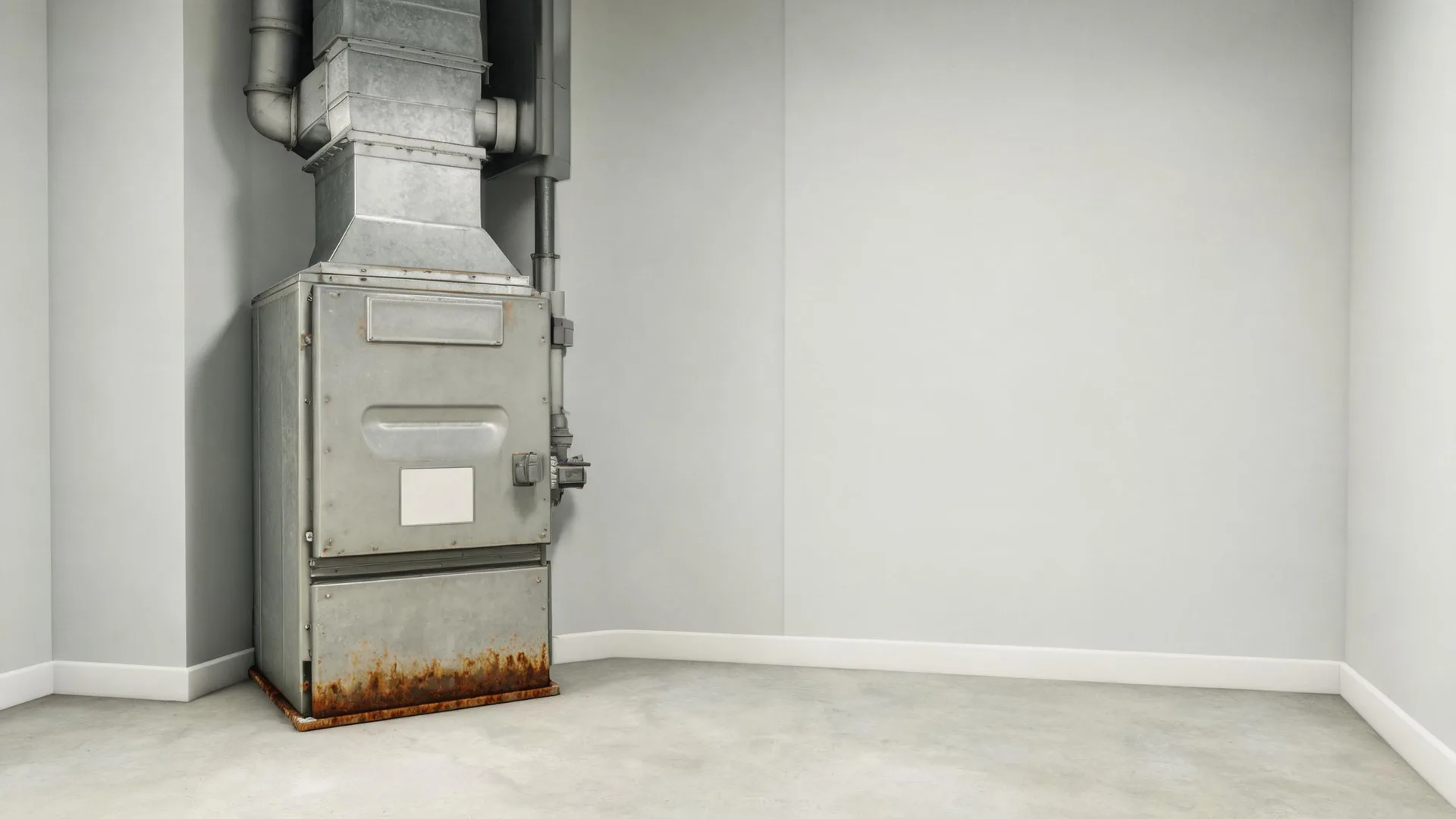
A gray gas furnace with attached ductwork and piping installed in an unfinished concrete basement.

The parts that fail are the ones that cycle, not the ones that run long

A furnace fails because one part wears out, not because the whole unit quits at once. The igniter is usually first. It heats up and cools down every cycle, and that repeated stress eventually cracks it. The flame sensor fouls over time with a film that builds up on it, and once it can't sense the flame it shuts the gas off as a safety measure. The blower motor wears at the bearings from spinning hour after hour, and you'll hear it before it fails, a grinding or squealing that gets worse. Capacitors weaken with age and stop giving the motor the jolt it needs to start. None of these have much to do with how hard the furnace has been worked. A furnace that's barely run can still lose an igniter or a capacitor just from sitting through the off months. The parts age whether they're running or not.

What you can check yourself

Look at the thermostat first. Make sure it's set to heat and the setpoint is above room temperature, and check the batteries if it uses them. Go to the breaker panel and look for a tripped breaker feeding the furnace. Check the filter by holding it up to a light. If you can't see light through it, it's choking off airflow and that alone can cause shutdowns. If your furnace has a standing pilot, check whether the pilot light is lit. None of this requires opening the cabinet or touching gas lines.
Where to stop

If the filter is clean, the breaker is on, and the thermostat is calling for heat but the furnace still won't fire, stop there. Anything past that means getting into the burner compartment or the electrical controls, and that's where a wrong guess either does nothing or does damage. If you smell gas, or the furnace short cycles after you've reset the breaker, don't keep resetting it. Leave it off and get someone out.

A furnace rarely goes from fine to dead. It tells you first. Short cycling, where it fires up and shuts off again before the room warms, usually means a flame sensor that can't hold the flame long enough to satisfy the control board. Cool air out of the vents when it should be warm points at a burner that's not lighting right, or a limit switch cutting the burners off while the blower keeps going. A furnace that won't start at all but clicks when you call for heat is often an igniter that's cracked and no longer glowing hot enough to catch the gas. Listen for noise too. A grinding or squealing blower only gets louder, it doesn't fix itself. Any of these on their own is a single worn part. Together, or ignored for a few weeks, they're how a simple repair turns into a furnace that won't run at all.

A diagnostic call starts with the thermostat and the breaker, the same things worth checking before anyone comes out, then moves into the cabinet once those are ruled out. A tech will pull the burner cover and watch a full cycle, the igniter glowing, the flame catching, the flame sensor holding it steady. Most of what fails shows up right there in how the flame behaves, whether it's weak, yellow, or won't stay lit. From there it's a multimeter on the capacitor and the control board, checking that each part is giving or getting the voltage it should. Static pressure and amp draw on the blower motor tell whether it's still spinning the way it was built to. None of this takes guessing. Either a part is within spec or it isn't, and that's what decides whether it gets replaced or left alone.