A single-story brick house with a white-columned wraparound porch and a neighboring light-colored siding house, seen across a lawn behind a trimmed hedge, under oak branches draped with Spanish moss.

Furnace Repair in Ozark, AR

Tell us about the job

Takes about a minute. No obligation.

RepairFurnace or heatingFranklin County, AR
Step 1 of 2

What ZIP code is the job in?

The furnace is talking to you

A furnace that short cycles, bangs when it starts, or blows cool air before shutting off is telling you something specific is failing, not just getting old. A burner that won't stay lit points at the flame sensor. Banging at startup points at dirty burners or a delayed ignition. Cool air out of the vents can mean the heat exchanger is overheating and shutting the system down to protect itself.

Waiting makes some of these worse

A furnace that's starting to struggle usually keeps running, just worse each time, until a part fails outright or the system locks out and won't start at all. Catching the flame sensor or the igniter early is a simple fix. Let it go and you risk a cracked heat exchanger, which is a different repair and a safety issue, not just an inconvenience.

7 months
October through April, your furnace is on duty
31°F
the average winter night it heats against
11 winter storms
in ten years, the nights a failure hurts most
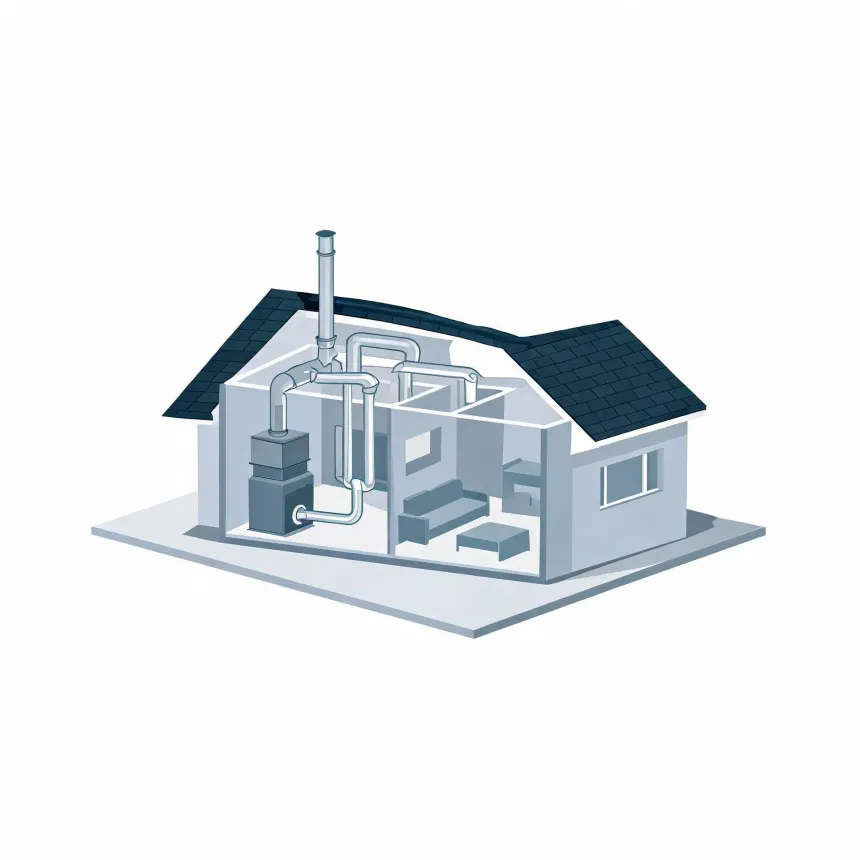
Isometric illustration of a cutaway single-story house showing a gray furnace unit, connected ductwork, and a vertical flue extending above the dark shingled roof.
Your furnace works hardest from November through March.

NOAA nClimDiv, 1991–2020 normals

A furnace in Ozark fails the same way it does anywhere else.

The igniter or flame sensor is still the usual cause, and the usual fix still works.

Half the homes in Franklin County were built in 1985 or later, so a lot of furnaces here haven't earned a replacement yet

Half the homes here were built by 1985
Heat runs October through April
Winter nights average 31°F

Get the usual fix

Nothing about this area is especially hard on it. It's most likely the usual problem with the usual fix.

Find a contractor
A gas furnace with attached ductwork, gas piping, and condensate lines installed in a concrete-block basement.

A young furnace gets fixed, not replaced

If your furnace came with the house, check the install date before anyone brings up replacement. A furnace that's only a few years into its run is almost always worth repairing when the igniter or flame sensor goes. That's true whether the house is new or old, but it matters more here, where half the homes were built in 1985 or later and a lot of these systems are still early in their working life.

What you can check before anyone shows up

Check the thermostat is set to heat and the temperature is actually above room temperature. Check the furnace switch, it looks like a light switch near the unit, and make sure nothing bumped it off. Check the breaker in the panel. Check the filter, if it's gray and clogged the furnace may be shutting itself off from lack of airflow. Check that the vents in each room are open and nothing's been stacked in front of the return.

What to leave alone

Don't take the cabinet apart or reach near the burners. Don't try to relight a pilot if you're not sure how, some furnaces don't have one at all. If you smell gas, don't flip switches or check anything, just get out and get the gas company or a contractor out. A furnace that locks out after a few tries is doing that on purpose, so don't keep resetting it and hoping.

A furnace that's struggling doesn't fail all at once. A cracked heat exchanger usually starts as a small stress crack from the metal heating and cooling over and over, and it gets worse every time the burners fire. A blower motor straining under a clogged filter runs hotter on each cycle until the bearings give out, instead of just the filter getting swapped. A flame sensor that's struggling to detect the flame causes more failed startups, and each failed startup puts extra stress on the igniter. A part working harder than it should makes the parts around it work harder too. Catching the problem while it's still one part failing is a simpler job than catching it after it's taken another part down with it.

A diagnostic visit starts with questions. A tech asks what the furnace was doing, when it started, and whether anything changed right before. Then the cabinet comes off and the sequence gets watched from start to finish. Does it ignite on the first try. Does the flame stay lit. Does the blower kick on when it should. A multimeter checks the flame sensor's signal and the igniter's resistance, since both can look fine and still be failing. Static pressure across the filter and coil tells the tech whether airflow is the real problem behind a symptom that looked like something else. The goal is to find the one part actually causing the complaint, not to replace everything that could theoretically be involved.