An unfinished basement containing a metal furnace with ductwork, exposed wooden joists on the ceiling, cardboard boxes, a coiled cable, and a single hanging incandescent bulb.

Furnace Repair in Searcy, AR

Tell us about the job

Takes about a minute. No obligation.

RepairFurnace or heatingWhite County, AR
Step 1 of 2

What ZIP code is the job in?

How old the furnace is matters less than what's failing

A cracked heat exchanger on an older furnace is a sign to start pricing a replacement. A bad igniter or a failed flame sensor is a cheap part swap on a furnace of any age. Ask the technician what's actually broken before you decide anything based on the furnace's age alone.

A furnace that's starting to repeat itself is telling you something

One repair in a few years is just a repair. The same furnace needing attention every winter, for different reasons each time, means the unit as a whole is wearing out, not just the part that failed this time. That pattern is worth more than any single repair bill when you're deciding what to do next.

6 months
November through April, your furnace is on duty
33°F
the average winter night it heats against
8 winter storms
in ten years, the nights a failure hurts most
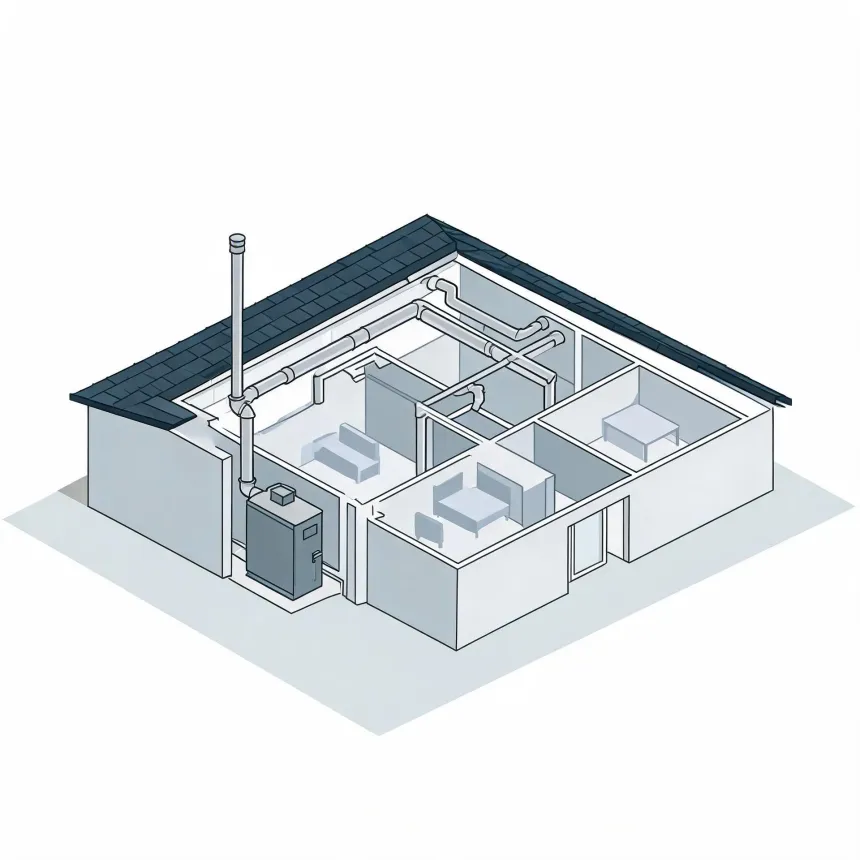
Isometric line illustration of a cutaway single-story house showing interior rooms with furniture, ceiling ductwork, and an exterior furnace unit with a tall flue pipe.
Your furnace works hardest from November through March.

NOAA nClimDiv, 1991–2020 normals

Furnaces in White County only run about six months a year, November through April.

A furnace that isn't working year round has less wear behind it, which is one more reason a repair is worth doing.

107 severe weather events in ten years means the power going out is the bigger risk to your furnace than the winter itself

107 severe weather events from 2015 to 2024
24% of homes statewide lost power a day or more in 2024
52 damaging wind events from 2015 to 2024

October is worth a call to the furnace before it runs again. Homes here start heating in November, and whatever was already weak tends to show up in the first cold week, not before. A weak igniter or a cracked limit switch that got through last April often won't get through the first hard night. Having it looked at in October means the part gets replaced on a slow afternoon instead of a cold morning when the furnace won't fire at all.

Get it fixed, not replaced

Six months of running a year is a light load for a furnace. Get the broken part fixed and there's a good chance what's left has plenty of life in it.

Find a contractor
A man in a dark cap, gray long-sleeve shirt and brown work pants climbs porch steps toward a navy front door, carrying a canvas tool tote with tools in its pockets, beside a potted evergreen shrub in a blue planter.
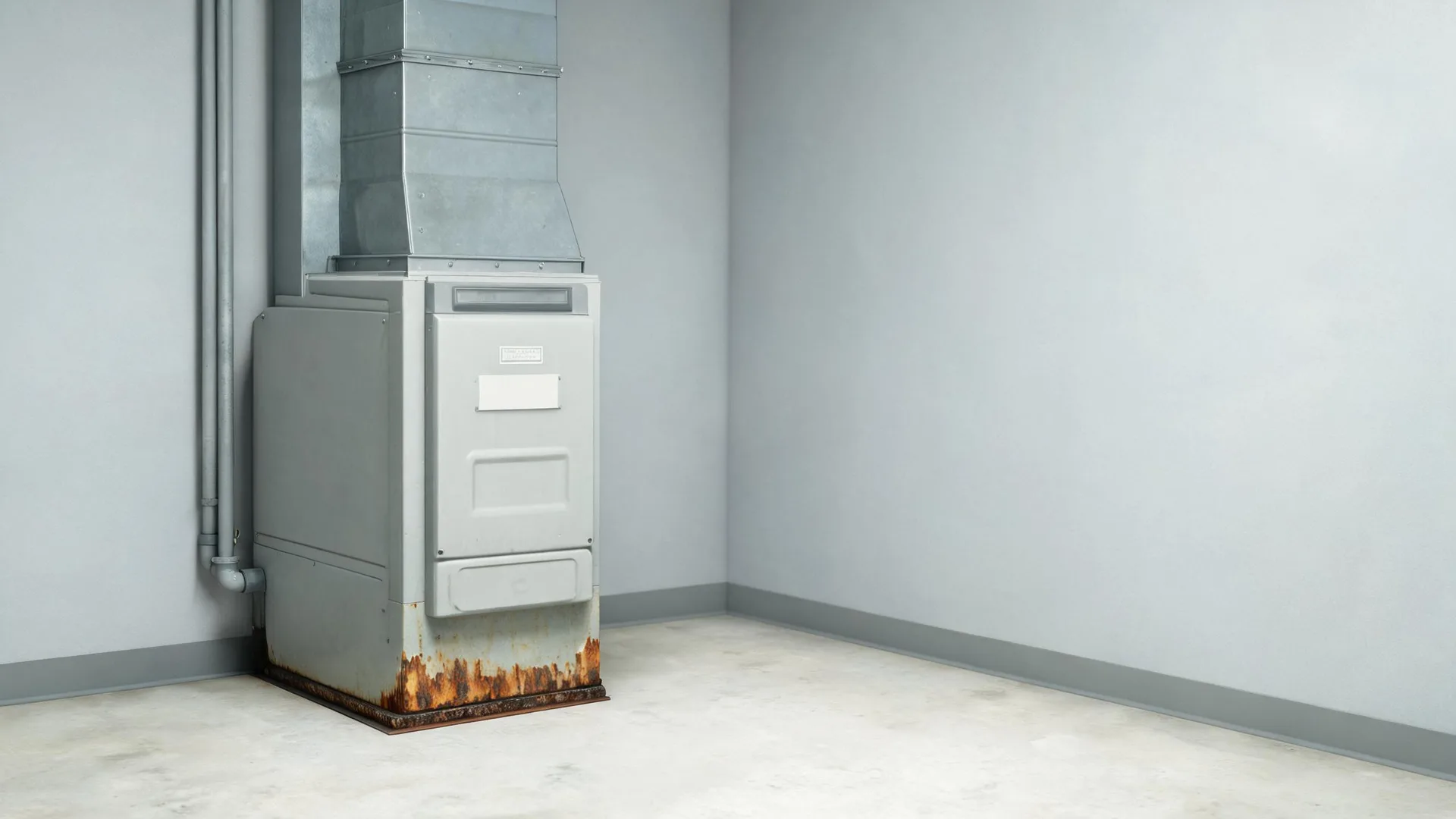
A gas furnace with attached ductwork, gas piping, and condensate lines installed in a concrete-block basement.

A newer house usually means a furnace with life left in it

Half the homes in White County were built in 1992 or later. If yours is one of them, the furnace inside it hasn't necessarily been running for decades, and a repair now likely isn't the last one before you'd need to think about replacing the unit. Ask the technician how old the furnace actually is before you let the thought of an old worn-out system decide anything for you.

Most calls come down to the igniter or the flame sensor

The igniter has to heat up and cool down every time the furnace cycles, and that stress eventually cracks it or burns it out. The flame sensor sits in the burner flame and collects a coating over time that keeps it from sensing the flame at all, so the furnace shuts itself down as a safety check. Both are small parts that fail on their own schedule, not because anything else is wrong.

The blower motor and the pressure switch wear for different reasons

A blower motor runs for hours at a stretch pushing air through the ducts, and the bearings inside it wear down the same way any motor's would. A pressure switch fails when the inducer motor isn't pulling enough draft, or when the small hose running to the switch gets blocked or cracked. One is wear from use, the other is usually a sign something upstream of it needs attention too.

A furnace that's struggling doesn't fix itself by staying on. A cracked heat exchanger gets worse every cycle, because the metal keeps flexing against the same weak spot until it opens up further. A flame sensor coated with residue gets a little more coated each time the burner fires. A blower motor running on worn bearings is wearing those bearings down further on every cycle, not holding steady. Ignoring a pressure switch that's failing intermittently just means the furnace shuts down more often, at worse times, until it stops starting at all. None of these get better left alone, and some of them turn a part replacement into something bigger if they run long enough.

A diagnostic call starts before any panel comes off. The technician asks what the furnace is doing, when it started, and whether it happens on every cycle or just some of them. That matters because an intermittent problem and a constant one point at different parts. Next comes a look at the flame itself, the sound of the inducer motor starting up, and a check of the error code on the control board if the furnace keeps one. Only after that does testing start on the specific part those signs point to, with a meter or gauge, rather than swapping parts to see what helps. A furnace that won't start gets diagnosed differently from one that starts and then shuts off, and the visit follows whichever problem is actually in front of the technician.